Sorry, no records were found. Please adjust your search criteria and try again.
Sorry, unable to load the Maps API.
Explore stunning hiking trails of Kinchega National Park
Discover the diverse trails of Kinchega National Park, New South Wales, offering hikes and walks for all skill levels and interests. Find your perfect adventure today.
Discover 1 hiking trail in Kinchega National Park
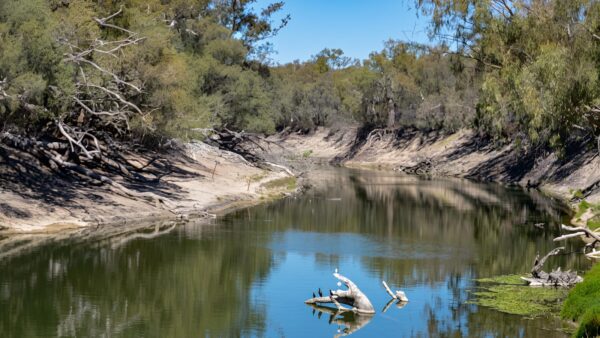

Where the Darling River Meets the Menindee Lakes
Overview
Kinchega National Park sits beside Menindee in far western New South Wales, about 113km south-east of Broken Hill. It stretches for roughly 62km along the Darling River and includes part of the Menindee lake system, giving the park a character that feels quite different from the drier stony country elsewhere in the region. Floodplain, overflow lakes and channels, lunettes, sand plains and dunes all sit within the one landscape, so the scenery shifts noticeably from river country to open semi-arid country as you move through it.
This is also a large park, covering more than 44,000 hectares, and it protects an important sample of the lower Darling environment. The presence of permanent river red gums, wetlands and open inland plains gives Kinchega a strong sense of contrast, especially when water levels change and the country moves between reflective lakes, green lakebeds and dry open ground.
Highlights
The defining feature here is the meeting of the Darling River with the Menindee Lakes system. Broad water bodies, old overflow channels and low lunettes create a landscape that feels open and spacious, with long horizons and big skies. Around the water, stands of river red gum give the park some of its most memorable scenery, particularly where trunks rise directly from the edges of lakes and billabongs.
Kinchega is also one of the few places in inland New South Wales where wetland country and semi-arid landforms sit so closely together. That mix gives the park its changing visual character. After water has moved through the system, the country can look entirely different from the drier phases, with fresh colour across the lake margins and strong reflections across still water.
Best Time to Visit
The most rewarding time to visit is usually during the cooler months, when walking is more comfortable and the open landscapes are easier to appreciate at a slower pace. The park can look striking at any time of year, but seasonal and water-level changes make a big difference to how the lakes, channels and floodplain present.
If you are especially interested in the wetland scenery and birdlife, timing matters more than the calendar. Kinchega changes with the movement and retreat of water, so the park’s character is often at its best when the lakes and river country are holding water.
Plants and Animals
Kinchega protects plant communities typical of the lower Darling, including river red gum country along the river and lake margins, bluebush shrubland, and dune vegetation across the sandier parts of the park. It is also an important reserve for vulnerable plants including Acacia carneorum and Solanum karsense, both of which are noted as having reserve protection here.
The wetlands around Lakes Menindee and Cawndilla are especially important for birdlife. More than 30 species groups of waterfowl have been recorded in the lake system, including the freckled duck and migratory waders. Away from the water, the park supports the four large macropod species as well as other animals typical of inland New South Wales.
Culture and Heritage
Kinchega has a long and direct Aboriginal connection, with many sites recorded in and around the park including burials, open sites, carved trees, stone caches and ceremonial places. Evidence of occupation in the park reaches back at least 15,000 years, and the concentration of sites reflects the long importance of the Darling River and its overflow lakes and channels as places to live and gather.
The park also has a strong pastoral history linked to the former Kinchega Station, and that history remains visible in the old station precincts. Alongside this, joint management work with the Menindee Aboriginal Elders Council recognises and helps protect the Aboriginal heritage of the area.
Find more places to explore…
Help expand the trail collection!
Know of an official trail not listed on Trail Hiking Australia? I’m focused on showcasing the best tracks managed by land managers, and I’d love your help! Sharing a trail adds to our community and helps others discover safe, new adventures.
Submit your trail here

