Ancient Rock, Ringed Peaks and the Heart of the Flinders
Overview
Ikara-Flinders Ranges National Park sits in the central Flinders Ranges, about 400 kilometres north of Adelaide, and brings together some of South Australia’s most recognisable outback scenery in one vast protected area. The park covers roughly 93,695 hectares and includes the Heysen Range, the great enclosed formation of Ikara, also known as Wilpena Pound, and well-known gorge country including Brachina and Bunyeroo.
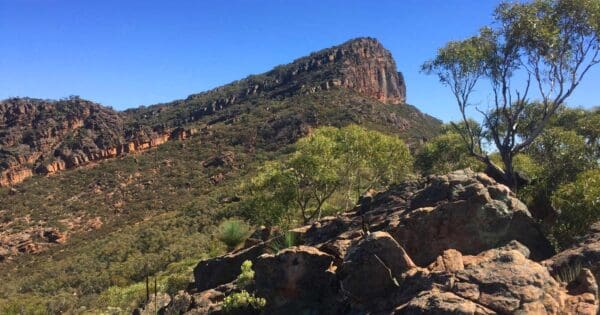
What gives this park its particular character is the mix of rugged mountain country, tree-lined creek beds and wide semi-arid space. It is a place where the land itself tells a very long story, from folded ranges and eroded basins to fossil-bearing rocks that helped define the Ediacaran Period.
Highlights
The standout feature is Ikara, the immense natural amphitheatre better known as Wilpena Pound, where a ring of mountains rises around a central basin. It is one of those landforms that feels even larger once you are in it, with sheer ridgelines, layered rock and a scale that shapes the whole park.
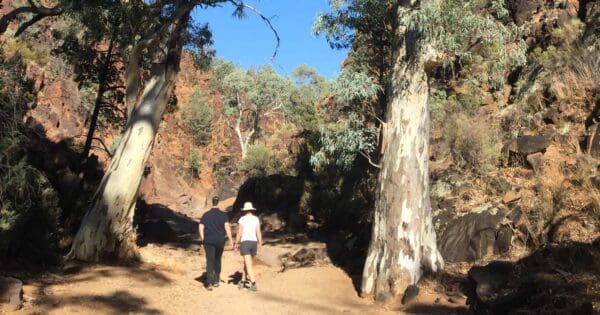
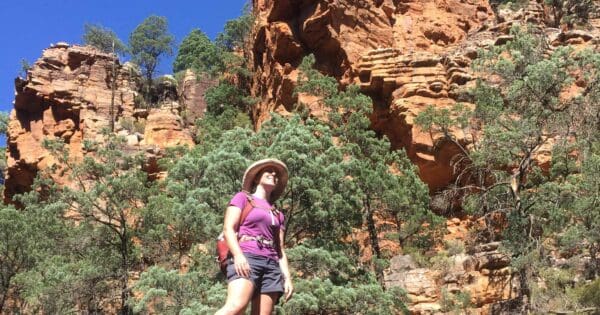
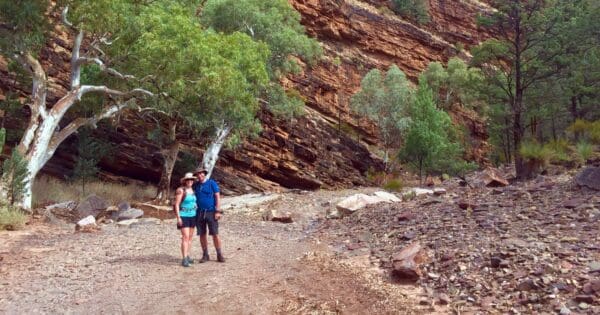
Beyond Ikara, the scenery shifts through gorges cut into the ranges, open creek lines and high lookouts over deeply folded country. Brachina Gorge and Bunyeroo Gorge are central to the park’s scenic identity, while the broader landscape is marked by striking geological structure, long views and the red, ochre and grey tones typical of the Flinders.
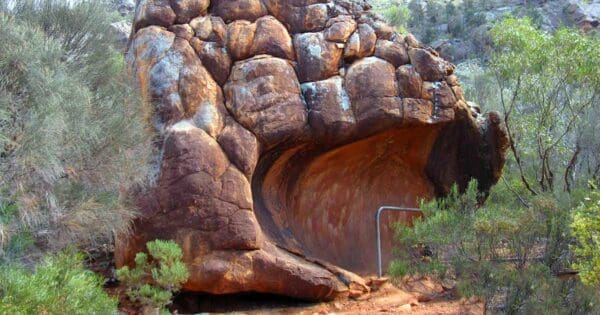
The geology here is not just dramatic to look at. The park contains geological and palaeontological sites of global significance, including the reference point at Enorama Creek for the base of the Ediacaran Period, a key chapter in the history of complex life on Earth.
Best Time to Visit
The most comfortable times to spend time in the park are generally the cooler months, when mild days make the ranges, gorges and exposed country easier to appreciate. Summer can be intensely hot in this part of South Australia, so the feel of the place changes a lot with the season.
After rain, the country can look especially fresh, with creek lines and vegetation standing out against the rock and plains. Wildlife activity is often easier to notice in these milder periods as well.
Plants and Animals
Despite the dry setting, the park protects a surprisingly varied spread of habitats. Ephemeral streams and waterholes provide important refuge areas, while the broader landscape supports at least 22 ecological communities, including River Red Gum communities along alluvial areas and Triodia grasslands across stony country.
The animal life reflects that variety. The park is known for its population of yellow-footed rock-wallabies, particularly around the gorge country, and it also supports a range of rare or threatened fauna. These include the Short-tailed Grasswren, which is endemic to the Flinders and Gawler Ranges, along with species such as the Flinders Worm-lizard and Australian Painted Snipe.
Culture and Heritage
Ikara-Flinders Ranges National Park lies within the traditional lands of the Adnyamathanha people and has been co-managed with the Adnyamathanha Traditional Lands Association since 2011. The park’s name recognises Ikara as a meeting place, and the cultural meaning of the landscape remains central to how the park is understood and cared for.
The cultural significance of Ikara is closely connected with the story of Akurra, the powerful Dreaming serpent of the Flinders Ranges. In Adnyamathanha tradition, the forms of the land around Ikara are bound up with that story, including the walls of the pound itself. Cultural sites within the park are part of this continuing connection to Country.