Sorry, no records were found. Please adjust your search criteria and try again.
Sorry, unable to load the Maps API.
Explore stunning hiking trails of Goobang National Park
Discover the diverse trails of Goobang National Park, New South Wales, offering hikes and walks for all skill levels and interests. Find your perfect adventure today.
Discover 2 hiking trails in Goobang National Park
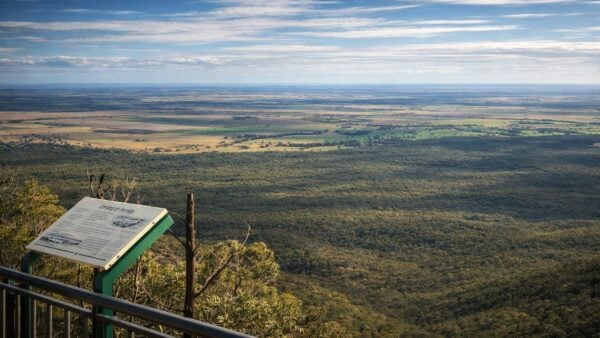

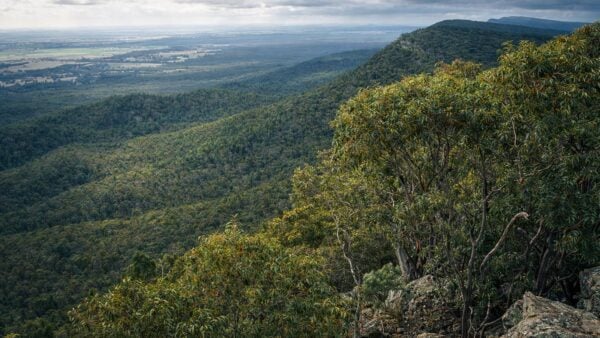

Ranges, Woodlands and Escarpments in Central West NSW
Overview
Goobang National Park stretches across a long belt of hill country in central western New South Wales, between Peak Hill, Parkes and Molong, with the park extending from about 50 kilometres south-east of Dubbo to about 30 kilometres north-east of Parkes. At 42,080 hectares, it protects one of the largest remaining areas of natural vegetation in this part of the state.
What makes Goobang stand out is its scale and shape. Rather than a single compact block, it follows a 55 kilometre run of ranges and escarpment country, including parts of the Hervey and Curumbenya Ranges, with a smaller separate section around Crokers Range. In a landscape where so much surrounding country has been cleared or heavily modified, the park remains an important stronghold for native plants and animals.
Highlights
The defining character of Goobang is its long, broken line of ridges, rocky slopes and escarpments rising out of the surrounding farmland. That contrast gives the park a strong sense of relief and a very different feel from the open plains around it.
Scenically, the appeal is in the varied hill country rather than a single landmark. The northern and southern sections each have their own texture, with sedimentary country in the Hervey Range and volcanic country in the Curumbenya Range helping shape different landforms, vegetation patterns and views across central west NSW.
Best Time to Visit
Spring is usually the most comfortable and rewarding time to be here, when milder temperatures and longer daylight suit walking and birdwatching, and reptiles are also more active through spring and summer. The cooler months are often the better choice if you prefer steadier conditions for longer days outdoors, while the hotter part of summer can feel exposed in the open woodland and range country.
Plants and Animals
Goobang protects a surprisingly broad mix of plant life for inland NSW. Surveys have recorded 459 plant species and 11 distinct vegetation communities, ranging from open forest to open heathland, though most of the park is open woodland. Differences in altitude, soils, geology and rainfall along the park’s north-south length all help create that variety.
The park is also important habitat for wildlife of the central west, especially woodland birds. Vulnerable and endangered species recorded here include regent honeyeater, glossy black-cockatoo, superb parrot and turquoise parrot, and large remnants such as Goobang are considered critical for the survival of several declining woodland bird species. More commonly seen animals include red-necked wallabies, swamp wallabies, eastern grey kangaroos and echidnas, with reptiles such as lace monitors, blue-tongued lizards, shinglebacks and bearded dragons active in the warmer months.
Culture and Heritage
Goobang has direct and specific cultural significance for the Bogan River Wiradjuri people. The ranges were identified as an important landform in their traditional country, and the name Goobang itself is part of that connection. The headwaters of the Bogan River rise in creeks within the park, and the wider river system was an important travelling route that linked people and places across this part of New South Wales.
Evidence of long Aboriginal occupation has been recorded across the park, including open camp sites, scarred trees, a stone arrangement, a quarry and an axe grinding site, with more than 900 stone artefacts documented in survey work. Oral evidence also links the ranges with ceremonial use, and the park remains an important landmark in Wiradjuri country.
Find more places to explore…
Help expand the trail collection!
Know of an official trail not listed on Trail Hiking Australia? I’m focused on showcasing the best tracks managed by land managers, and I’d love your help! Sharing a trail adds to our community and helps others discover safe, new adventures.
Submit your trail here

