Sorry, no records were found. Please adjust your search criteria and try again.
Sorry, unable to load the Maps API.
Explore stunning hiking trails of Cathedral Rock National Park
Discover the diverse trails of Cathedral Rock National Park, New South Wales, offering hikes and walks for all skill levels and interests. Find your perfect adventure today.
Discover 4 hiking trails in Cathedral Rock National Park




Granite Tors and Highland Swamps on the New England Tablelands
Overview
Cathedral Rock National Park sits on the New England Tablelands in north-east New South Wales, about 70 kilometres east of Armidale. It is a relatively compact park, but the country changes quickly from exposed granite boulder country to swampy valleys, sheltered gullies and higher ground around Round Mountain. That mix gives the park a character quite different from the larger forest parks nearby.
The landscape is shaped by granite from the New England batholith, with rugged tors, broad ridgelines and peaty swamps all packed into one area. Those natural contrasts are a big part of what makes the park memorable, and they also help explain why it supports such a varied spread of plant communities in a fairly small space.
Highlights
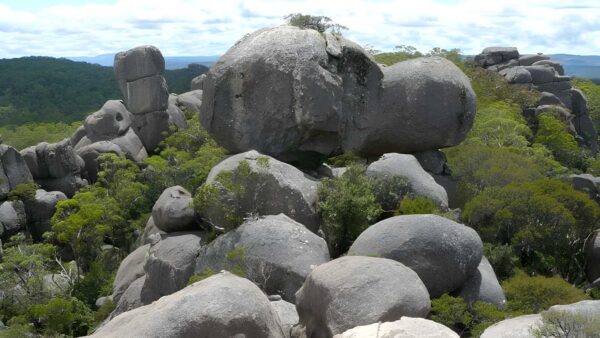
The defining feature here is the granite. Cathedral Rock and Woolpack Rocks rise in stacked boulder formations that stand out sharply from the surrounding tableland forest, and they give the park its strong visual identity. In late afternoon light, or when mist moves through the rocks, the country takes on a very different mood from the open farmland and forest beyond.
Round Mountain adds another layer to the scenery, with basalt capping at the summit rather than bare granite. Across the park, the contrast between rocky outcrops, dry eucalypt forest and broad swampy flats creates a landscape that feels both open and intricate at the same time.
Best Time to Visit
This is a high tablelands park, so cooler months are often the most comfortable for walking, especially when the air is clear and the granite country is at its sharpest. Spring is also a rewarding time, with wildflowers appearing through the heaths, swamps and open forest.
Conditions can shift with altitude and weather, so the feel of the place changes through the year. Mist, colder mornings and crisp light suit the granite scenery particularly well, while the warmer months bring greener swamp and gully country.
Plants and Animals
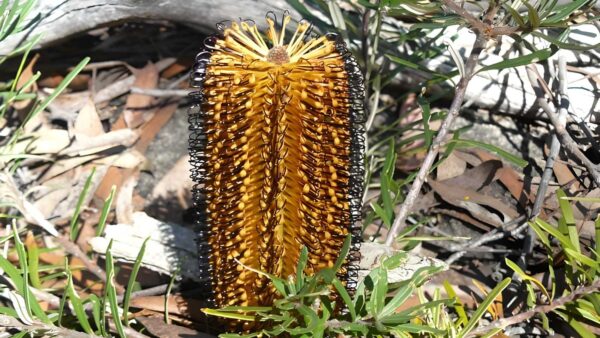
Despite the poor granite soils over much of the park, the vegetation is remarkably varied. There are dry eucalypt forests, woodland heaths, swamps, small pockets of gully rainforest and plant communities clinging to granite outcrops. Many species found here are alpine or subalpine plants more often associated with colder parts of south-eastern Australia, which gives the park an unusual botanical mix for northern New South Wales.
The swamps are especially important, with fen, fen-heath and small areas of sphagnum bog helping hold and slowly release water through the landscape. The park also contains the southernmost distribution of New England mallee, a species known from only a few places on the New England Tablelands. Birdlife is one of the drawcards, and the park supports species including glossy black-cockatoos and turquoise parrots.
Culture and Heritage
Cathedral Rock National Park falls within the Dorrigo Local Aboriginal Advisory Committee area and the Gumbaynggir community, with Aboriginal cultural values recognised as part of the park. At the same time, the recorded cultural picture is incomplete, with only limited site recording and no full cultural heritage study of the park having been carried out.
There is also recorded non-Indigenous heritage here. Known historic elements include a World War II tank barrier at Ebor and evidence of earlier activity such as sapphire fossicking trenches and water infrastructure associated with Round Mountain.
Find more places to explore…
Help expand the trail collection!
Know of an official trail not listed on Trail Hiking Australia? I’m focused on showcasing the best tracks managed by land managers, and I’d love your help! Sharing a trail adds to our community and helps others discover safe, new adventures.
Submit your trail here

