Sorry, no records were found. Please adjust your search criteria and try again.
Sorry, unable to load the Maps API.
Explore stunning hiking trails of Cascade National Park
Discover the diverse trails of Cascade National Park, New South Wales, offering hikes and walks for all skill levels and interests. Find your perfect adventure today.
Discover 2 hiking trails in Cascade National Park
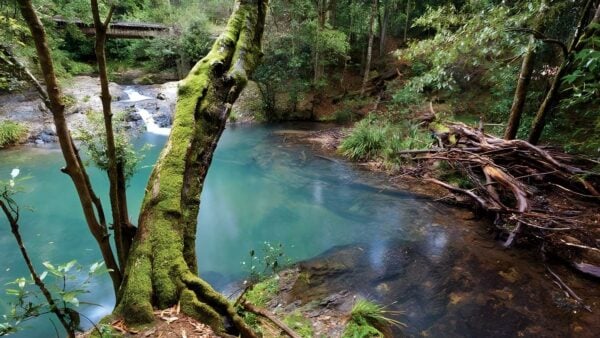

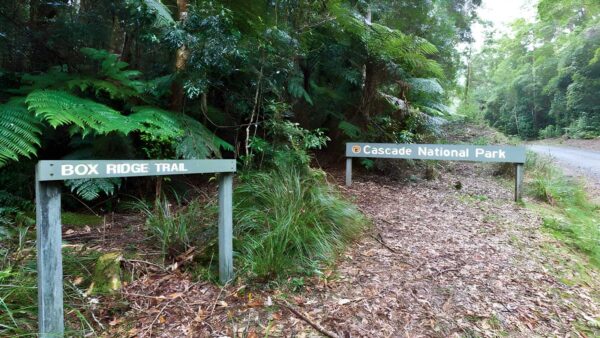
Rainforest and old tramways on the eastern Dorrigo Plateau
Overview
Cascade National Park sits about 10km north of Dorrigo on the eastern side of the Dorrigo Plateau, around an hour from Coffs Harbour. It covers roughly 3,620 hectares of steep, rolling country, with elevations ranging from about 500 to 850 metres. What gives the park its character is the mix of moist forest types, especially warm temperate and subtropical rainforest, threaded through a high-rainfall landscape of creeks and sheltered slopes.
The park is centred around the small village of Cascade and has a quieter feel than some of the better-known parks nearby. It is a place of dense green forest, rich birdlife and a landscape shaped both by geology and by an earlier timber-cutting era that still shows through in parts of the park.
Highlights
The scenery here is defined by rainforest on the Dorrigo Plateau’s eastern fall, where steep hills, narrow crests and deep creek lines create a layered, enclosed landscape rather than broad open country. In the western part of the park the forest is predominantly rainforest, while lower areas also include endangered Lowland Rainforest, adding to the sense of variety as the terrain changes with altitude.
Another distinctive part of Cascade is its position among a cluster of protected forests. It sits close to the Gondwana Rainforests World Heritage area to the south and links visually and ecologically with other forested reserves across this part of north-east New South Wales, which helps explain the park’s strongly intact, high-rainfall character.
Best Time to Visit
Because Cascade is a rainforest park on a high-rainfall plateau, it stays green and appealing through much of the year. Cooler months usually suit walkers best, when temperatures are milder and the forest feels especially fresh, while warmer months bring lush growth and the humid feel that goes with subtropical country.
Season matters less here than the mood of the forest itself. Mist, recent rain and shifting light through the canopy are a big part of what makes the place memorable, so Cascade tends to reward visits across different times of year rather than having one single standout season.
Plants and Animals
Cascade protects a notably rich slice of plateau forest. The rainforest is dominated in places by coachwood, crabapple and booyong, with smaller patches that include hoop pine and Antarctic beech. There are also areas of tall wet sclerophyll forest, including stands of brush box, tallowwood and Sydney blue gum, often with a rainforest understorey.
The wildlife reflects that damp, complex forest environment. Threatened species recorded from the park and the adjoining planning area include the wompoo fruit-dove, spotted-tailed quoll, red-legged pademelon, sphagnum frog, stuttering frog, giant barred frog and pouched frog. The area is considered particularly important for upland forest frogs, and its mix of rainforest and wet forest provides habitat for a wide range of birds, mammals and amphibians.
Culture and Heritage
Cascade National Park lies within the traditional lands of the Gumbaynggirr Aboriginal people, and the planning area is identified as part of the jagun of the Gambalamam clans of the Gumbaynggirr. The park’s cultural history sits alongside a more recent timber history that is still visible in the landscape.
Historic remains linked to the former Dorrigo branch railway and old timber tramways are an important part of the park’s heritage. These tramway sections are considered representative examples of the logging networks that once operated across the Dorrigo Plateau, and the broader group of tramways in this part of the region is regarded as having state heritage significance.
Find more places to explore…
Help expand the trail collection!
Know of an official trail not listed on Trail Hiking Australia? I’m focused on showcasing the best tracks managed by land managers, and I’d love your help! Sharing a trail adds to our community and helps others discover safe, new adventures.
Submit your trail here

