Sorry, no records were found. Please adjust your search criteria and try again.
Sorry, unable to load the Maps API.
Explore stunning hiking trails of Walgun Cape Byron State Conservation Area
Discover the diverse trails of Walgun Cape Byron State Conservation Area, New South Wales, offering hikes and walks for all skill levels and interests. Find your perfect adventure today.
Discover 2 hiking trails in Walgun Cape Byron State Conservation Area


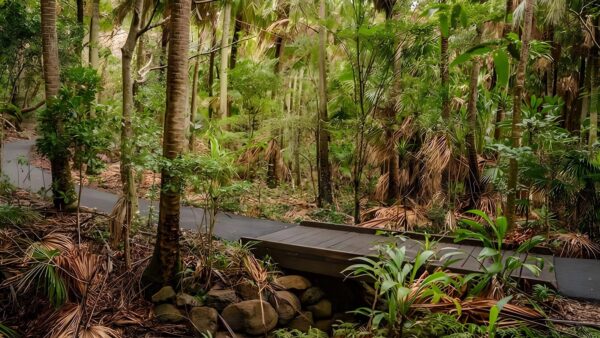

Where Rainforest, Headland and Ocean Meet at Walgun Cape Byron
Overview
Walgun Cape Byron State Conservation Area covers 98.5 hectares on the Cape Byron headland, about 2 kilometres east of Byron Bay on the far north coast of New South Wales. It includes the most easterly point of the Australian mainland, where rugged headlands, sheltered rainforest gullies and open coastal waters all press close together. Even though the reserve sits beside one of the state’s best-known beach towns, it still feels like a distinct natural pocket shaped by sea, wind and old rock.
This is a small reserve in area, but not in character. The landscape shifts quickly between cliff edges, beaches, dune systems and pockets of littoral rainforest, which gives the place a layered, almost compressed feel. That mix of landforms and vegetation is a big part of why the headland stands out from other coastal parks in New South Wales.
Highlights
The defining feature here is the headland itself. Walgun Cape Byron contains the easternmost point of mainland Australia, and the views are broad in every direction, taking in long runs of coastline, the ocean and the Byron hinterland. The setting has a strong sense of exposure, with rocky points and steep slopes balanced by quieter, sheltered gullies.
The geology adds another layer to the scenery. Cape Byron and Byron Bay form an outstanding example of a zeta-form bay, shaped by long-term coastal erosion and the northward movement of sand. The headland is built on some of the oldest rock formations in the region, while nearby dune systems record much more recent phases of coastal change. It is a place where the shape of the landscape is easy to read.
Best Time to Visit
Winter is one of the most rewarding times to be here because the headland is a nationally significant land-based whale watching site, with annual humpback whale migrations passing the cape. Cooler months also tend to suit longer walks and time spent lingering at lookouts without the heavier heat of summer.
At other times of year, the appeal is more about the contrast between the headland, rainforest pockets and open beaches. There is no bad season for the scenery itself, but clearer days make the coastal sweep and changing colours of the sea stand out best.
Plants and Animals
The reserve supports a mosaic of vegetation communities including littoral rainforest, sclerophyll forest, heathland and grassland. Littoral rainforest is the standout, covering almost half the reserve and supporting most of the known threatened species recorded here. In a park this size, that concentration of coastal rainforest is one of its most important natural values.
The area provides refuge for native plants and animals, with many species listed as threatened in New South Wales. Offshore and in adjacent waters, humpback whales, southern right whales, green turtles, loggerhead turtles and leatherback turtles have all been recorded. The close link between the headland and the sea is part of what makes the wildlife here feel so immediate.
Culture and Heritage
Walgun is the traditional name for Cape Byron, and the headland holds spiritual, cultural and historical importance for the Arakwal Aboriginal People of Byron Bay. The reserve contains significant sites, artefacts and landscapes that help maintain continuing cultural connections with Country.
Palm Valley is identified as the most culturally significant Aboriginal area within the reserve. The Pass midden is a particularly important site, described as an old and largely undisturbed foredune pipi midden that forms part of a much longer history of Aboriginal occupation along this stretch of coast. The headland also carries a strong built heritage presence through Cape Byron Lighthouse and its associated buildings, which have long been part of the identity of the place.
Find more places to explore…
Help expand the trail collection!
Know of an official trail not listed on Trail Hiking Australia? I’m focused on showcasing the best tracks managed by land managers, and I’d love your help! Sharing a trail adds to our community and helps others discover safe, new adventures.
Submit your trail here

