Sorry, no records were found. Please adjust your search criteria and try again.
Sorry, unable to load the Maps API.
Explore stunning hiking trails of Budawang National Park
Discover the diverse trails of Budawang National Park, New South Wales, offering hikes and walks for all skill levels and interests. Find your perfect adventure today.
Discover 1 hiking trail in Budawang National Park
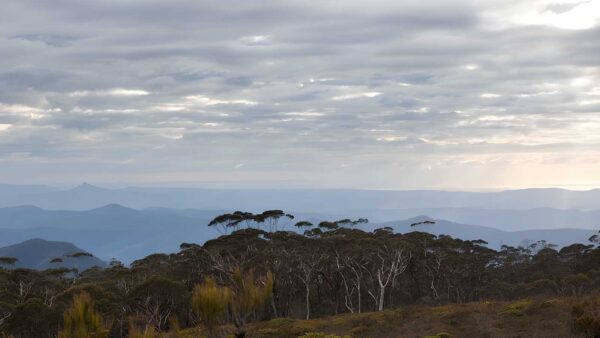

Stone mesas, deep gorges and the rough country of the Budawangs
Overview
Budawang National Park protects a striking section of the Southern Tablelands escarpment in south-eastern New South Wales. It is a relatively compact park at 23,732 hectares, but the country feels much bigger once you are in it, with steep ranges, entrenched valleys and long folds of high ground shaping nearly every view.
What sets this park apart is its geology. The Budawang country is part of a complex landscape of plateaus, scarps, deep gorges and high ranges, and the northern Budawang Range is noted for its mesa-like peaks, terraced slopes and sculptured rock faces. The park also contains part of the Budawang Synclinorium, a folded geological structure that helps explain why the scenery here looks so rugged and broken compared with many other sandstone parks in New South Wales.
Highlights
The strongest impression of Budawang National Park is the landform itself. Around the northern Budawang Range, erosion has carved the old plateau into a maze of mesas and gorges, while elsewhere the southern range rises as a narrow, prominent ridge with very steep slopes. It is bold country, with cliffs, shelves and folded rock giving the whole area a hard-edged, sculpted look.
There is also real scientific interest in the landscape. This broader park system protects the southern edge of the Sydney Basin, the Hawkesbury Sandstone and Permian plateau scarp, an important fossil site, and the only proven occurrence of upper Devonian limestone in New South Wales. Even if you are not thinking in geological terms, that mix shows up in the shape, colour and texture of the country.
Best Time to Visit
Cooler months are generally the most comfortable time to spend time in Budawang National Park, especially in exposed high country. Conditions vary a lot across the park because altitude, slope and aspect all matter here, with cooler conditions on the higher ranges and warmer conditions down in the gorge and valley floors. Rainfall is also influenced by the terrain, particularly along the ranges and eastern slopes, so the feel of the park changes with season and elevation more than the map might suggest.
Plants and Animals
Because the park spans varied geology, landforms and local climates, it supports a broad spread of vegetation. Forest and woodland sit alongside heathland, sedgeland and rainforest, with sheltered gullies and eastern slopes carrying some of the richest plant communities. On the eastern side of the park, rainforest becomes especially noticeable in the main gullies, while low altitude gullies can carry dry rainforest and higher slopes support cool temperate rainforest.
Some of the most distinctive plant life is tied closely to the Budawang landforms. The northern Budawang Range has a significant number of threatened species, and several plants are endemic to that area, including Pigeon House ash, Budawangia gnidioides, Grevillea renwickiana and Leptospermum grassifolium. In the southern Budawang Range, cool temperate rainforest is dominated by plumwood with a tree fern understorey, and at higher elevations pure stands of plumwood can be draped in moss.
Culture and Heritage
Budawang National Park holds significant Aboriginal sites and a strong record of Aboriginal cultural heritage. Official management material identifies paintings and drawings in rock shelters, occupation deposits, axe grinding grooves and a number of Aboriginal place names across the wider Morton and Budawang park system, including Buddawong, Cooyoo for the Castle, and Didthul for Pigeon House Mountain.
The name Budawang itself is recorded as a corruption of Buddawong, an Aboriginal word for macrozamia palm. Pigeon House Mountain, Didthul, is identified as a significant feature in Aboriginal mythology, and the surrounding plateau and country contain sites of high scientific and cultural significance connected with traditional religious purpose.
Find more places to explore…
Help expand the trail collection!
Know of an official trail not listed on Trail Hiking Australia? I’m focused on showcasing the best tracks managed by land managers, and I’d love your help! Sharing a trail adds to our community and helps others discover safe, new adventures.
Submit your trail here

