Sorry, no records were found. Please adjust your search criteria and try again.
Sorry, unable to load the Maps API.
Explore stunning hiking trails of Blue Tier State Forest
Discover the diverse trails of Blue Tier State Forest, Tasmania, offering hikes and walks for all skill levels and interests. Find your perfect adventure today.
Discover 1 hiking trail in Blue Tier State Forest
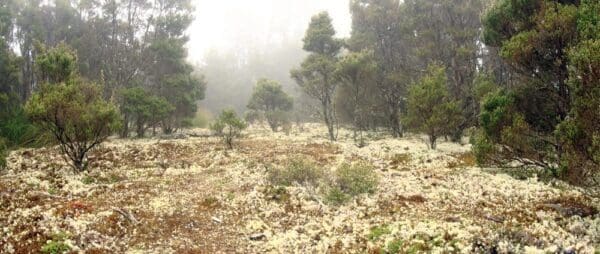

Granite summits and cool rainforest on Tasmania’s Blue Tier
Overview
Blue Tier State Forest sits in north-east Tasmania, inland from the coast between St Helens and Weldborough. This is a high, steep-sided plateau country, with much of the Blue Tier lying around 750 metres above sea level and higher ridges and peaks reaching close to 900 metres. Today the area is protected as Blue Tier Regional Reserve, covering about 5,305 hectares, and it combines mountain forest, rocky high points and the traces of an older mining landscape.
What gives Blue Tier its character is that mix of elevation and moisture. In one part of the reserve you are in cool, lush forest, and in another you are up among exposed boulders with long views across the north-east. On clear days the outlook stretches from inland farming and forested valleys around Pyengana and Weldborough across to the east coast, with views as far as Flinders Island and the Bay of Fires.
Highlights
The Blue Tier stands out for its contrast between dense mountain forest and open, rocky summit country. Around the higher ground, large granite boulders and subalpine landscapes give the reserve a rough, high-country feel that is quite different from the coast not far away. Mount Poimena is the highest point in the Blue Tier at 816 metres, and the top country is known for broad panoramas across the north-east and out to the sea.
Lower down, the scenery shifts into rainforest and wet forest, with mossy creeks, myrtle forest and sheltered gullies giving the reserve a cooler, darker feel. The forested valleys toward Weldborough and Pyengana add to that sense of layered country, with ridgelines, farmland and distant coast all visible from the higher points in fine weather.
Best Time to Visit
Blue Tier is worth visiting whenever you want cool mountain air and clear forest scenery, but the most rewarding conditions are usually settled, fine days when the long coastal and inland views open up from the higher ground. Because of the reserve’s elevation, it can feel much cooler than the coast nearby, and the summit country can be exposed. Snow does fall here at times, which gives the upper slopes a very different look in winter.
Plants and Animals
The reserve protects a mix of mountain forests, including rainforest, myrtle forest and wet eucalypt forest. In some parts you pass through mature rainforest, while other areas carry regenerating rainforest and wet forest shaped by the district’s long history of use. Myrtle, mountain pepper and ferny creek lines are all part of the feel of the place, and sphagnum bogs also occur in the wetter ground.
Blue Tier is also associated with specialised forest fauna of north-east Tasmania. Simsons stag beetle is centred on the Blue Tier area and lives in mature wet eucalypt forest, damp forest, rainforest and mixed forest, where deep leaf litter on the forest floor is important to its survival.
Culture and Heritage
Blue Tier has a strong mining heritage, and that history still shapes how the place reads on the ground. The mountains were part of a tin mining district, and remnants of that period are scattered through the reserve. Old mine sites, pack tracks, water races and related workings still survive in places, including infrastructure linked with water supply for the former Moorina Power Station and features dating to the early 1900s.
Find more places to explore…
Help expand the trail collection!
Know of an official trail not listed on Trail Hiking Australia? I’m focused on showcasing the best tracks managed by land managers, and I’d love your help! Sharing a trail adds to our community and helps others discover safe, new adventures.
Submit your trail here

