Sorry, no records were found. Please adjust your search criteria and try again.
Sorry, unable to load the Maps API.
Explore stunning hiking trails of Belmont Wetlands State Park
Discover the diverse trails of Belmont Wetlands State Park, New South Wales, offering hikes and walks for all skill levels and interests. Find your perfect adventure today.
Discover 1 hiking trail in Belmont Wetlands State Park
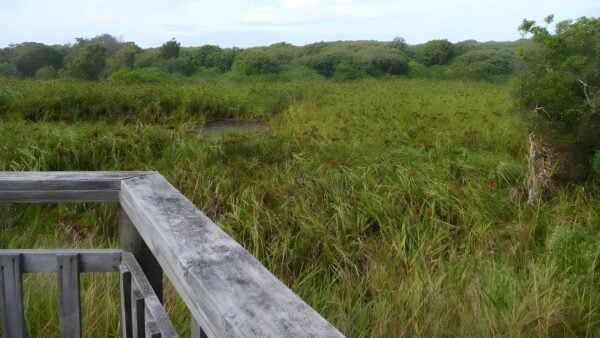

Coastal Wetlands, Dunes and Beach at Belmont
Overview
Belmont Wetlands State Park spreads across a broad stretch of coast between Belmont and Redhead in Lake Macquarie. It brings together natural bushland, extensive sand dunes, coastal wetlands and a long run of beach, all within one reserve. The park covers about 549 hectares, with around 190 hectares of wetlands and about 4.5 kilometres of frontage along Nine Mile Beach, so it feels much larger and wilder than its suburban edges suggest.
What stands out here is the mix of landscapes packed into a relatively compact area. Low-lying wetland country sits behind the dunes, while the eastern side opens onto beach and foredune. That contrast gives the park a strong coastal character, but it is also a place shaped by rehabilitation, with large areas recovering from earlier sand mining and natural regeneration steadily restoring habitat.
Highlights
The park’s main natural draw is its varied coastal scenery. Wetlands, hind dunes, foredunes and the long sandy edge of Nine Mile Beach sit side by side, creating a landscape that changes noticeably as you move through it. The wetlands form a patchwork of open water, rushes, wet heath and swamp forest, while the dune system adds a more open, wind-shaped feel closer to the coast.
There is also a sense of scale here that makes the setting memorable. Around one third of the park is made up of wetlands, and the beach frontage runs for several kilometres, giving the whole reserve a broad, open feel. Even where past mining has altered the dunes, the combination of beach, sand country and wetland flats still gives Belmont Wetlands a distinctive coastal form.
Best Time to Visit
Belmont Wetlands State Park can be rewarding at any time of year, but the milder months are usually the most comfortable for walking and for taking in the contrast between beach, dunes and wetland country. Spring is especially appealing when plant growth is active and birdlife is often easier to notice around the wetland edges.
After rain, the wetlands tend to feel at their fullest and most characteristic, while calmer, cooler days make the more exposed sandy sections more pleasant. Summer can still be a good time to appreciate the coastal setting, though the open dunes and beach can feel harsher in the middle of the day.
Plants and Animals
This is one of the park’s strongest qualities. The wetlands and surrounding bush support a rich mix of native vegetation, with about 400 native plant species recorded across the area. The dominant vegetation communities include Coastal Sand Scrub, Swamp Mahogany and Paperbark Forest, and Coastal Sand Apple and Blackbutt Forest, reflecting the shift from damp wetland ground to drier sandy country.
Several parts of the park are recognised for their high ecological value, particularly around the protected coastal wetlands. Vegetation ranges from open water and rushland to wet heath and closed swamp forest, and official mapping has identified the potential presence of four endangered ecological communities, including coastal saltmarsh. Birdlife is an important part of the park’s character too, especially around the wetlands, where waterbirds are a regular feature of the landscape.
Culture and Heritage
The area now known as Belmont Wetlands State Park has strong cultural significance for the Awabakal people. Belmont Lagoon is noted as a place of special importance and is connected with an Awabakal creation story about the lagoon’s formation. The broader park landscape also reflects a long history of Aboriginal use, with wetland and dune environments traditionally providing food, materials and gathering places.
The park also carries visible reminders of more recent history. Much of the dune country was altered by sand mining from the mid-1970s until the land passed into public ownership, and that legacy still shapes parts of the landscape today. In many ways, the park’s current character comes from the meeting of coastal ecology, cultural significance and long-term restoration.
Find more places to explore…
Help expand the trail collection!
Know of an official trail not listed on Trail Hiking Australia? I’m focused on showcasing the best tracks managed by land managers, and I’d love your help! Sharing a trail adds to our community and helps others discover safe, new adventures.
Submit your trail here

