Hike at a Glance
Max elevation: 408m
Min elevation: 361m
Total Ascent: 98m
Hike overview
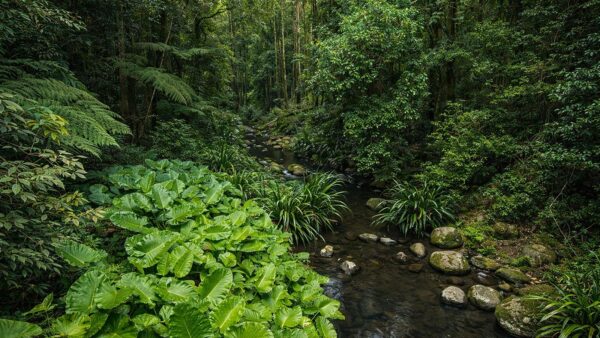
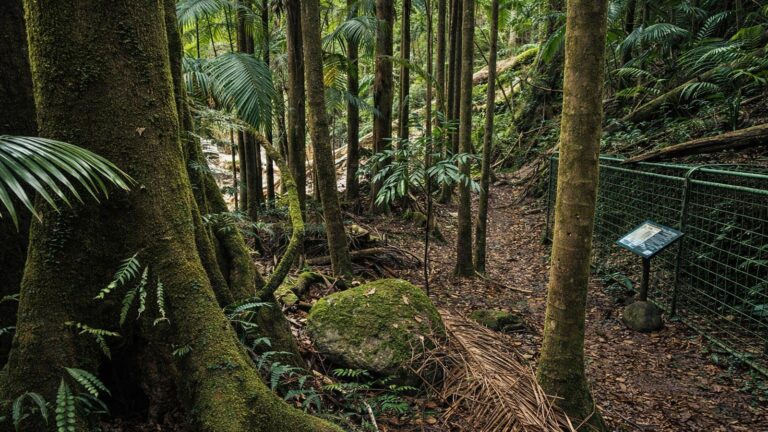
The Palm Forest walking track in Border Ranges National Park is a short, rewarding walk that offers a genuine taste of subtropical rainforest without demanding much time or effort. Beginning near the Sheepstation Creek campground, this 1.8 kilometre, Grade 3 return walk typically takes around 1 hour to complete. It is an easy option for families, casual walkers or anyone looking to stretch their legs while soaking up the atmosphere of this remarkable landscape in northern New South Wales.
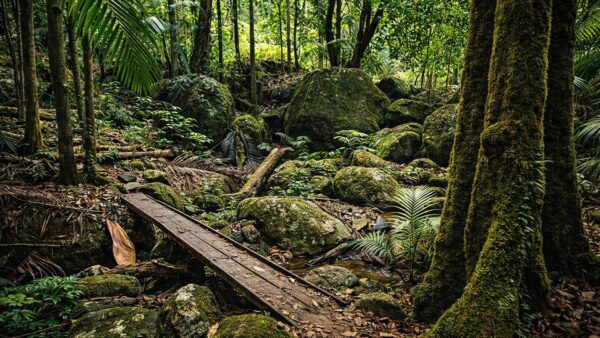
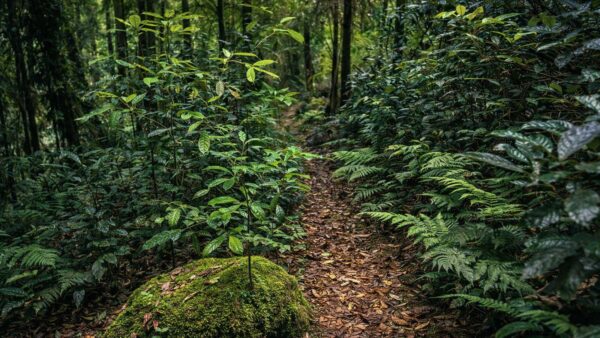
The track follows an old logging route, a quiet reminder of the area’s timber history, and gradually leads you beneath a dense canopy of bangalow and piccabeen palms. The air feels cooler here, filtered through layers of green. As you move deeper into the forest, towering brush box trees rise above you, some believed to be hundreds of years old. Their sheer size gives a sense of perspective, and it is hard not to slow your pace as the forest closes in around you.
Keep an eye and ear out for birdlife. The rainforest is alive with sound, from the clear, ringing calls of bell miners to the soft wingbeats of fruit doves moving through the canopy. If you are lucky, you may spot the vividly coloured wompoo fruit dove perched quietly among the foliage. The presence of booyongs and strangler figs along the way adds to the layered complexity of the forest, with buttressed trunks and looping vines telling their own quiet stories of competition and survival.
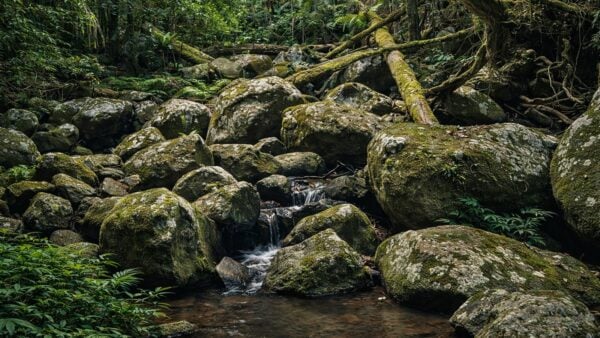
As you approach Brushbox Falls lookout, the sound of running water grows louder, a gentle tinkling that guides you towards the creek. The lookout provides a peaceful view of the falls, especially after rain when the water flows more freely. Nearby, on a sandstone rockface north of the creek, you can find historic carvings left by cedar getters, their moss covered names etched into stone and still visible more than a century later. It is a small but powerful reminder of the human history woven through this landscape.
If conditions allow and water levels are suitable, the clear pool below the falls can offer a refreshing swim. Even if you choose to stay dry, it is a place worth lingering. The combination of cool water, filtered light and layered forest creates a calm that feels far removed from the outside world. For such a short walk, Palm Forest delivers a rich and immersive rainforest experience that suits both a quick stop and a relaxed morning in the park.
Track grade
Grade 3 (Moderate) - Walks for Most Fitness Levels: Grade 3 on the AWTGS represents moderate walking tracks. These are ideal for walkers with some fitness who are comfortable with some hills and uneven terrain. While suitable for most ages, some bushwalking experience is recommended to ensure a safe and enjoyable experience. Tracks may have short, steep hill sections, a rough surface, and many steps. The total distance of a Grade 3 walk can be up to 20 kilometers.
Practical information
- Before swimming, rinse off sunscreen, insect repellent and other topical products well away from the creek. Even small amounts of these chemicals can disrupt fragile freshwater systems and harm frogs and other aquatic life.
- Bring a pair of binoculars if you enjoy birdwatching. The rainforest canopy is busy with movement and colour, and good optics make it far easier to spot fruit doves, parrots and smaller forest species high above the track.
Walk map and GPX file
Max elevation: 408 m
Min elevation: 361 m
Total climbing: 98 m
Total descent: -98 m
GPX files, maps and content are copyright Trail Hiking Australia. Not to be copied, redistributed or uploaded to other platforms including AllTrails.
Explore safely
Planning this hike? Most incidents develop before you even start. Safe outcomes depend on how navigation, hydration, environment, load and judgement work together. Small oversights can compound quickly in Australian conditions. See how it happens in the Hiking Safety Systems Foundations. Then use the Hiking Safety Systems, planning calculators, and make sure a trusted contact has your trip plan before heading out.
Leave a trip plan
Before you go, complete a trip intentions form and share it with a trusted contact. Agree on a Late-Back Time and ask them to call 000 (Police) if you have not checked in. A clear trip plan is one of the simplest and most effective safety steps you can take.
Planning checklists
Download the hiking preparation and safety checklists before leaving home to help you think through your plans. They help ensure important considerations are not overlooked and support safer decision-making on the trail.
Getting there
Getting to the trailhead: Border Ranges National Park.
Palm Forest walking track is located in the Sheepstation Creek precinct of Border Ranges National Park in northern New South Wales. If you are travelling from Lismore, head north west towards Kyogle and follow the signs for approximately 40 kilometres. From Kyogle, continue north for about 30 kilometres along the Kyogle to Murwillumbah Road until you reach Barkers Vale. From there, turn onto Tweed Range Scenic Drive and enter the eastern precinct of the park, then follow the signs to Sheepstation Creek campground.
Road conditions can vary, particularly after rain. The final sections are unsealed and may become slippery or boggy in wet weather, so it is worth checking conditions before you leave and allowing extra time if needed. Parking is available at Sheepstation Creek campground, where the walk begins nearby.
Need a rental car to get you to the hike? Find one here.
Accommodation nearby
Find accommodation close to the trailhead including hotels, cabins, and campgrounds. Use the interactive map to explore available options in nearby towns.
Nearby towns: Bonalbo, Kyogle, Lismore, Mount Warning, Murwillumbah, Nimbin, Rathdowney, Richmond Range, Stokers Siding, Tumbulgum, Uki, Woodenbong
About the region
Border Ranges National Park is part of the Gondwana Rainforests of Australia World Heritage Area, protecting an expanse of ancient subtropical rainforest near Murwillumbah in northern New South Wales. This is a landscape shaped by deep time, where remnants of the supercontinent Gondwana survive in the form of towering trees, rare plant species and diverse wildlife. Walking here feels like stepping into an older world, one that has remained largely untouched compared to much of Australia’s cleared and modified country.
The park offers a range of ways to explore, whether you prefer short rainforest walks, longer hikes, cycling routes or scenic drives. Tweed Range Scenic Drive, part of the broader Rainforest Way, winds through the park and links many of its highlights. It is an easy way to experience changing forest types, open lookouts and quiet picnic areas, with plenty of opportunities to stop and take a closer look. Short tracks such as the Palm Forest walk provide a gentle introduction to the dense subtropical rainforest, while longer options like the Booyong walk from Sheepstation Creek campground allow you to spend more time under the canopy.
Lookouts scattered throughout the park reveal the dramatic crater escarpment that defines this region. On clear days you can see across rolling forested ridges to Wollumbin Mount Warning and, in the distance, towards the coast. After rain, waterfalls swell and mist drifts through the valleys, adding another layer of atmosphere. Photographers are often drawn to the interplay of light and shadow in the rainforest, where massive buttressed trees, lush ferns and tangled vines create rich textures at every turn.
Border Ranges is easily reached from Kyogle and Lismore, making it suitable for a long day trip. If you prefer to take your time, several campgrounds within the park offer a simple but memorable way to stay overnight. Falling asleep to the sound of the forest and waking to birdsong adds another dimension to the experience, and allows you to enjoy the early morning light before most visitors arrive.
Similar walks nearby
Looking for more walks in or near Border Ranges National Park? Try these trails with a similar difficulty grade.
Gallery
Got any photos from this hike? Your photos can help others plan. Share shots from along the trail so fellow hikers know what to expect.
Click to add your photos >>
Suggest an edit
Notice something different about this trail? Whether it’s a new feature, a route change, or a closure, share your update so we can keep our info accurate and helpful for fellow hikers.
Click to suggest edits >>
Acknowledgement of Country
Trail Hiking Australia acknowledges the Traditional Owners of the lands on which we hike and pay respects to their Elders, past and present, and we acknowledge the First Nations people of other communities who may be here today.