Hike at a Glance
Max elevation: 1775m
Min elevation: 1590m
Total Ascent: 261m
Hike overview
The Mount Buller Summit Nature Walk is a 6 kilometre, grade 3 loop in Alpine National Park, Victoria, and usually takes around two hours to complete. It is a great way to explore the upper slopes of Mount Buller, combining easy walking with short steeper sections, changing alpine vegetation, and a strong sense of place shaped by both nature and the ski village.
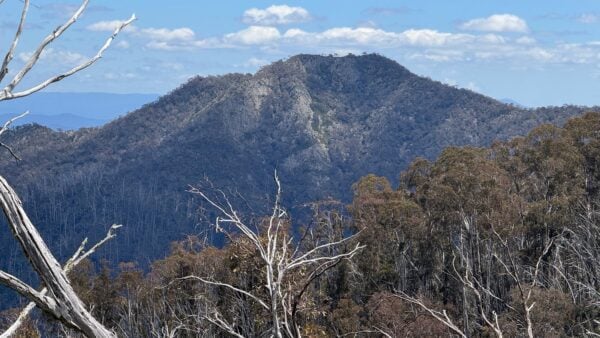
Starting at the Clock Tower, the walk follows Athlete’s Walk uphill past the ABOM Hotel before continuing along Summit Road. A stop at the Arlberg is a popular option, especially if you feel like grabbing a coffee before leaving the village behind. From here, the route heads out across the ski area, tracking north north west beneath a small shelter and toward Spurs near the top of the Northside Express chairlift. The trail then climbs steadily, with the summit clearly visible ahead, giving you a good sense of where you are headed.
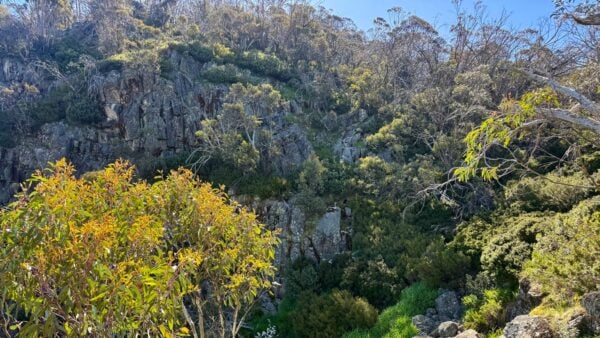
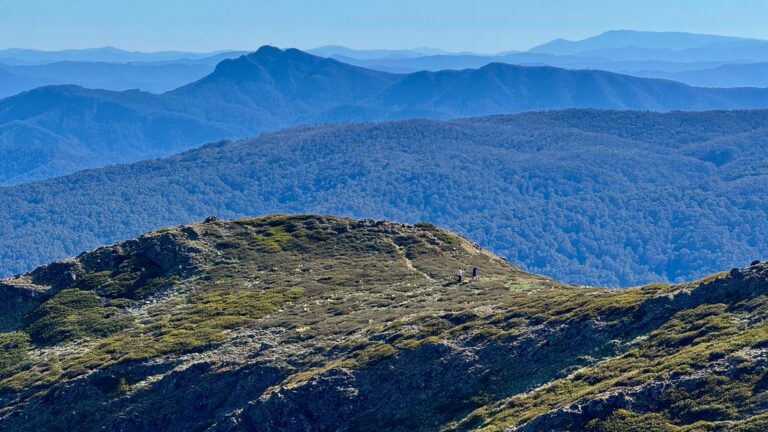
As the track winds higher, it passes through low alpine heath before reaching a quiet glade of snow gums. A marker here points out surrounding peaks and helps put the landscape into context. The walk then skirts beneath the Boggy Creek Reservoir, a 100 megalitre water storage built for the resort in 2019 and 2020, before continuing up toward the Summit Car Park. From this point, a short but steep side trip leads directly to the summit itself. The rocky path is narrow with steep drops on either side, so it is worth taking your time, but the views from the top are well worth the effort.
If the summit climb feels like enough for the day, there is an alternative option to return to the village via the unsealed road, passing Tirol and heading back toward the Arlberg. Otherwise, the main loop continues past Pendergast Hut and Koflers, then beneath the Koflers T bar line and the Ski Patrol memorial. The path threads under several lift lines including Wombat, Federation, Southside and Bull Run, offering a different perspective on the mountain outside the winter season.
Further along, the track passes below the Sun Valley snowmaking dam, with wide views across to the Bluff. Recently landscaped steps make this section much easier to manage. This area is also important habitat for the mountain pygmy possum, a tiny alpine marsupial that shelters among the boulder fields nearby. As the walk continues, glimpses of the village and lodges appear ahead before the trail emerges at the Skyline ski run near the top of the Bourke Street Express, bringing you back to the Arlberg.
From here, it is a familiar stroll back along Summit Road and Athlete’s Walk to the Clock Tower. The loop offers a relaxed but rewarding way to experience Mount Buller beyond the village streets, with enough variety to keep it interesting and plenty of moments to stop, look around, and appreciate the alpine setting.
Track grade
Grade 3 (Moderate) - Walks for Most Fitness Levels: Grade 3 on the AWTGS represents moderate walking tracks. These are ideal for walkers with some fitness who are comfortable with some hills and uneven terrain. While suitable for most ages, some bushwalking experience is recommended to ensure a safe and enjoyable experience. Tracks may have short, steep hill sections, a rough surface, and many steps. The total distance of a Grade 3 walk can be up to 20 kilometers.
Walk map and GPX file
Max elevation: 1775 m
Min elevation: 1590 m
Total climbing: 261 m
Total descent: -261 m
GPX files, maps and content are copyright Trail Hiking Australia. Not to be copied, redistributed or uploaded to other platforms including AllTrails.
Explore safely
Planning this hike? Most incidents develop before you even start. Safe outcomes depend on how navigation, hydration, environment, load and judgement work together. Small oversights can compound quickly in Australian conditions. See how it happens in the Hiking Safety Systems Foundations. Then use the Hiking Safety Systems, planning calculators, and make sure a trusted contact has your trip plan before heading out.
Leave a trip plan
Before you go, complete a trip intentions form and share it with a trusted contact. Agree on a Late-Back Time and ask them to call 000 (Police) if you have not checked in. A clear trip plan is one of the simplest and most effective safety steps you can take.
Planning checklists
Download the hiking preparation and safety checklists before leaving home to help you think through your plans. They help ensure important considerations are not overlooked and support safer decision-making on the trail.
Getting there
Getting to the trailhead: Mount Buller Alpine Resort.
The walk begins at the Clock Tower in the Mount Buller Village, which is easily reached by car from Mansfield via Mount Buller Road. The drive climbs steadily into the alpine area, with sealed roads all the way to the village, though winter snow conditions can require a 4WD or snow chains when declared. Parking is available in and around the village, and once on foot, the Clock Tower is a clear and well known landmark. From here, simply follow Athlete’s Walk uphill past the ABOM Hotel to begin the Mount Buller Summit Nature Walk.
Need a rental car to get you to the hike? Find one here.
Accommodation nearby
Find accommodation close to the trailhead including hotels, cabins, and campgrounds. Use the interactive map to explore available options in nearby towns.
Nearby towns: Barwite, Bonnie Doon, Goughs Bay, Jamieson, Kevington, Macs Cove, Maindample, Mansfield, Merrijig, Merton, Mount Buller, Mount Buller Alpine Resort, Mount Buller Alpine Village, Sawmill Settlement, Tolmie
About the region
The Alpine National Park stretches across 646,000 hectares of rugged beauty in Victoria’s high country, northeast of Melbourne. It’s the largest national park in the state, encompassing much of the Great Dividing Range, including Victoria’s highest peak, Mount Bogong, which rises to 1,986 metres. The park’s northeastern edge meets the border of New South Wales, connecting with Kosciuszko National Park to form a vast and continuous alpine environment. These high plains, snow gum woodlands, and river valleys hold a rich mix of natural wonder, history, and cultural significance.
This is a place that rewards time and curiosity. Whether you’re hiking across windswept ridgelines, cycling along twisting mountain trails, or following old stock routes once used by cattlemen, the Alpine National Park offers experiences that feel deeply tied to the landscape. During the warmer months, the grassy plains burst with wildflowers and the cool air carries the scent of snow gums. In winter, the region transforms again, drawing backcountry skiers and snowshoers into a quieter, snow-covered world.
There are many ways to explore this country. The Falls to Hotham Alpine Crossing takes in some of the region’s most dramatic scenery, threading through river valleys and over exposed alpine ridges. For something equally rewarding, the Razorback Trail leads to Mount Feathertop, Victoria’s second-highest peak. The narrow ridge that leads there offers striking views across the high country and a sense of immersion in the landscape that’s hard to forget. Mount Bogong, the highest of them all, is a tough climb but a deeply rewarding one for experienced walkers.
Beyond the trails, the park also tells stories of the people who’ve called this place home for thousands of years. The Alpine National Park lies within the traditional lands of the Taungurung and Gunaikurnai Peoples. Their deep cultural connection to Country continues today, woven into the fabric of the landscape. Scattered throughout the high plains, you’ll also find huts once used by mountain cattlemen, many of which now offer shelter for hikers and skiers.
For those seeking more than hiking, the park has plenty to offer. Remote four-wheel drive tracks crisscross the region, with the Wonnangatta Valley offering one of the most iconic routes through steep, forested country. The Mitta Mitta River provides thrilling white-water rafting, while cross-country and downhill skiing draw visitors in the colder months. No matter how you travel through the park, there’s a sense of rawness and scale that makes each visit memorable.
The Alpine National Park isn’t a place to rush through. It’s a landscape shaped by time, weather, and tradition. Take the time to pause, breathe the cool mountain air, and absorb the silence. Whether you’re following a well-worn trail or forging your own path, this high country offers something both grounding and expansive.
Similar walks nearby
Looking for more walks in or near Mount Buller Alpine Resort? Try these trails with a similar difficulty grade.
Gallery
Got any photos from this hike? Your photos can help others plan. Share shots from along the trail so fellow hikers know what to expect.
Click to add your photos >>
Suggest an edit
Notice something different about this trail? Whether it’s a new feature, a route change, or a closure, share your update so we can keep our info accurate and helpful for fellow hikers.
Click to suggest edits >>
Acknowledgement of Country
Trail Hiking Australia acknowledges the Traditional Owners of the lands on which we hike and pay respects to their Elders, past and present, and we acknowledge the First Nations people of other communities who may be here today.





1 Review on “Mount Buller Summit Nature Walk (6km)”
I did the Mount Buller Summit Nature Walk recently and it’s a really enjoyable, easy walk with big rewards. The track is straightforward, with a gentle climb through snow gums and rocky sections, and the views from the top stretch out in every direction. It’s a brilliant spot for both sunrise and sunset, especially on a clear day when the light rolls across the Alps. The weather can change quickly on Mount Buller, so it’s worth taking a warm layer even if it feels fine when you start. Short, scenic and well worth the time if you’re up on the mountain.