Hiking safety is not about carrying more gear or memorising rules. Built on search and rescue patterns and decades of field experience, it is about understanding the systems that keep you oriented, protected, fuelled, mobile and able to respond when conditions change.
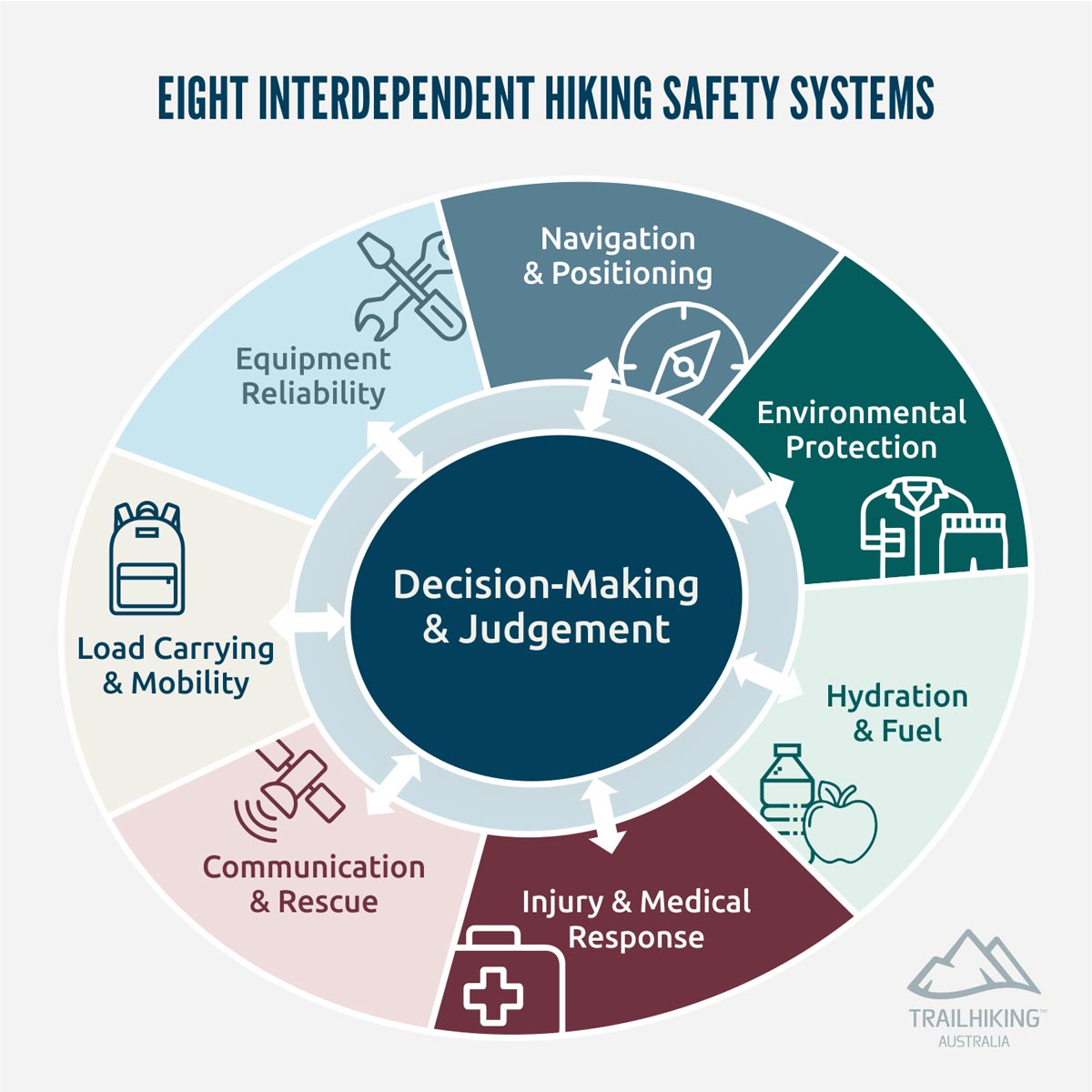
The Hiking Safety Systems Framework explains bushwalking safety as the interaction of eight interdependent systems. Rather than focusing on isolated mistakes or individual equipment items, it helps hikers understand how pressure develops when one system weakens and begins to affect others.
Most hiking incidents do not begin with dramatic terrain or extreme events. They develop gradually. A navigation delay becomes a time problem. Time pressure increases fatigue. Fatigue narrows judgement. Exposure becomes harder to manage. Small issues compound quickly, even on familiar tracks.
This page outlines the eight systems and how they function together in Australian conditions.
Why a Systems Approach Matters
Many hikers think about safety in terms of individual items. A map. A jacket. A first aid kit. A phone.
In reality, safety depends on how well a set of interconnected systems are functioning at any given time.
Technology supports systems. It does not replace them. A GPS does not replace navigation skill. A Personal Locator Beacon does not replace preparation or judgement. Extra water does not compensate for a poor turnaround decision.
A systems approach explains why capable, well-equipped hikers still encounter preventable problems. It also explains why short walks can become serious when multiple systems degrade simultaneously.
Preparation changes depending on terrain, weather, group size and remoteness. The systems lens helps identify which elements are likely to be under strain before pressure accumulates.
Eight Interdependent Functional Systems
1. Navigation & Positioning System
What this system does: Allows you to know where you are, where you are going, and how to recover if you lose your way. It includes route planning, map and compass use, terrain interpretation, and the ability to relocate when plans change.
When it degrades: Hikers become lost, benighted, or pushed into hazardous terrain. Navigation errors often trigger a cascade of other problems, including fatigue, exposure, and delayed return times.
2. Environmental Protection System
What this system does: Manages exposure to sun, wind, rain, cold, and heat. It includes clothing, shelter, sun protection, and the ability to interpret weather conditions before and during a hike.
When it degrades: Hypothermia, heat illness, dehydration, and impaired decision-making. In Australian conditions, environmental exposure is a year-round risk, not a seasonal one.
3. Hydration & Fuel System
What this system does: Maintains energy levels, cognitive function, and temperature regulation. It includes water carrying, water treatment, electrolytes, food planning, and pacing.
When it degrades: Fatigue, poor concentration, heat stress, and reduced ability to make sound decisions. Calories are not just fuel for movement. They are also the fuel your body uses to generate internal heat, directly linking this system to environmental protection.
4. Injury & Medical Response System
What this system does: Prevents minor issues from becoming trip-ending or life-threatening. It includes first aid knowledge, injury prevention, basic medical supplies, and the ability to manage bleeding, shock, and pain.
When it degrades: A manageable injury becomes immobilising. Inability to continue walking often exposes weaknesses in other systems, particularly shelter, warmth, and communication.
5. Communication & Rescue System
What this system does: Allows you to summon help when self-reliance is no longer sufficient. It includes trip intentions, mobile phones and power management, Personal Locator Beacons, whistles, and signalling methods.
When it degrades: Rescue is delayed or does not occur. In remote or complex terrain, the ability to communicate clearly and early can be as important as the decision to call for help.
6. Load Carrying & Mobility System
What this system does: Supports efficient and safe movement across terrain. It includes footwear, packs, load distribution, walking technique, and aids such as trekking poles.
When it fails: Fatigue increases, balance deteriorates, and injury risk rises. Blisters, joint strain, and falls are common early indicators of stress in this system. Beyond immediate movement, this system plays a critical role in preserving joints, balance, and endurance over years of hiking.
7. Equipment Reliability System
What this system does: Keeps critical gear functioning over time. It includes maintenance, storage, field repairs, and an understanding of how materials fail in Australian conditions.
When it degrades: Breakdowns often appear without warning. Delaminated coatings, broken buckles, snapped poles, or worn footwear can turn a routine hike into a complex problem when combined with weather, fatigue, or injury.
8. Decision-Making & Judgement System
What this system does: Determines when to continue, adapt, or turn back. It is influenced by experience, group dynamics, fatigue, weather interpretation, and risk tolerance.
When it degrades: Poor decisions are rarely caused by ignorance. More often they result from psychological pressure, including summit fever or “get-home-itis”, where commitment to a goal or schedule overrides changing conditions, warning signs, or declining energy. This system overlays every other system and determines how effectively problems are managed when they arise.
How Systems Fail Together
Most hiking incidents involve multiple system degradations rather than a single dramatic mistake.
A disruption in one system rarely stays isolated.
A navigation delay creates time pressure. Time pressure increases physical and cognitive load, leading to fatigue. As fatigue builds, decision-making degrades. Poor decisions increase exposure and reduce the ability to manage hydration and environmental conditions.
Each step transfers pressure to the next system.
By the time the situation feels serious, multiple systems are already under strain.
Understanding this interaction allows you to recognise pressure early and intervene before the cascade escalates.
Explore Cascade Failure in Action
The simulator below lets you work through these patterns directly. Select a preset scenario or click any of the eight systems to introduce strain. Watch how pressure transfers, which systems absorb it, and how quickly a single weakness can affect the whole picture.
HSSF Cascade Failure Simulator
Click a system to introduce strain and watch how failure transfers. Use the scenarios to explore real cascade patterns.
How to Use this Framework
The Framework is designed to guide thinking before, during and after a hike.
Before departure: Identify which systems are most likely to be under strain based on terrain, weather, distance and group composition. Pack and plan deliberately to support those systems.
On the trail: Use the systems as an early-warning scan. When one begins to weaken, assume pressure will transfer. Intervene early.
After the hike: Debrief using the systems. Identify which element degraded first and what pressure it created. Adjust future planning accordingly.
A Practical Systems Check
Use these prompts to assess your systems before your next walk.
Navigation & Positioning
If the track becomes unclear, what is my relocation plan, and what is my turn-back point?
Environmental Protection
If I had to stop moving for two hours, could I stay warm, dry, shaded, and safe from wind?
Hydration & Fuel
Do I have enough water and food if this takes longer than planned, and do I know the next reliable water option?
Injury & Medical Response
What is my most likely injury today, and what is my plan if someone cannot walk out?
Communication & Rescue
Who has my trip intentions, what is my late-back time, and what is my escalation plan if I do not return?
Load Carrying & Mobility
Is my pack weight realistic for this terrain, and are my footwear and foot-care plans sound?
Equipment Reliability
What are the few items that must work today, and do I have a simple field repair option?
Decision-Making & Judgement
What would make me change the plan early, and what conditions would make me turn back?
These prompts are intentionally simple. The value comes from answering honestly and adjusting the plan before systems are stressed.
To put the Hiking Safety Systems Framework into practice and see how each system might respond to your planned hike, try the Hiking Safety System Assessment Tool. This interactive tool translates your route, conditions, and readiness into a clear view of where pressure may build, how it can transfer across systems, and where to intervene before issues escalate.
See the framework in action
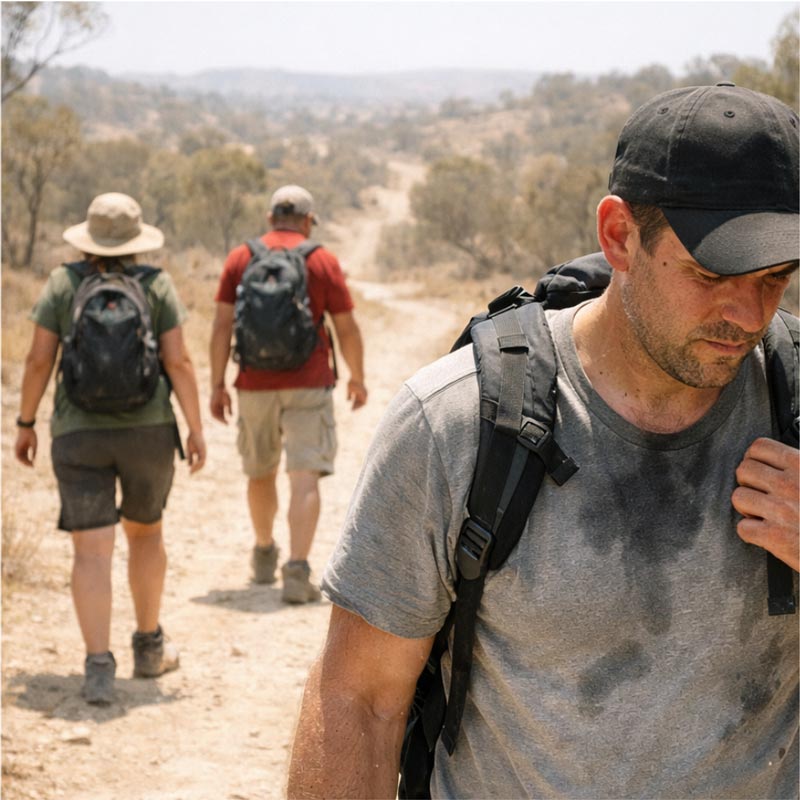
Understanding how the systems interact is one thing. Experiencing the pressure is another.
The Hiking Safety Scenarios place you in realistic Australian conditions and ask you to make decisions as situations evolve.
Learn the framework from the ground up
The scenarios show the framework under pressure. Foundations training explains how it works.
HSSF Foundations is a free, structured introduction to how incidents develop and how to recognise system strain before it becomes critical.
Apply the framework under pressure
Understanding the framework is the foundation. Applying it in real conditions is the next step.
The HSSF Readiness Assessment assesses how you manage interacting systems, recognise developing pressure, and make decisions before situations escalate.

The Small Things Are Where Incidents Begin
Most problems don’t start where you think they do.
They begin with small changes that are easy to ignore. These guides shows you what to look for early, before those small things compound. Explore the field guide and two-volume series.
Explore the field guide →
Explore the Hiking Australia volumes →
Download The Hiking Safety Systems Framework
Download The Hiking Safety Systems Framework (Version 1.0) → (login required) Download HSSF Executive Overview → (login required)