Sorry, no records were found. Please adjust your search criteria and try again.
Sorry, unable to load the Maps API.
Explore stunning hiking trails of Yarra Ranges
Discover the diverse trails of Yarra Ranges, Victoria, offering hikes and walks for all skill levels and interests. Find your perfect adventure today.
Discover 1 hiking trail in Yarra Ranges
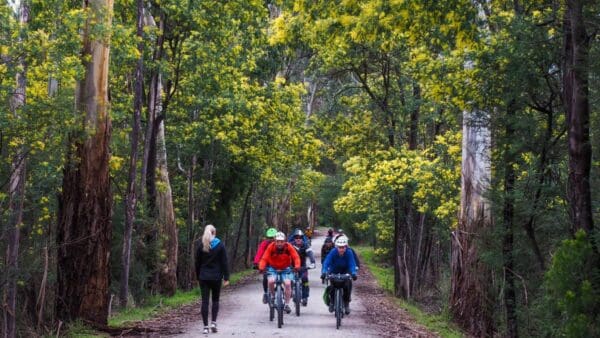

Among Mountain Ash and Misty Rainforest
Overview
Yarra Ranges National Park protects a big sweep of mountain country in Victoria’s Central Highlands, roughly 60 kilometres north-east of Melbourne. It stretches around Healesville, Marysville and Warburton, with forested ridgelines, sheltered gullies and high plateaus shaping the character of the area. Just as important as the scenery, these ranges form a major protected catchment, with clear headwaters and densely forested slopes feeding waterways and reservoirs that supply a large share of Melbourne’s drinking water.
This is tall forest country. Mountain Ash rises above wet fern gullies and cool temperate rainforest, while higher ground around Lake Mountain shifts into sub-alpine vegetation. The result is a park with a strong sense of elevation and moisture, where the landscape changes noticeably from towering eucalypt forest to mossy gullies and then to more open high-country terrain.
Highlights
The park’s standout feature is its tall forest scenery. Along the Black Spur and through the mountain slopes beyond, the sheer height of the Mountain Ash forest gives the whole area its scale and presence. In the darker gullies, rainforest takes over, with Myrtle Beech, tree ferns and clear streams creating a cooler, more enclosed feel.
Higher up, Mount Donna Buang and the Lake Mountain area bring a different side of the Yarra Ranges, with broad elevated country and far-reaching views. This mix of steep forested ranges, deeply cut creek lines and high plateaus is what makes the region feel so distinctive compared with many other parks close to Melbourne.
Best Time to Visit
Spring through autumn is when the forests are at their most inviting for walking, with mild conditions, full creeks and lush undergrowth after wetter periods. Rainforest sections and fern gullies tend to be especially appealing in these cooler months, when the damp forest character really comes through.
Winter brings a different atmosphere to the higher parts of the park. Mount Donna Buang commonly sees snow from June to August, and Lake Mountain is known for its sub-alpine setting, so the colder months suit anyone who wants to experience the Yarra Ranges in its crispest, most seasonal form.
Plants and Animals
The vegetation here ranges from wet sclerophyll forest dominated by Mountain Ash to ancient Myrtle Beech rainforest and, at higher elevations, wet sub-alpine heathland and woodland. Around Lake Mountain, poorly drained bogs and swamps support a specialised plant community with species such as Candle Richea, Swamp Heath and Mountain Daisy-bush.
The park is also important habitat for threatened wildlife, including Leadbeater’s Possum, as well as species such as the Powerful Owl and Barred Galaxias. Mature hollow-bearing trees are a key part of that habitat, which is one reason the older forests of the Yarra Ranges matter well beyond their scenic appeal.
Culture and Heritage
Yarra Ranges National Park forms part of an Aboriginal cultural landscape with a direct and continuing connection to the Wurundjeri People. The park also contains recorded Aboriginal archaeological sites, reflecting a much longer history of use and occupation across this mountain country.
Find more places to explore…
Help expand the trail collection!
Know of an official trail not listed on Trail Hiking Australia? I’m focused on showcasing the best tracks managed by land managers, and I’d love your help! Sharing a trail adds to our community and helps others discover safe, new adventures.
Submit your trail here

