Sorry, no records were found. Please adjust your search criteria and try again.
Sorry, unable to load the Maps API.
Explore stunning hiking trails of Windjana Gorge National Park
Discover the diverse trails of Windjana Gorge National Park, Western Australia, offering hikes and walks for all skill levels and interests. Find your perfect adventure today.
Discover 1 hiking trail in Windjana Gorge National Park
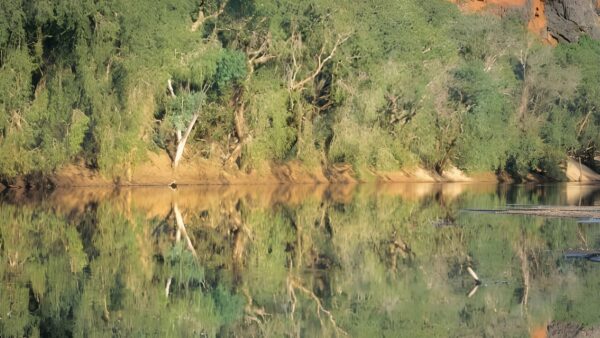

Through an Ancient Reef at Bandilngan Windjana Gorge
Overview
Bandilngan (Windjana Gorge) National Park sits in the western Kimberley, near Fitzroy Crossing, where the Lennard River has cut a 3.5 kilometre gorge through the Napier Range. The walls rise to around 100 metres in places, and what looks today like a line of rugged limestone hills was once part of an ancient barrier reef. That deep geological history gives the park its striking shape and much of its character.
The setting changes with the seasons. In the wet, the river moves strongly through the gorge. In the dry, it contracts into long pools edged by trees and shrubs, which softens the hard limestone and draws wildlife into the shade along the water.
Highlights
The gorge itself is the standout feature here: a long, narrow break in the pale limestone of the Napier Range, with sheer walls, broad floodplain country around it and the river threading through the middle. It is one of those Kimberley landscapes that feels both open and enclosed at once, with big skies above and towering rock faces close at hand.
Another distinctive detail is the exposed reef limestone in the gorge walls. Fossilised marine life can still be seen in the rock, a reminder that this inland landscape began as a Devonian reef system. The contrast between the ancient reef, the river pools and the surrounding savannah gives the park a very particular sense of place.
Best Time to Visit
The dry season is the best time to see the park at its clearest and most settled, generally from late April to late November. Days are usually warm and clear, nights can be cool, and the receding river leaves behind pools that make the gorge especially photogenic.
This is also when the contrast between the limestone range, the riverbank vegetation and the open grasslands is easiest to appreciate. Earlier in the dry, the country still carries some of the wet season’s freshness, while later in the season the bare rock and permanent waterholes become more pronounced.
Plants and Animals
Bandilngan supports many plants and animals typical of the Kimberley, but the mix of limestone, riverbanks and surrounding plains gives it unusual variety. Along the gorge and water’s edge you are likely to notice river figs, Leichhardt trees and weeping paperbarks, while the ancient reef country carries tougher species such as spinifex, rock figs and kurrajong. Out on the surrounding flats, boabs, eucalypts and twin-leaved bauhinia are scattered through the grassland.
Wildlife is one of the park’s defining features. Freshwater crocodiles are a familiar sight in the pools, and black flying foxes and corellas often gather in the riverside trees. Birdlife ranges from egrets, herons, brolgas and glossy ibis to raptors such as falcons, whistling kites and white-bellied sea eagles. Around dawn and dusk, agile wallabies, northern nailtail wallabies and short-eared rock-wallabies may also be seen.
Culture and Heritage
This is Bunuba country, and Bandilngan is a place of strong continuing cultural significance. The park’s Aboriginal name recognises that connection, and Bandilngan is described as a highly spiritual place where the Wandjina creation spirits reside.
The wider area around the gorge also holds an important place in Bunuba history, including stories connected with Jandamarra and Bunuba resistance in the late nineteenth century. That deeper history sits closely with the landscape, giving the gorge a significance that goes well beyond its scenic appeal.
Find more places to explore…
Help expand the trail collection!
Know of an official trail not listed on Trail Hiking Australia? I’m focused on showcasing the best tracks managed by land managers, and I’d love your help! Sharing a trail adds to our community and helps others discover safe, new adventures.
Submit your trail here

