Volcanic Rainforest and Escarpment Country on Tamborine Mountain
Overview
Tamborine National Park sits on Tamborine Mountain in the Gold Coast hinterland, about 80km south of Brisbane. Rather than being one continuous block, it is made up of 14 separate sections spread across the plateau and surrounding slopes. Together they protect remnants of the mountain’s original forests in a landscape now largely surrounded by rural land and development.
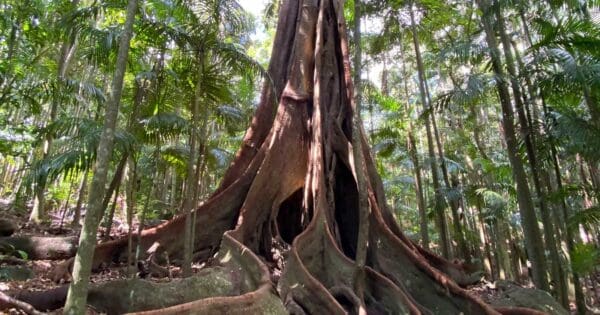
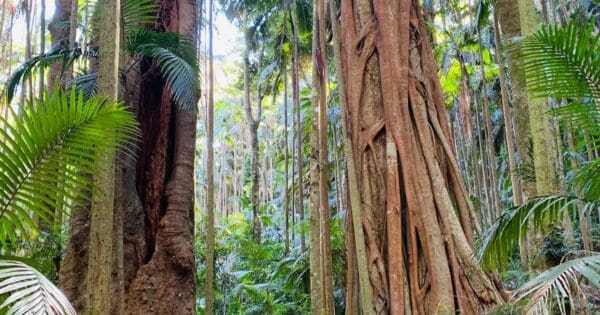
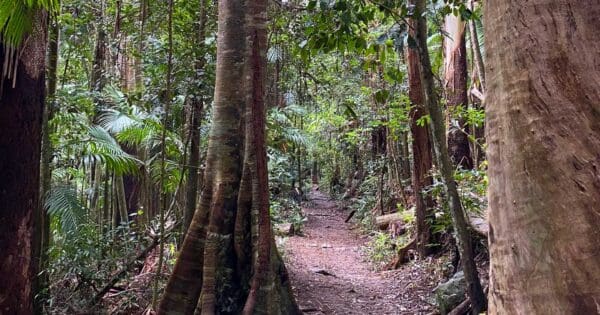
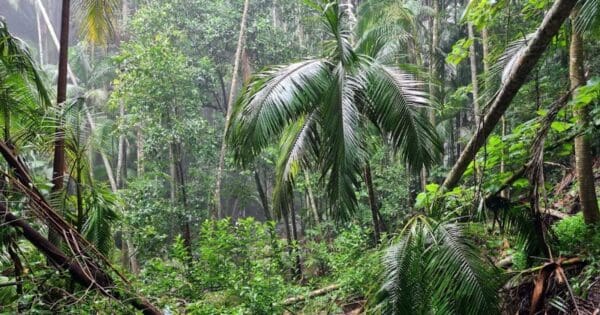
The park brings together several distinct forest types, from subtropical rainforest with piccabeen palm groves to wet eucalypt forest with tall flooded gums, plus open forest and woodland on drier ground. That mix gives Tamborine a very different feel from one section to the next, but the constant thread is a cool, elevated mountain environment shaped by old volcanic flows.
Highlights
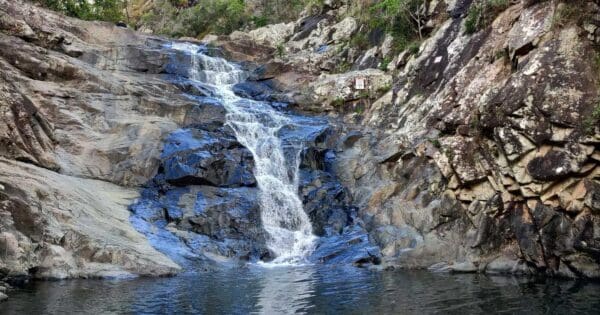
What gives Tamborine National Park its character is the meeting of basalt mountain country, steep escarpments and sheltered creek gullies. Cliffs, rocky outcrops, columnar basalt and waterfalls all trace back to volcanic eruptions around 23 million years ago, when lava from the Tweed Volcano spread across this part of the landscape. Tamborine is the northernmost remnant of those flows.
That geology creates a compact but varied mountain setting, with rainforest pockets tucked into moist gullies and wider views opening from the edge of the escarpment. The contrast between dense palm-filled forest and abrupt rocky slopes is a big part of what makes this park feel so distinctive.
Best Time to Visit
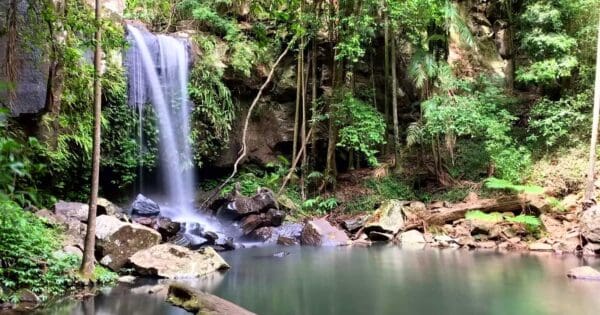
Tamborine can be rewarding at any time of year, but the cooler months are often the most comfortable for walking and for taking in the mountain forests without summer humidity. Winter is also a good time for birdlife, especially when Albert’s lyrebirds are most vocal. After wetter periods, the creeks and waterfalls are usually at their most impressive and the rainforest feels especially lush.
Plants and Animals
The park protects a surprisingly rich share of the local hinterland’s biodiversity. On the Tamborine Mountain escarpment, about 65 per cent of the City of Gold Coast area’s plant species and 85 per cent of its animal species are represented. The vegetation ranges from rainforest with buttressed trees and piccabeen palms to flooded gum forest, open forest and woodland.
Commonly seen wildlife includes pademelons, Australian brush-turkeys and small scrubwrens moving through the undergrowth. Tamborine is also important for species with more specialised habitat needs, including the near threatened Albert’s lyrebird and the Richmond birdwing butterfly. Seasonal movement adds another layer, with birds such as the noisy pitta visiting from nearby higher-altitude rainforests.
One unusual local resident is the land mullet, a large glossy skink that favours the moist forest floor. In a park known for waterfalls and rainforest, it is often the smaller details of the forest community that make the place memorable.