Clifftops, Rock Pools and the Narrow Valley of Onkaparinga Gorge
Overview
Onkaparinga River National Park protects the eastern side of the lower Onkaparinga River reserve in Adelaide’s southern metropolitan area, about 35 kilometres from the city. What makes it stand out is the way the country changes across a relatively compact area, from ridgelines and steep slopes down into a deeply cut gorge and the river below. The national park forms part of a broader protected stretch that includes the gorge, floodplain and estuary of the lower Onkaparinga River.
This is also one of the more important remnants of native bushland in southern Adelaide. Along with its scenic value, the park helps protect estuarine and freshwater habitats, fish breeding habitat and a notable concentration of plant and animal species of conservation significance.
Highlights
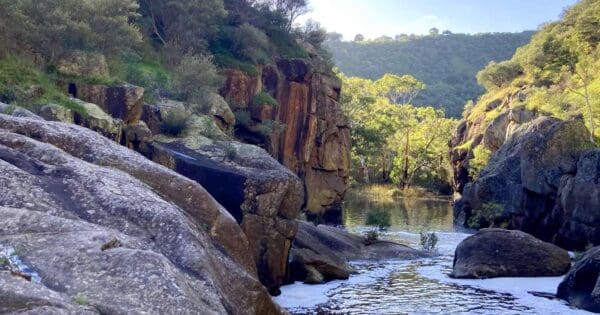
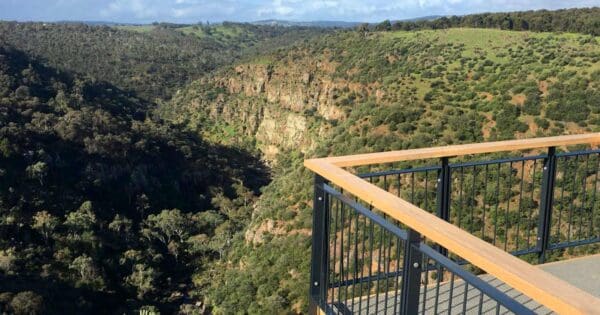
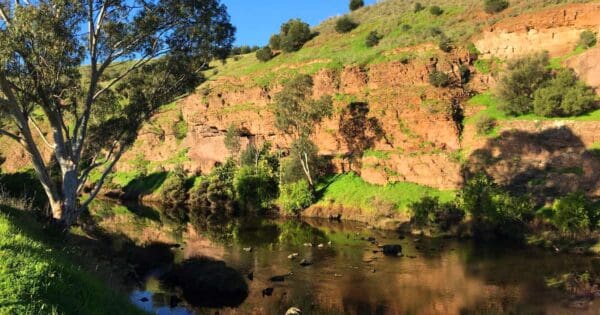
The defining feature here is Onkaparinga Gorge, a narrow river valley edged by rugged ridge tops and cliffs. From above, the park has a dry, open, hilly character. Down on the river line, the mood shifts completely, with permanent rock pools and sheltered bends that make the gorge feel older and more enclosed.
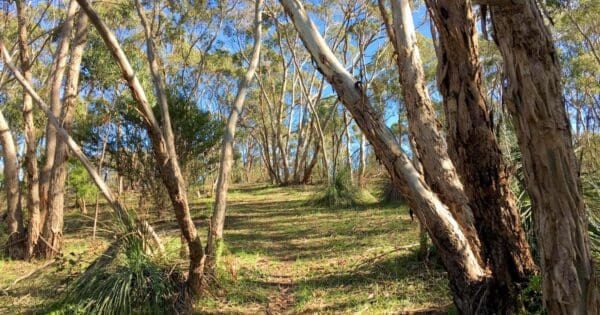
The scenery is varied rather than uniform. Grey-green woodland on the slopes, rocky outcrops, the winding river corridor and the broader sense of a gorge cutting through suburban Adelaide all give the park a strong identity. It is that contrast between metropolitan location and sharply carved landscape that stays with people.
Best Time to Visit
This park can be visited year-round, but the most pleasant time for walking is usually in the cooler months from autumn through spring, when the ridges and open slopes are more comfortable and the bush generally feels greener. After seasonal rain, the gorge and river corridor tend to look at their best.
In warmer weather, the exposed country on the upper slopes can feel much harsher than the river line below, so the season makes a real difference to how the landscape is experienced.
Plants and Animals
Onkaparinga River National Park protects some of the finest remaining pockets of remnant vegetation in the southern Adelaide region. The plant communities change with the terrain. Grey box and sheoak grow in the eastern part of the reserve, while upper ridges and higher valleys carry pink gum, dryland tea-tree and sheoak. Wetter sites support blue gum and manna gum, and the creek and riverbanks are lined by river red gums.
Beyond the slopes and gorge, the lower reserve also includes samphire flats and estuarine plant communities. Across the reserve as a whole, 457 native plant species have been recorded.
Wildlife is equally varied. Koalas, western grey kangaroos, common brushtail possums and short-beaked echidnas are all recorded here, and the wider reserve also supports important habitat for migratory birds as well as estuarine and freshwater species tied to the river system.
Culture and Heritage
The Kaurna people occupied the land now conserved within the Onkaparinga River reserve. The name Onkaparinga is recorded from Kaurna as Ngangkiparinga, meaning “women’s riverâ€, and the mouth of the river is described as a mythological site with particular significance for Kaurna women.
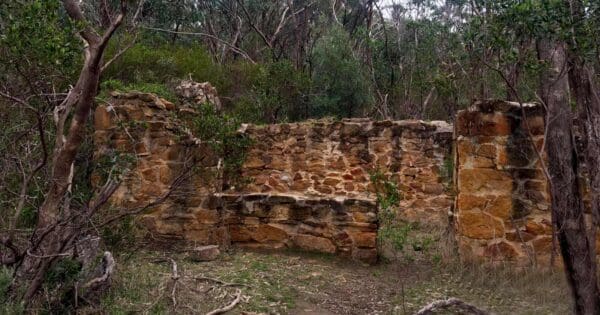
The reserve also contains archaeological evidence of long Aboriginal use, including recorded sites within the floodplain and evidence of camping places. Material dated to about 7,500 years before present has been identified from the edge of the estuary, pointing to very long cultural connections with this river landscape.