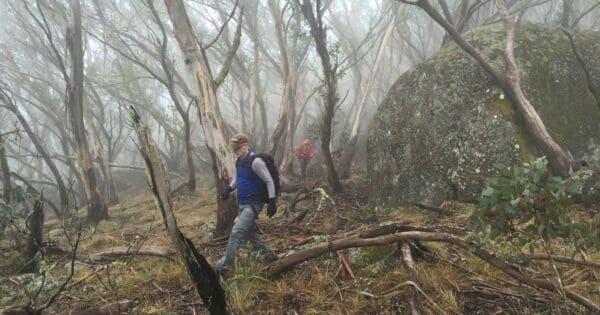
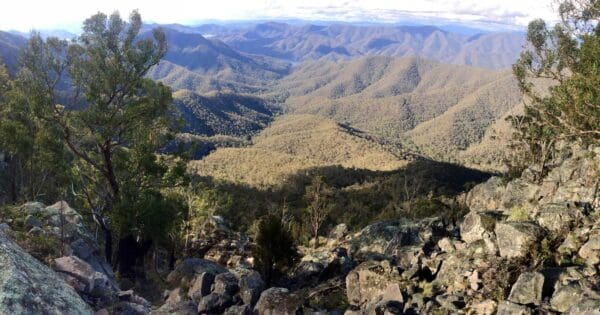
High Country views and tall forest around Mount Torbreck
Overview
Mount Torbreck Scenic Reserve protects a high section of Victoria’s Central Highlands near Eildon, about 150 km north-east of Melbourne. The reserve centres on Mount Torbreck itself, a prominent peak rising to about 1516 metres, where subalpine conditions meet the tall ash forests of the ranges below.
This is a place of elevation and transition. The country shifts from wetter mountain forest into more open snow gum woodland closer to the summit, giving the reserve a distinctly high-country feel without the scale of the larger alpine parks farther east.
Highlights
The reserve’s main draw is its mountain setting. Mount Torbreck stands above the surrounding ridges and, in clear weather, the higher ground opens out to broad views across the Central Highlands and towards nearby peaks and forested ranges.
What makes the area memorable is the contrast between rocky upper slopes and the deep cloak of forest around them. It feels rugged but not stark, with the summit country sitting above a long sweep of mountain ash and mixed eucalypt forest.
Best Time to Visit
Late spring through autumn is usually the easiest time to appreciate the reserve’s scenery, when access to the higher country is generally more straightforward and the forest is at its greenest. Spring and early summer also bring a strong contrast between lush lower slopes and the more open summit country.
Winter gives Mount Torbreck a different character, with regular snowfall in the higher country and a much more alpine feel. Even outside winter, the higher elevation keeps conditions cooler than the surrounding valleys.
Plants and Animals
The reserve sits within mountain forest country typical of the Central Highlands, with tall eucalypt forest on the lower slopes and snow gums appearing higher up. This change in altitude creates a noticeable shift in vegetation over a relatively short distance.
Older planning and environmental sources for the wider adjoining high-country forests point to the ecological importance of these mountain ash landscapes for native wildlife, particularly forest-dependent birds and mammals. For visitors, the strongest impression is often the structure of the vegetation itself, from towering ash forest below to wind-shaped woodland nearer the summit.