Sorry, no records were found. Please adjust your search criteria and try again.
Sorry, unable to load the Maps API.
Explore stunning hiking trails of Mount Dial Nature Recreation Area
Discover the diverse trails of Mount Dial Nature Recreation Area, Tasmania, offering hikes and walks for all skill levels and interests. Find your perfect adventure today.
Discover 3 hiking trails in Mount Dial Nature Recreation Area
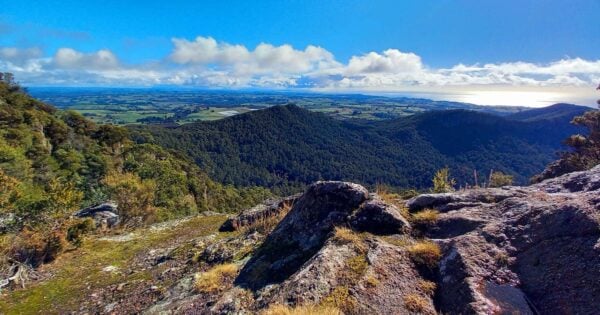

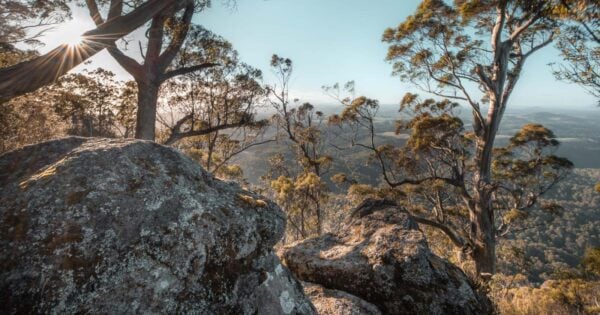

Conglomerate Ridges and Forested Slopes at Mount Dial
Overview
Mount Dial Nature Recreation Area sits within the broader Dial Range south of Penguin on Tasmania’s north-west coast. The reserve protects part of a 14 kilometre band of rugged hill country that stands out clearly from the surrounding coastal plain, with Mount Dial near the middle of the range. It is a relatively compact reserve at about 446 hectares, but it forms part of a much larger connected landscape of public reserves and other managed land across the Dial Range.
What gives this area its character is the meeting of steep ridgelines, varied rock formations and a strong change in vegetation from one slope to the next. The result is a place that feels more complex than its size suggests, with dry forest on some faces and taller, damper forest in sheltered ground nearby.
Highlights
The main appeal of Mount Dial is its rugged scenic character. The ridgeline is shaped largely by Duncan conglomerate, and across the wider Dial Range that geology sits alongside volcanic rock, dolerite, sandstone and conglomerate layers. That mix gives the area its broken skyline, rocky outcrops and a landscape that feels distinct from the flatter country around Penguin.
Because the reserve rises above the north-west coast, it also has a strong sense of elevation and outlook. The broader Dial Range is made up of multiple peaks, and the contrast between forested slopes, exposed rock and glimpses of coastline is a big part of what makes this area memorable.
Best Time to Visit
Mount Dial can be rewarding at any time of year, but the cooler months and the milder parts of spring and autumn usually suit the area best. Forest and ridgeline walking is often most pleasant when temperatures are moderate and the surrounding vegetation is looking fresh after wetter weather.
Spring is also a particularly good time to notice the change between the drier eucalypt slopes and the damper gullies, when new growth and wildflowers help bring out the range’s botanical variety.
Plants and Animals
The reserve’s varied geology creates different soils, and that supports a noticeably diverse patchwork of vegetation. Across the Dial Range, stringybark and black peppermint forest grow on drier slopes, while taller swamp gum and blackwood occur on wetter ground. Around Mount Dial, past fire has also shaped the vegetation, leaving a landscape where regrowth and older forest features sit side by side.
Tree hollows in the area provide habitat for birds and small mammals. The wider Dial Range also supports native animals including platypus and echidna, and it contains habitat for several threatened species. One of the more localised plants recorded from Mount Dial Nature Recreation Area is the large bird-orchid, a threatened Tasmanian orchid known from only a small number of sites.
Find more places to explore…
Help expand the trail collection!
Know of an official trail not listed on Trail Hiking Australia? I’m focused on showcasing the best tracks managed by land managers, and I’d love your help! Sharing a trail adds to our community and helps others discover safe, new adventures.
Submit your trail here

