Sorry, no records were found. Please adjust your search criteria and try again.
Sorry, unable to load the Maps API.
Explore stunning hiking trails of Mount Brown Conservation Park
Discover the diverse trails of Mount Brown Conservation Park, South Australia, offering hikes and walks for all skill levels and interests. Find your perfect adventure today.
Discover 1 hiking trail in Mount Brown Conservation Park
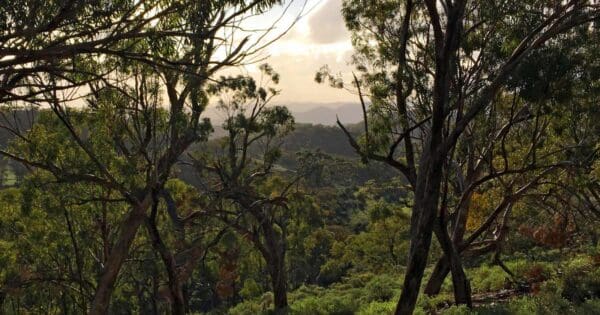

Quartzite Ridges and Big-Sky Country at Mount Brown
Overview
Mount Brown Conservation Park sits in the South Flinders Ranges, about 14 kilometres south of Quorn and roughly 344 kilometres from Adelaide. The park centres on Mount Brown itself, which rises to 964 metres and stands among the higher peaks of the southern part of the range. It is a former forest reserve, and the country shifts from more open, undulating ground to steeper ridges with woodland and scrub.
What gives the park its character is the way its geology shapes everything around it. Much of the landscape is built on tough quartzite, with ridges, scree slopes and narrow gorges cut into the range. Richman Valley sits within this folded country, and the contrast between the harder ridge lines and the more open valley floor makes the park feel broader and more varied than its size might suggest.
Highlights
The defining feature here is height. Mount Brown is one of the prominent summits in the South Flinders Ranges, and the upper slopes have the exposed, stony feel that comes with a big ridge in this part of South Australia. The park’s western edge and higher ground show off the underlying geology particularly well, with quartzite forming bold rims above the valley country.
There is also a strong sense of deep time in the landscape. A canyon around a kilometre deep was formed here about 600 million years ago, and the wider landform reflects much older processes of folding, uplift and erosion. Steep slopes, boulder-strewn ground and narrow creek lines all add to that rugged character.
Best Time to Visit
The most comfortable months are generally the cooler parts of the year, from autumn through spring. This area has a Mediterranean climate with hot, dry summers and cool, wetter winters, and the higher ridges and summit tend to be a little cooler and more humid than the country below.
Rainfall in the district is variable, but much of it falls from late summer to late spring. Winter and the shoulder seasons usually bring milder daytime conditions, while frosts are common from April to September.
Plants and Animals
Mount Brown Conservation Park protects a mix of plant communities that change with altitude, slope and rock type. Ridgetops are mostly covered by long-leaved box, often with a shrubby understorey including yacca, while middle and upper slopes also carry sheoak and grey box. Lower slopes and steeper hills support more grey box woodland, and grasslands spread across the more undulating country. In the carbonate areas, open shrubland becomes more common, with creek lines standing out as greener strips.
This is an important park for native plants, especially grey box woodlands and grasslands that are not well represented elsewhere in the reserve system. A number of plant species of conservation significance have been recorded here, including several of national significance. Fauna records are less complete, but the park’s range of habitats supports species such as euro and western grey kangaroo, and echidnas are also expected to occur.
Culture and Heritage
Aboriginal people occupied the Flinders Ranges long before European arrival, and Mount Brown was understood to have been known as Wirtiartu. The management plan identifies the Nukunu people as the traditional custodians of the land. A plaque on the summit also marks the 1802 ascent associated with Robert Brown, the naturalist on Matthew Flinders’ voyage, after whom the mountain was named.
The park also reflects a later pastoral and forestry history. Forestry activity began in the 1870s, and Mount Brown became an important nursery and distribution centre for amenity trees for drier parts of South Australia, western Victoria and western New South Wales before the area was eventually dedicated as a conservation park in 1993.
Find more places to explore…
Help expand the trail collection!
Know of an official trail not listed on Trail Hiking Australia? I’m focused on showcasing the best tracks managed by land managers, and I’d love your help! Sharing a trail adds to our community and helps others discover safe, new adventures.
Submit your trail here

