Ancient Sandstone on the Edge of Kununurra
Overview
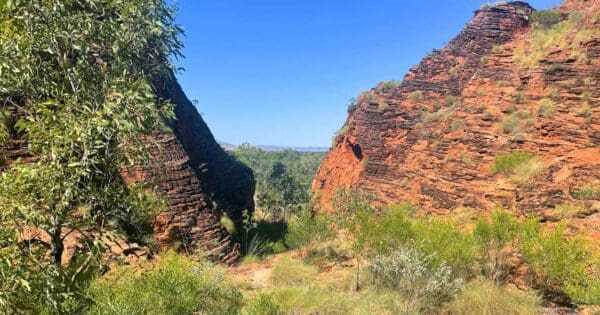
Mirima National Park sits right beside Kununurra in the eastern Kimberley, around 3,000 kilometres north-east of Perth. Despite being so close to town, it feels surprisingly removed, with a maze of sandstone ridges, narrow gullies and weathered rock walls shaping the whole park. Covering just over 2,000 hectares, it is a compact but distinctive pocket of Kimberley country.
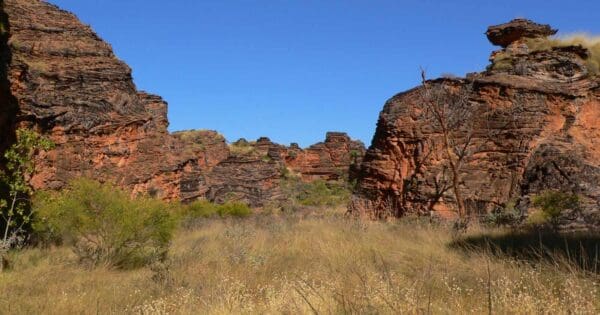
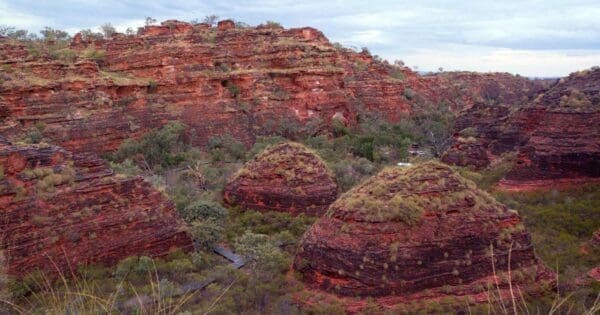
The landscape is often compared with the Bungle Bungle Range because of its layered sandstone forms, but Mirima has its own character. The ridges rise in a series of broken ranges and rocky corridors, creating a place that changes quickly as the light moves across the stone.
Highlights
The defining feature here is the sandstone itself. Bands of orange and grey rock, steep-sided gullies and sculpted outcrops give the park a strong sense of shape and texture, especially in the softer light of early morning and late afternoon.
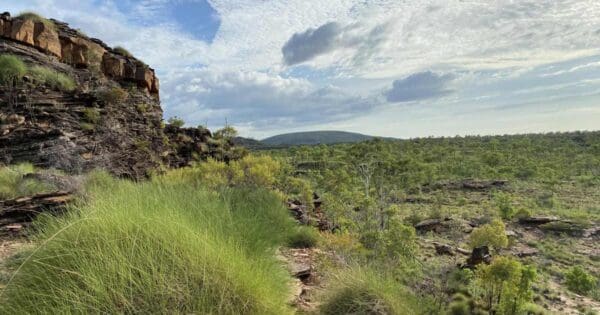
Because the park stands on the edge of Kununurra, higher points look out across the Ord Valley as well as back over the rocky range. That contrast between town, broad valley and tightly folded stone country is one of the things that makes Mirima memorable.
Best Time to Visit
The cooler months are the most comfortable time to spend time in Mirima, when the Kimberley heat eases and the air is generally clearer. From around the dry season through the shoulder months, the rock country is easier to appreciate without the build-up humidity and intense summer temperatures.
If you want to see the park at its most atmospheric, lower-angle light brings out the colour and layering in the sandstone particularly well.
Plants and Animals
Mirima supports a mix of Kimberley plants and animals within a relatively small area. Permanent water has long made parts of the park important for wildlife, and the rocky country provides shelter for a range of species.
You may see wallabies and wallaroos around the park, particularly in the cooler parts of the day. The vegetation also has cultural significance, with local plant species traditionally used for bush medicine.
Culture and Heritage
Mirima is a place of long cultural significance for the Miriwoong people. For thousands of years, caves in the park provided shelter from sun and wet season rain, and the area was used as a significant camping place during seasonal movements.
Permanent water and plant resources made this an important place for hunting and gathering, including the use of local plants for bush medicine. The park also includes bilingual interpretation that reflects the continuing presence of Miriwoong language and culture in this landscape.