Sorry, no records were found. Please adjust your search criteria and try again.
Sorry, unable to load the Maps API.
Explore stunning hiking trails of Meelup Regional Park
Discover the diverse trails of Meelup Regional Park, Western Australia, offering hikes and walks for all skill levels and interests. Find your perfect adventure today.
Discover 1 hiking trail in Meelup Regional Park
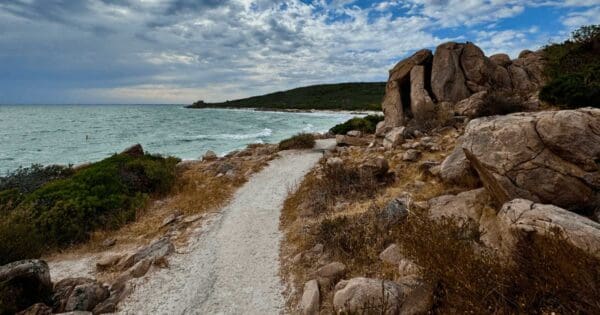

Granite Headlands and Biodiversity on the Edge of Cape Naturaliste
Overview
Meelup Regional Park stretches along about 11.5 kilometres of coast between Dunsborough and Bunker Bay on the Cape Naturaliste peninsula. It covers 577 hectares and protects a mix of beaches, rocky headlands, granite outcrops, creeklines and bushland, all packed into a relatively compact part of the South West. That variety is a big part of what gives the park its strong sense of place. One moment you are looking across pale sand and clear water, and the next you are in thicker coastal vegetation or among weathered stone.
The park also sits within the Busselton-Augusta biodiversity hotspot, and much of its vegetation remains in relatively good condition. For walkers, that means Meelup feels more like a continuous natural landscape than a string of disconnected coastal reserves, with landforms and plant communities changing noticeably as you move through it.
Highlights
What stands out most here is the meeting of granite and sea. Large rounded outcrops, knolls and headlands shape the eastern part of the park, while four beaches sit between granitic gneiss promontories. Semi-mobile dunes, scattered boulders and cobbles, and the contrast between sheltered coves and more open coastal edges give the shoreline a rugged, varied character.
Inland from the shore, the scenery shifts again. Lateritic hills, plateaus and gravel slopes form much of the western and central parts of the park, creating a different texture from the coastal edge. Meelup and Dolugup Brooks have also helped shape the valleys through the reserve, adding another layer to the landscape beyond the beaches that usually get the first glance.
Best Time to Visit
Spring is the standout season if you want to see the park at its most colourful, with a strong display of wildflowers across its heath, woodland and granite-based plant communities. That said, flowering plants are present throughout the year, so there is usually something in bloom even outside the main wildflower season.
The cooler months from autumn to spring also tend to suit longer walks better than the height of summer, especially in the more exposed coastal sections where shade can be limited. In summer, the beaches and clear water are part of the park’s appeal, but the finer detail of the bushland often comes into its own once the weather eases.
Plants and Animals
Meelup Regional Park has unusually high botanical value for its size. More than 600 plant species have been recorded here, including a threatened ecological community, 12 threatened or priority flora, and several species found nowhere else. Its vegetation ranges from jarrah and marri forest to banksia woodland, coastal heath, low shrubland, herbs, grasses and orchids, reflecting how many different habitats are packed into the reserve.
Some of the rarest plants are tied very closely to Meelup itself. The Meelup mallee occurs only in this park, and the Cape spider orchid is known only from populations here on coastal granite outcrops. The park also supports almost half of the remaining Wilyabrup vegetation complex, a highly restricted vegetation type associated with granite in this part of the Leeuwin Block.
Animal life is just as significant. The mix of granite outcrops, creeklines and bushland provides habitat for a wide range of fauna, including quenda, western false pipistrelle bat and the critically endangered western ringtail possum. Carnaby’s black cockatoo, Baudin’s black cockatoo and forest red-tailed black cockatoo are all recorded here as well, using the park’s jarrah, marri, banksia and peppermint-rich habitats for feeding and shelter.
Culture and Heritage
Meelup is a significant cultural site for the Wadandi people. Cultural burning knowledge connected with this place describes cool, low-intensity autumn burns carried out in small, patchy mosaics, helping protect granite areas, tree canopies and fauna habitat while reducing the chance of severe fire. That long, place-based understanding is part of how the landscape has been read and cared for over time.
Find more places to explore…
Help expand the trail collection!
Know of an official trail not listed on Trail Hiking Australia? I’m focused on showcasing the best tracks managed by land managers, and I’d love your help! Sharing a trail adds to our community and helps others discover safe, new adventures.
Submit your trail here

