Sorry, no records were found. Please adjust your search criteria and try again.
Sorry, unable to load the Maps API.
Explore stunning hiking trails of Lincoln National Park
Discover the diverse trails of Lincoln National Park, South Australia, offering hikes and walks for all skill levels and interests. Find your perfect adventure today.
Discover 1 hiking trail in Lincoln National Park
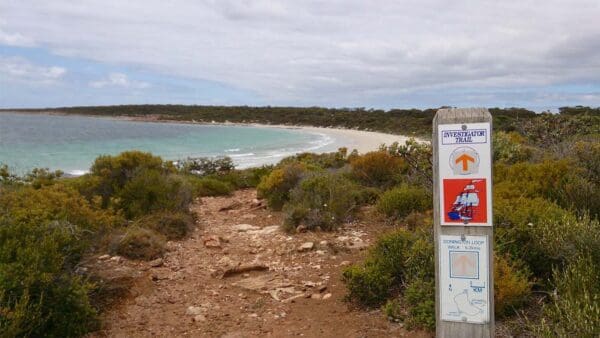

Granite Headlands, Surf Beaches and the Big Dunes of Lincoln
Overview
Lincoln National Park sits on the south-eastern tip of Eyre Peninsula, just outside Port Lincoln, where the coast shifts between sheltered water on Boston Bay and the exposed Southern Ocean. It is a place of strong contrasts, with granite headlands and offshore islands on one side, then broad surf beaches and major dune country further south.
The park also takes in Memory Cove Wilderness Protection Area and a scattering of nearby islands, conserving a large stretch of coastal and near-coastal country. That mix of bays, cliffs, scrub, mallee and sand gives the area a very distinct feel, even within South Australia’s already dramatic coastline.
Highlights
The scenery here is defined by the meeting of hard rock and moving sand. Along the Boston Bay side, the coastline is broken into granite headlands, quiet coves and sheltered inlets, with views out to offshore islands. On the park’s southern side, the land opens into the Sleaford-Wanna dune system, where high wind-shaped dunes run down to a wild ocean shore.
Memory Cove adds another side to the landscape again, with a pale sandy beach backed by densely vegetated headlands. Across the park as a whole, the coastal character changes quickly from calm bays to cliffed shores and open surf, which is what makes Lincoln feel so varied even over a relatively compact area.
Best Time to Visit
Late winter and spring are the standout months if you want the park at its most lively, with native flora out and birdlife especially active. This is also the main walking season, when cooler conditions make time outdoors more comfortable.
From May to October, the coast can also reward patient visitors with sightings of southern right whales offshore. Summer brings warmer, drier weather and a different kind of appeal around the beaches and bays, but for wildflowers, birds and milder days, the cooler months are hard to beat.
Plants and Animals
Lincoln National Park protects a patchwork of coastal dune vegetation, Drooping Sheoak and Dryland Tea-tree woodland, coastal heath, cliff-top plant communities and mallee scrub. In places the southern dune country is backed by dense heath on deep white sand, while other parts of the park carry low coastal scrub or vegetation shaped by limestone and granite outcrops.
Wildlife reflects that range of habitats. Western Grey Kangaroos are the most obvious land mammals, and the park also supports species of conservation significance including Bush Stone-curlew, Southern Emu-wren, Western Whipbird, Australian Sea-lion and New Zealand Fur-seal. Port Lincoln parrots remain common through the mallee, and in the cooler months the wider coast is also known for whale movement offshore.
Culture and Heritage
The park is part of the traditional Country of the Barngarla and Nauo people, whose connection with the land and waters of southern Eyre Peninsula continues today. Lincoln National Park contains Aboriginal archaeological sites, and features within the landscape hold cultural meaning that goes well beyond what is visible on the ground.
There is also a layered colonial history here. Remains linked with farming, grazing, woodcutting and guano mining are still present in parts of the park, and the coastline is tied to shipwrecks, sealing and early whaling. A few heritage places stand out in particular, including the Flinders Tablet at Memory Cove and the monument on Stamford Hill.
Find more places to explore…
Help expand the trail collection!
Know of an official trail not listed on Trail Hiking Australia? I’m focused on showcasing the best tracks managed by land managers, and I’d love your help! Sharing a trail adds to our community and helps others discover safe, new adventures.
Submit your trail here

