Sorry, no records were found. Please adjust your search criteria and try again.
Sorry, unable to load the Maps API.
Explore stunning hiking trails of Lake Thetis Reserve
Discover the diverse trails of Lake Thetis Reserve, Western Australia, offering hikes and walks for all skill levels and interests. Find your perfect adventure today.
Discover 1 hiking trail in Lake Thetis Reserve
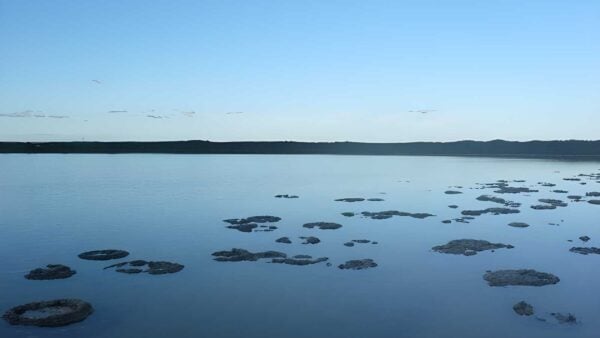

Ancient Life on the Edge of a Salty Lake
Overview
Lake Thetis Reserve, near Cervantes on Western Australia’s Coral Coast, protects a small saline lake known for its living stromatolites. The lake sits within Nambung National Park and is part of a threatened ecological community found only here. What makes the place so striking is the sense that you are looking at a process that links modern life with some of the earliest life forms known on Earth.
The lake’s alkaline, nutrient-poor water supports benthic microbial mats and stromatolitic microbialites in distinct zones around the shoreline and basin. That gives Lake Thetis an importance well beyond its size, both as a natural feature and as a place of ongoing scientific interest.
Highlights
The big draw here is the chance to see living stromatolites around the lake margin. These rock-like structures are built by microscopic communities over long periods, creating a shoreline that looks quiet at first glance but is full of geological detail. In a flat coastal landscape, the lake has a very different character from the nearby beaches and dunes, with pale water, salt-lake textures and a stark, open setting.
Lake Thetis is also unusual because it contains several kinds of microbial communities in one place, including lithified stromatolites around the littoral zone and well-developed flocculant mats in the basin. Some stromatolites here even form branching columns, a feature noted as especially uncommon.
Best Time to Visit
Lake Thetis can be visited year-round, but the milder months are usually the most comfortable for spending time outdoors around the lake. Clear light and cooler conditions from autumn to spring tend to suit the open, exposed setting best, while summer heat can make the salt-lake landscape feel harsh in the middle of the day.
Seasonal rainfall also influences water levels, which fluctuate through the year rather than following the tides. That changing waterline is part of what shapes the lake’s different microbial zones, so the place can look a little different from one visit to the next.
Plants and Animals
The defining life here is microbial rather than large and obvious. Lake Thetis supports a distinctive set of benthic microbial assemblages, including cyanobacterial mats in the low-lying margins, living mats beside the stromatolites, filamentous mats in deeper parts of the lake, and flocculant communities in the basin. These thrive in conditions that exclude many other organisms, especially the lake’s high salinity and low nutrient levels.
Because of those specialised conditions, the ecological interest of the reserve lies less in showy vegetation or abundant wildlife and more in the rare living communities within the lake itself. It is one of the few places in Western Australia where these modern microbialites can be seen.
Find more places to explore…
Help expand the trail collection!
Know of an official trail not listed on Trail Hiking Australia? I’m focused on showcasing the best tracks managed by land managers, and I’d love your help! Sharing a trail adds to our community and helps others discover safe, new adventures.
Submit your trail here

