Sorry, no records were found. Please adjust your search criteria and try again.
Sorry, unable to load the Maps API.
Explore stunning hiking trails of Kings Park and Botanic Garden
Discover the diverse trails of Kings Park and Botanic Garden, Western Australia, offering hikes and walks for all skill levels and interests. Find your perfect adventure today.
Discover 3 hiking trails in Kings Park and Botanic Garden

Perth’s bushland ridge and living gallery of Western Australian flora
Overview
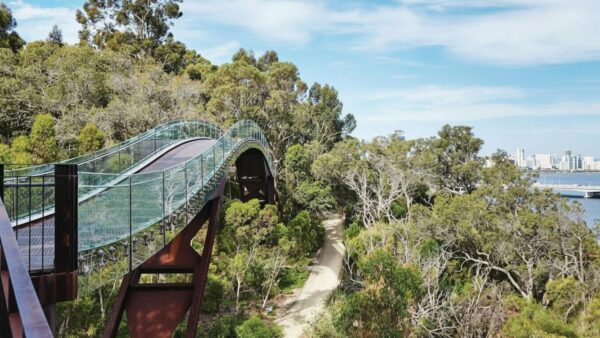
Kings Park and Botanic Garden sits on Mount Eliza, right on the edge of central Perth, combining broad parkland, a large remnant bushland area and the Western Australian Botanic Garden in one place. Covering more than 400 hectares, it is one of the world’s largest inner-city parks, with sweeping views across the Swan River, the city skyline and the Darling Range to the east.
What makes it distinctive is the way these different landscapes sit together. Much of the park remains native bushland, while the botanic garden focuses entirely on Western Australian plants, creating a place that feels both deeply local and unusually wide-ranging in the way it represents the state’s flora.
Highlights
The setting on Mount Eliza gives Kings Park its strong sense of scale. From the higher ground, the park looks out over the Swan River and across Perth, while the escarpment and open lawns create a clear contrast with the surrounding city. That mix of elevated views, mature parkland and native bush gives the place a character that is very different from a typical urban garden.
Another standout is the way the natural bushland and the botanic garden meet. The bushland holds banksia woodland and other native plant communities, while the garden gathers plants from regions across Western Australia, so the scenery shifts from local Perth vegetation to displays that reflect the Wheatbelt, Goldfields, Kimberley, southern coast and more.
Best Time to Visit
Kings Park is rewarding at any time of year, but spring is usually the standout, when wildflowers are at their peak and the botanic garden is especially colourful. Because the plantings are drawn from across Western Australia and arranged by region and plant group, there is still plenty to notice outside the main wildflower season.
Autumn and winter can also be a good time to appreciate the bushland and the broader shape of the landscape, especially when cooler weather makes longer walks through the park more comfortable.
Plants and Animals
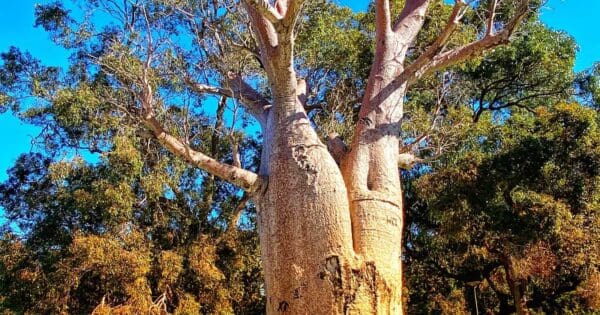
The Western Australian Botanic Garden displays around 3,000 species of the state’s native flora, making it the largest display of Western Australian plants in the world. Within the wider park, the bushland protects a substantial patch of local vegetation, including banksia woodland with tuart, jarrah and marri, along with sheoaks, shrubs and a rich flowering understorey.
The remnant bushland is also important for urban biodiversity. There are 327 species of local native plants recorded there, along with 96 native bird species, 30 native reptile species, nine native mammal species and a large variety of invertebrates. Fungi are another overlooked part of the picture, with 341 species of fungi and slime moulds recorded in the bushland.
Culture and Heritage
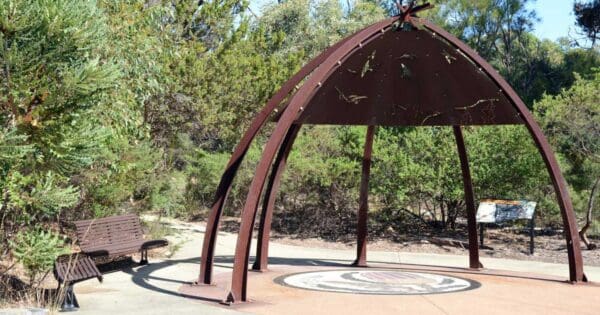
Kings Park and Botanic Garden has historic and continuing cultural significance for Aboriginal people, and the Whadjuk Noongar people are the traditional custodians of the land. The park includes registered sites of significance that continue to be respected and actively used today, and Noongar names are part of how the landscape is understood, including Derbarl Yerrigan for the Swan River and Djarlgarro Beelier for the Canning River.
The park is also one of Western Australia’s key places of public remembrance. It holds the State War Memorial, Honour Avenues and many other memorials, and has more memorials, statues and honour avenues than any other park in Australia. That commemorative role is a major part of its identity, sitting alongside its value as bushland, botanic garden and civic green space.
Find more places to explore…
Help expand the trail collection!
Know of an official trail not listed on Trail Hiking Australia? I’m focused on showcasing the best tracks managed by land managers, and I’d love your help! Sharing a trail adds to our community and helps others discover safe, new adventures.
Submit your trail here

