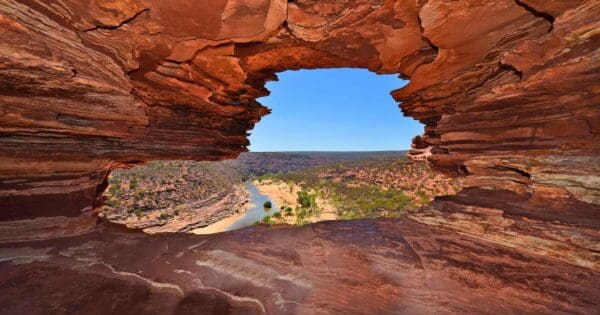
Where the Murchison Cuts Through Sandstone
Overview
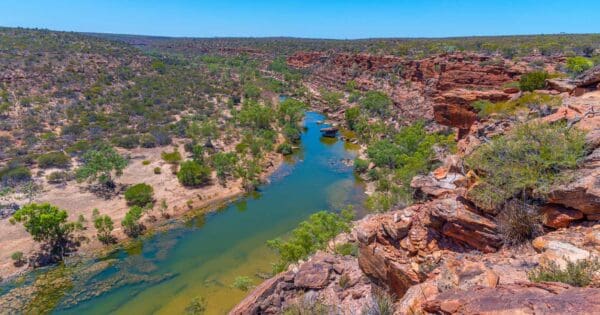
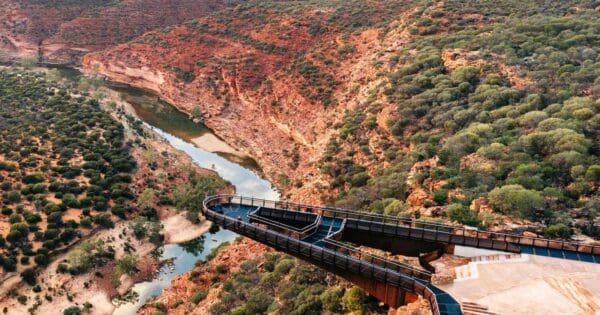
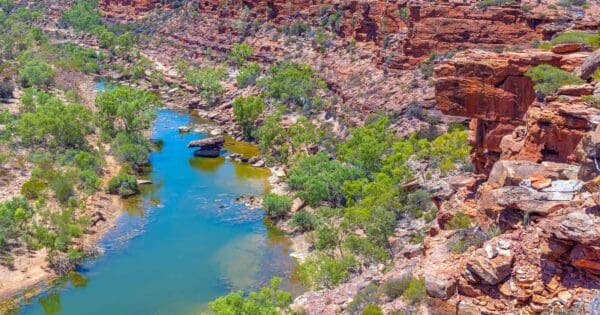
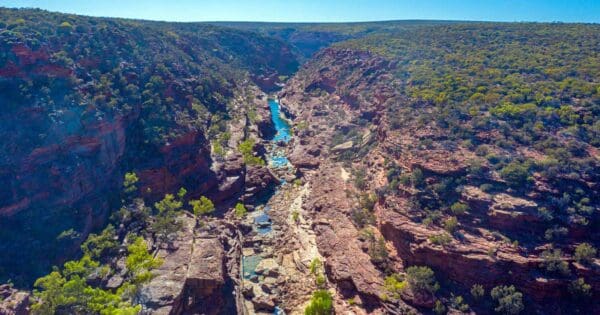
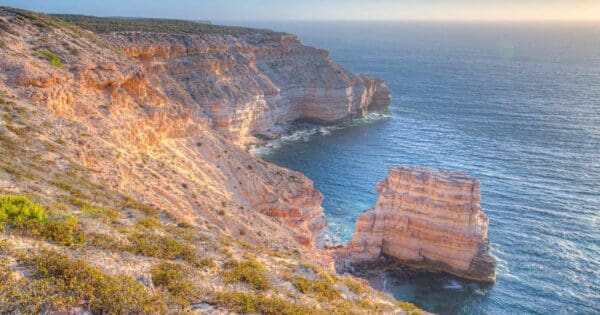
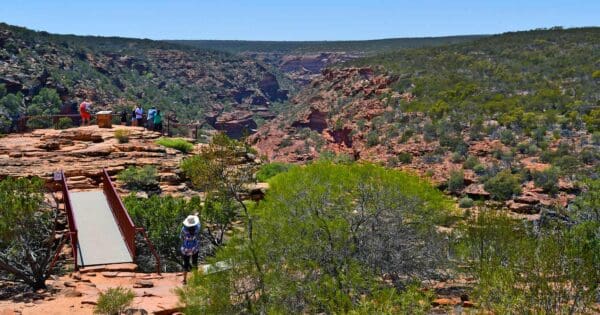
Kalbarri National Park sits on the lower reaches of the Murchison River on Western Australia’s central coast, about 160 kilometres north of Geraldton. It is a large park of river gorge, coastal cliffs and broad sandplain, with the landscape shifting from red and white banded sandstone in the gorge to wind-shaped coastal country and inland plains.
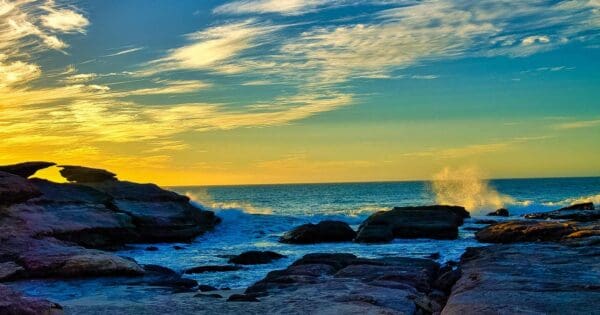
What makes Kalbarri feel so distinctive is that contrast. In one park you get an 85-kilometre gorge carved through ancient rock, steep sea cliffs along the Indian Ocean, and wide stretches of sandplain that flower strongly in season. The park also lies at the northern edge of the south-west biodiversity hotspot, which helps explain why the scenery and plant life feel a little different here from places further south.
Highlights
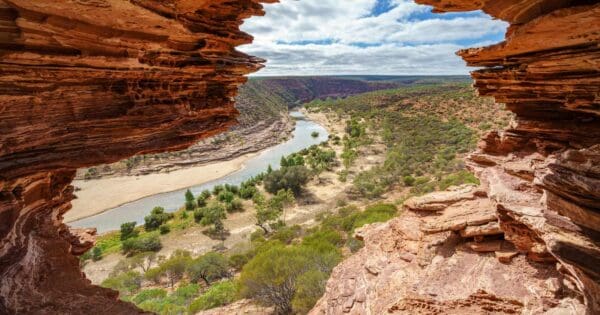
The defining feature is the Murchison Gorge, where the river has cut deeply through exposed Tumblagooda Sandstone, leaving long walls of red and pale rock with clear horizontal banding. This is the geological heart of the park, and it gives Kalbarri much of its strong, dry, sculpted character.
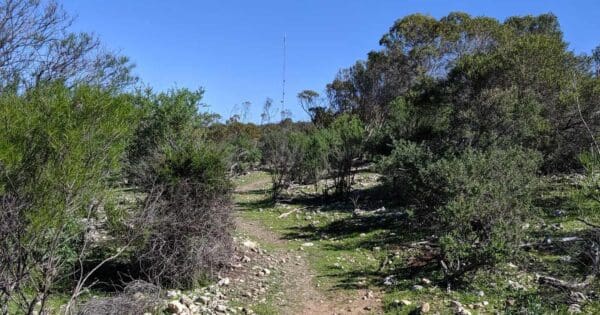
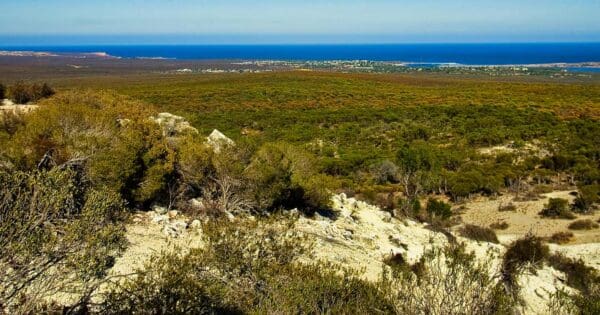
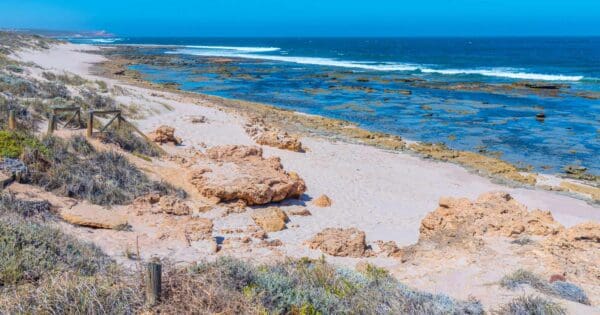
The coast adds a completely different scale, with cliff-lined headlands and weathered rock formations above the ocean. Inland, the sandplain softens the scene again, especially when seasonal flowers spread across the plateau. Taken together, those three elements, gorge, coast and sandplain, give the park a sense of variety that is unusual even within Western Australia.
Best Time to Visit
The most appealing stretch for many walkers is from late winter to early spring, when wildflowers are a key feature of the park. Spring also brings some of Kalbarri’s brightest colour, especially across the sandplain.
More broadly, the main visiting season runs from April to October, when conditions are generally milder. If you are choosing a time for scenery rather than sheer heat, that cooler part of the year usually shows the park at its best.
Plants and Animals
Kalbarri is one of the richer botanical parks in the state, with more than 1,000 native plant species recorded and a strong reputation for colourful wildflower displays. The sandplain and gorge support a mix of plant communities, including a number of threatened and priority flora species, and the park’s position between south-west and arid-zone environments adds to that diversity.
The fauna is just as varied. At least 268 native fauna species have been recorded, including 144 bird species and 70 reptile species, with the sandplain especially important for reptiles. Significant species recorded in the park include Carnaby’s cockatoo, malleefowl and chuditch, and the Murchison River pools and surrounding habitats add another layer of life to the landscape.
Culture and Heritage
Kalbarri National Park lies within Nanda Country, and the park has a long history of Nanda use. Many Aboriginal heritage sites are recorded here, including artefacts, mythological places, paintings, a quarry and midden sites.
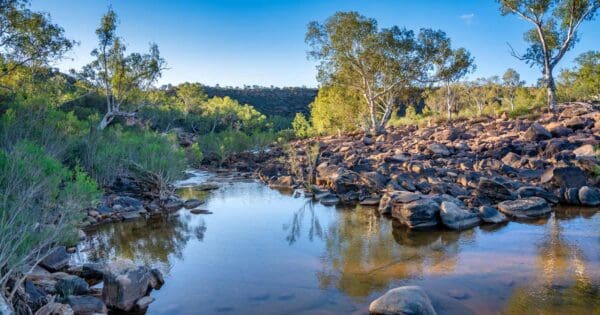
The permanent pools of the Murchison River are especially important in Nanda culture and history, which is reflected in the concentration of cultural sites along the river. Cultural significance is part of the park itself, not something separate from the landscape, and it sits closely alongside the gorge, coast and sandplain that people come here to see.