Sorry, no records were found. Please adjust your search criteria and try again.
Sorry, unable to load the Maps API.
Explore stunning hiking trails of Jumrum Creek Conservation Park
Discover the diverse trails of Jumrum Creek Conservation Park, Queensland, offering hikes and walks for all skill levels and interests. Find your perfect adventure today.
Discover 1 hiking trail in Jumrum Creek Conservation Park
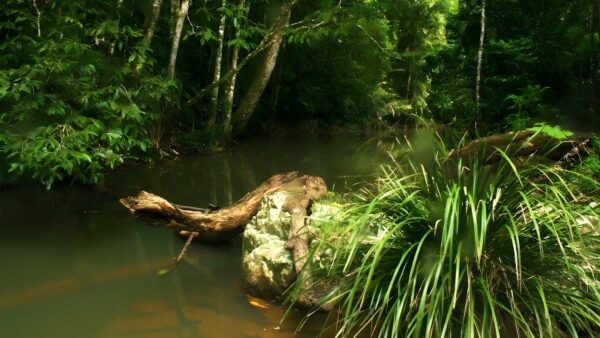

Rainforest Along the Creek in the Heart of Kuranda
Overview
Jumrum Creek Conservation Park is a very small protected pocket of Wet Tropics rainforest within Kuranda, in Tropical North Queensland. The park covers about 19 hectares and sits around Jumrum Creek, preserving a compact but surprisingly rich patch of mesophyll vine forest in an otherwise settled village setting.
That small scale is part of what makes the place distinctive. Rather than broad mountain country or long ridgelines, this park is about close rainforest detail, dense shade and the feel of a creek corridor holding on to its natural character right beside town.
Highlights
The main character of Jumrum Creek Conservation Park comes from its thick vine-entwined rainforest. Climbing palms wind upward through the canopy and create a layered, enclosed feel that is quite different from the more open forests found in many other Queensland parks. Large-leaved rainforest trees add to that lush, close-grown look.
Scenically, this is a place of intimate rainforest textures rather than big lookouts. The appeal is in the green canopy, the creekline setting and the sense of stepping into a cool patch of forest in the middle of Kuranda.
Best Time to Visit
This part of the Wet Tropics stays green year-round, so Jumrum Creek Conservation Park can be rewarding in any season. The drier months from roughly May to October are often the most comfortable for walking, with lower humidity and clearer conditions, while the wetter months bring a fuller, more intensely tropical feel to the forest.
Plants and Animals
The park protects mesophyll vine forest, a dense rainforest type dominated by large-leaved plants. Notable trees include Kuranda quandong, yellow walnut and rose butternut, with epiphytes such as basket fern high in the canopy. Climbing palms, including lawyer vine and wait-a-while, are especially characteristic here and help give the forest its tangled, close-knit structure.
Despite its modest size, the park supports a notable spread of significant wildlife. Recorded species include the southern cassowary, Macleay’s fig-parrot, Apollo jewel butterfly and the Kuranda treefrog, along with other threatened frogs associated with the Wet Tropics. Australian brush-turkeys and orange-footed scrubfowl are also part of the park’s distinctive birdlife.
Culture and Heritage
The Djabugay people are the Aboriginal Traditional Owners of Jumrum Creek Conservation Park, with a strong connection to this rainforest country around Kuranda. Jumrum Creek is described as an important place for teaching Djabugay stories, culture and language to younger people.
Plants in the park have long had practical and cultural uses. The climbing palms known as lawyer vine or wait-a-while were used for food and medicine, and their strong vines were used in hut frames, fish traps, dilly bags and for binding axe handles.
Find more places to explore…
Help expand the trail collection!
Know of an official trail not listed on Trail Hiking Australia? I’m focused on showcasing the best tracks managed by land managers, and I’d love your help! Sharing a trail adds to our community and helps others discover safe, new adventures.
Submit your trail here