Sorry, no records were found. Please adjust your search criteria and try again.
Sorry, unable to load the Maps API.
Explore stunning hiking trails of Judbarra – Gregory National Park
Discover the diverse trails of Judbarra – Gregory National Park, Northern Territory, offering hikes and walks for all skill levels and interests. Find your perfect adventure today.
Discover 4 hiking trails in Judbarra - Gregory National Park
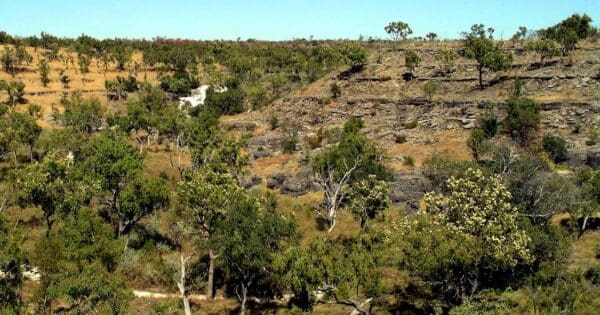

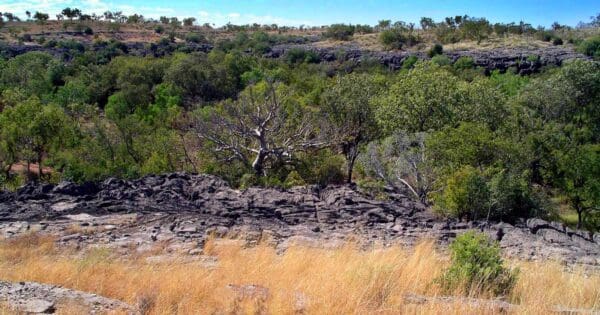

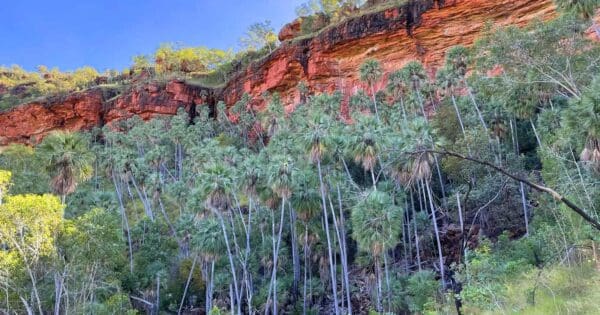

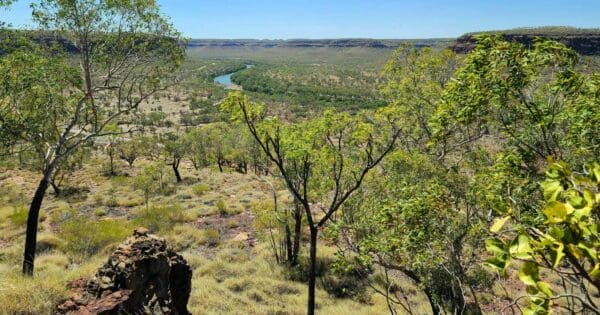
Sandstone Escarpments, River Country and Karst in Judbarra
Overview
Judbarra / Gregory National Park sits in the Victoria River District near the Western Australian border, with Timber Creek as the nearest main township. Covering about 1.3 million hectares, it is the largest park in the Northern Territory parks estate, and its scale really shapes the experience of the place. This is a landscape of long distances and strong contrasts, where river country, rugged ranges and open plains all meet within the one park.
The park lies where the wet-dry tropics give way to the semi-arid interior, so the country changes noticeably from one area to the next. Tropical woodlands spread across large parts of the park, monsoon vine-forest occurs in scattered pockets, and spinifex becomes more common in the south. Much of the park falls within the catchment of the Victoria River, with the Wickham, Humbert and East Baines rivers also running through it.
Highlights
What stands out most in Judbarra is the sheer variety of landforms. Sandstone escarpments and gorges, flat-topped mesas, rolling hills, alluvial plains and limestone country all sit within the same broad sweep of landscape. Around the Victoria River, the scenery becomes especially dramatic, with rugged escarpment country framing the river corridor and giving the park much of its strong visual character.
The limestone country around Limestone Creek is another defining feature. Here, karst landforms, tufas and stromatolites give this part of the park a very different feel from the sandstone ranges. The cave and karst systems are recognised as internationally significant, which makes this one of the most geologically distinctive national parks in the Territory.
Best Time to Visit
The cooler dry season is generally the most comfortable time to visit Judbarra. This is when the heat eases and the park’s escarpments, river country and open woodland are at their easiest to appreciate over longer days outdoors. In a place this large, seasonal change has a big effect on how the country looks and feels, so the dry months tend to suit visitors who want to take in the landscape itself rather than just pass through.
Plants and Animals
Because Judbarra spans the meeting point between two climatic zones, it supports notably varied vegetation. Extensive tropical woodlands are the dominant backdrop, but there are also riparian plant communities along waterways, sandstone heathlands, lancewood thickets, karst vegetation and isolated patches of monsoon rainforest. Those smaller rainforest and karst pockets are especially rich in plant life and provide important food sources for birds and flying foxes.
The park also supports a range of significant wildlife. Species identified as conservation priorities here include the purple-crowned fairy-wren, partridge pigeon and Gouldian finch, along with animals tied closely to healthy river and woodland habitats. That mix of river systems, sandstone country and sheltered pockets of denser vegetation is a big part of why the park is regarded as such an important area for biodiversity conservation.
Culture and Heritage
Judbarra is a living cultural landscape with deep and ongoing connections for several Traditional Owner groups. The park encompasses the traditional homelands of Ngarinyman, Karrangpurru, Malngin, Wardaman, Ngaliwurru, Nungali, Bilinara, Gurindji and Jaminjung people, and it is jointly managed with Traditional Owners.
Rock shelters and caves within the park hold a large body of rock art, including painted, stencilled, printed and engraved imagery. Gregory’s Tree is also part of the park’s heritage story, recognised both as an Aboriginal sacred site and as a place linked with early European exploration.
Find more places to explore…
Help expand the trail collection!
Know of an official trail not listed on Trail Hiking Australia? I’m focused on showcasing the best tracks managed by land managers, and I’d love your help! Sharing a trail adds to our community and helps others discover safe, new adventures.
Submit your trail here

