Sorry, no records were found. Please adjust your search criteria and try again.
Sorry, unable to load the Maps API.
Explore stunning hiking trails of Hallett Cove Conservation Park
Discover the diverse trails of Hallett Cove Conservation Park, South Australia, offering hikes and walks for all skill levels and interests. Find your perfect adventure today.
Discover 1 hiking trail in Hallett Cove Conservation Park

Ancient Ice Age Cliffs on Adelaide’s Southern Coast
Overview
Hallett Cove Conservation Park sits on Adelaide’s southern coastline, about 22 kilometres from the city, where steep coastal slopes, rock platforms and low scrub meet the sea. What makes the place stand out is its geology. The park protects internationally significant evidence of glaciation from around 280 million years ago, along with a much longer rock record that reaches back into the Proterozoic.
It is also an important pocket of open space in a heavily urbanised area. Alongside its scientific value, the park holds remnant habitat, restored native vegetation and broad views over the Gulf St Vincent shoreline, which gives the whole area a strong sense of contrast between suburb, coast and deep geological time.
Highlights
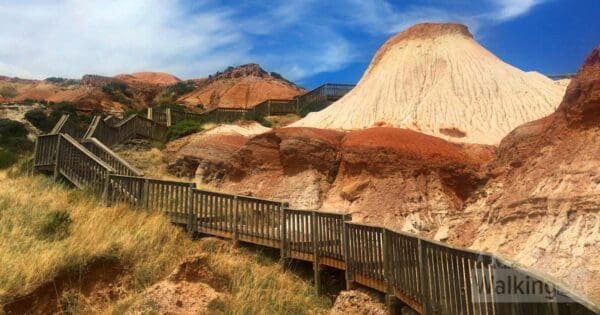
The real character of Hallett Cove lies in its landforms. Black Cliff and the shore platform below it show off ancient sedimentary rocks, while the Sugarloaf and the natural amphitheatre nearby are among the best-known features in the park. Together they make the coastline feel unusually dramatic for a metropolitan setting.
The park is part of a State Heritage Place because of these geological features, including the Permian glacial pavements that helped make Hallett Cove internationally recognised. Even if you are not reading the rocks in detail, the mix of cliffs, wave-cut platforms and exposed formations gives the coast a striking, raw look that changes with light and weather.
Best Time to Visit
There is something to see in every season, but spring is especially rewarding when wildflowers come into bloom and animal activity picks up after winter. Autumn is another lovely time, with plants recovering vigour after the heat and birdlife often more noticeable.
Summer tends to show the coastline at its driest and toughest, which can sharpen the park’s colours and rocky textures, while winter brings rougher seas and changing beach conditions. For many people, the milder months are the most comfortable for spending time out on the clifftops and along the coast.
Plants and Animals
Although the vegetation has been heavily altered since the early 20th century, Hallett Cove still supports a surprising amount of native plant life. Surveys recorded 160 native plant species in the park, including species of State and regional conservation significance, and rehabilitation work has aimed to rebuild indigenous plant communities along the coast and slopes.
The park also provides refuge for native birds, reptiles and invertebrates in an otherwise built-up part of Adelaide. Birds recorded here include the Little Wattlebird and Spotted Pardalote, and reptile records include the Dwarf Skink, Bougainville’s Skink and Sleepy Lizard. That combination of coastal habitat, remnant bush and ongoing revegetation gives the park an ecological value that goes well beyond its geology.
Culture and Heritage
Hallett Cove Conservation Park has cultural significance for Kaurna people through its connection with the Tjilbruke Dreaming. This links the place with Warriparinga and other sites along the Dreaming Track on the south coast and Fleurieu Peninsula.
The park also has recognised non-Aboriginal heritage value through the internationally significant geological features it protects. Stone walls from a former cottage survive in the north-eastern part of the park, adding a small but visible reminder of later occupation within a landscape better known for its much older natural history.
Find more places to explore…
Help expand the trail collection!
Know of an official trail not listed on Trail Hiking Australia? I’m focused on showcasing the best tracks managed by land managers, and I’d love your help! Sharing a trail adds to our community and helps others discover safe, new adventures.
Submit your trail here

