Sorry, no records were found. Please adjust your search criteria and try again.
Sorry, unable to load the Maps API.
Explore stunning hiking trails of Guula Ngurra National Park
Discover the diverse trails of Guula Ngurra National Park, New South Wales, offering hikes and walks for all skill levels and interests. Find your perfect adventure today.
Discover 3 hiking trails in Guula Ngurra National Park
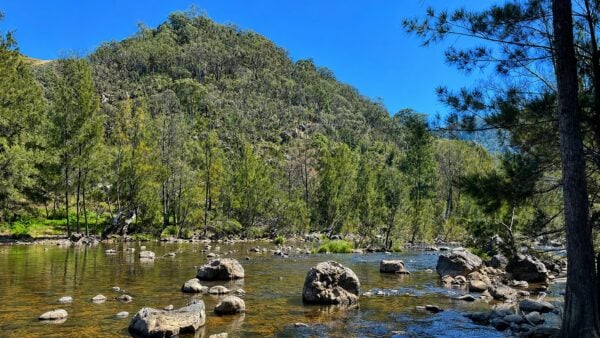

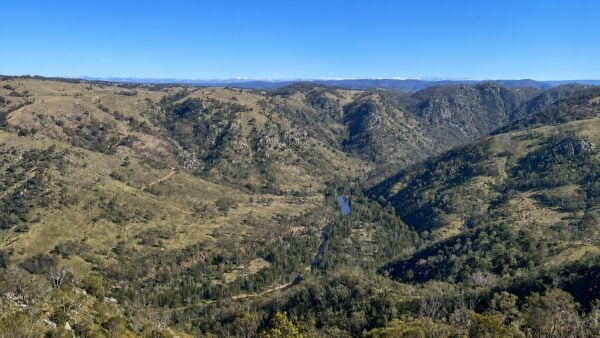
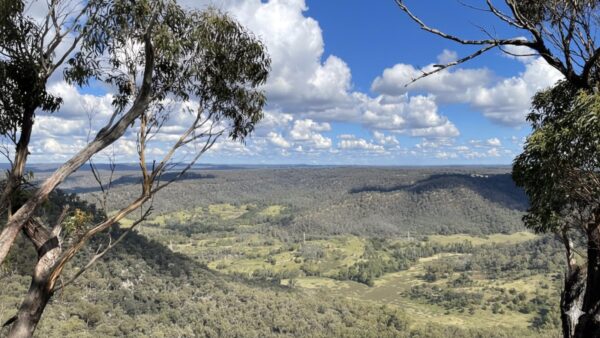
Where Koala Country Meets the Southern Highlands Escarpments
Overview
Guula Ngurra National Park sits in the Southern Highlands of New South Wales, about 30km west of Mittagong via Canyonleigh. It is a relatively new national park, covering 3,358 hectares, and protects a broad sweep of country where sandstone landscapes of the Sydney Basin meet the South Eastern Highlands.
That meeting of landscapes gives the park much of its character. Open forest and woodland spread across plateaus and slopes, then fall away into steep valleys shaped by the Wollondilly and Wingecarribee rivers. The park also forms part of an important north to south vegetated corridor in a largely cleared district, which helps explain why it holds such strong conservation value.
Highlights
The big draw here is the contrast in the landscape. Sandstone ridges and overhangs, red gum slopes, rocky gullies and river flats all sit within the one park, creating a place that feels both varied and rugged. The junction of the Wollondilly and Wingecarribee rivers is a defining natural feature, and the waterways themselves have cut steep escarpments and deep valleys through the country.
Higher ground around places such as Mount Penang and Baldy Billy Peak looks out over this folded terrain, where plateau country suddenly breaks into river gorges. Even without focusing on individual walks, the scenic character of Guula Ngurra is really about those sharp shifts between woodland uplands, cliff-lined slopes and the river country below.
Best Time to Visit
Autumn and spring are usually the most appealing times to spend time in Guula Ngurra. Autumn brings milder conditions after summer, while spring is known for wildflowers and good walking weather without the harsher heat.
If you are visiting mainly for the look of the landscape, spring also tends to show off the park’s mix of heath, woodland and flowering eucalypts particularly well.
Plants and Animals
Guula Ngurra is especially important as koala habitat, and the park has been recognised for its exceptional value in koala conservation. It sits within the Great Western Wildlife Corridor in the Southern Highlands, where koalas move through connected habitat across the landscape.
The range of habitats is one of the reasons the wildlife is so varied. Sandstone ridges, grey gum ridgetops, low Allocasuarina heath-woodland, river flats and caves support 139 recorded animal species, including 24 threatened species. The park also provides habitat for species such as the glossy-black cockatoo, swift parrot and regent honeyeater.
Plant life is just as varied, with open forest and woodland dominating much of the park. Significant vegetation communities include Forest Red Gum and Yellow Box woodland, and three threatened plant species have been recorded here. Because the park lies on the boundary of two bioregions, it can support species near the edge of their natural range, which adds to its ecological interest.
Culture and Heritage
Guula Ngurra lies within Gundungurra Country, and the park’s name, given by the Gundungurra People, translates as Koala Country. The word also carries a deeper meaning of Country as a living whole, taking in landforms, waters, plants, animals, stories and people.
The park remains culturally important, particularly around the meeting point of the Wollondilly and Wingecarribee rivers on the northern boundary. This place is part of the Gundungurra creation story of Gurangatch and Mirragan. Aboriginal archaeological sites have also been recorded in the park, including artefact scatters, occupation shelters, shelters with art, scar trees and grinding grooves.
Find more places to explore…
Help expand the trail collection!
Know of an official trail not listed on Trail Hiking Australia? I’m focused on showcasing the best tracks managed by land managers, and I’d love your help! Sharing a trail adds to our community and helps others discover safe, new adventures.
Submit your trail here

