Sorry, no records were found. Please adjust your search criteria and try again.
Sorry, unable to load the Maps API.
Explore stunning hiking trails of Gippsland High Country
Discover the diverse trails of Gippsland High Country, Victoria, offering hikes and walks for all skill levels and interests. Find your perfect adventure today.
Discover 1 hiking trail in Gippsland High Country

Snow Plains, Deep Valleys and the Long Spine of Victoria’s Alps
Overview
Gippsland High Country forms the south-eastern reach of Victoria’s alpine country, centred on the Gippsland side of Alpine National Park. Around 250 to 320 km east of Melbourne, this is a big mountain landscape of snow gum woodland, open plains, steep river valleys and long ridgelines that run north towards the New South Wales border. Much of the country is broad and elevated, then suddenly drops away into gorges, river systems and remote valleys, which is part of what gives the region its strong sense of scale.
The area includes some of the park’s best-known high country around Licola, Dargo, Omeo and Mitta Mitta, as well as more isolated country further east. Across that spread, the character shifts from grassy and herb-rich alpine plains to rugged river country cut by the Wonnangatta, Wellington, Moroka and Mitta Mitta systems.
Highlights
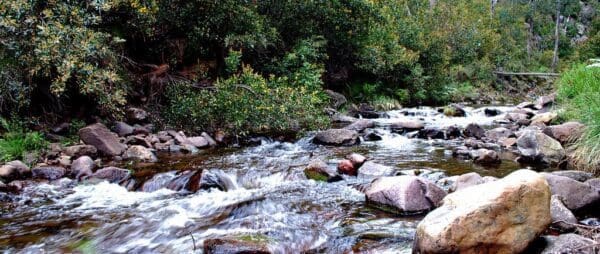
What stands out here is the contrast between open alpine country and the sharp breaks of the valleys below. Around the Howitt and Snowy Plains, the scenery is defined by snow grass plains, herbfields and snow gum woodland, with broad mountain views that feel expansive rather than rocky or crowded. In the Wonnangatta and Moroka country, the land becomes more dramatic, with clifftop lookouts, deep gorges and river-cut valleys folding away beneath the high ridges.
Further north-east, the Mitta Mitta country adds another layer again, with big river valleys and granite-strewn summits around Mount Wills and the Cobungra and Bundara catchments. Tali Karng gives the Gippsland side of the Alps one of its most distinctive landforms, a mountain lake formed when a massive rockslide dammed Nigothoruk Creek, with water leaving the basin underground before emerging far below in the Wellington River valley.
Best Time to Visit
The warmer months, from November to April, are generally the best time to see Gippsland High Country on foot. This is when the high country is at its most accessible and the alpine landscape shifts from snow-covered ground to open plains and flowering herbs and daisies. Summer brings milder temperatures than the lowlands, though nights in the mountains still stay cool.
Season matters here because the feel of the country changes so much through the year. Spring and summer bring colour to the high plains, while cooler months suit readers who simply want to picture a more austere alpine landscape of snow gums, exposed ridges and open snow plains.
Plants and Animals
The Gippsland High Country sits within one of the rarest ecological settings in Australia, with alpine and subalpine communities that include snow gum woodland, alpine grassland and heathland mosaics, wetlands and alpine sphagnum peatlands. These peatlands and associated fens are small in area but important in the way they store water and support specialised plant life.
Animal life includes a mix of characteristic alpine species and some of the state’s most sensitive high-country fauna. Suitable habitat is maintained here for threatened alpine animals including the Mountain Pygmy-possum, alongside other cold-climate specialists tied to the high plains, bogs and rocky uplands.
Culture and Heritage
This part of the Gippsland High Country includes places with direct cultural connections for Gunaikurnai people. Around Tali Karng, the area is identified as Gunaikurnai Country, and the lake itself is a sacred place. Elsewhere in the southern alpine country, cultural traces also remain on high vantage points, alongside later pastoral heritage expressed through old huts and grazing-era structures that still shape the character of the mountains.
Find more places to explore…
Help expand the trail collection!
Know of an official trail not listed on Trail Hiking Australia? I’m focused on showcasing the best tracks managed by land managers, and I’d love your help! Sharing a trail adds to our community and helps others discover safe, new adventures.
Submit your trail here

