Sorry, no records were found. Please adjust your search criteria and try again.
Sorry, unable to load the Maps API.
Explore stunning hiking trails of Gawler Ranges
Discover the diverse trails of Gawler Ranges National Park , South Australia, offering hikes and walks for all skill levels and interests. Find your perfect adventure today.
Discover 6 hiking trails in Gawler Ranges National Park


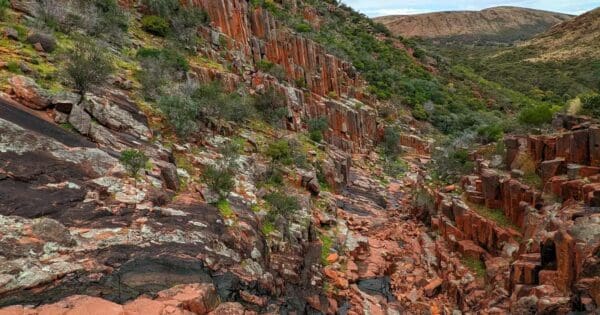
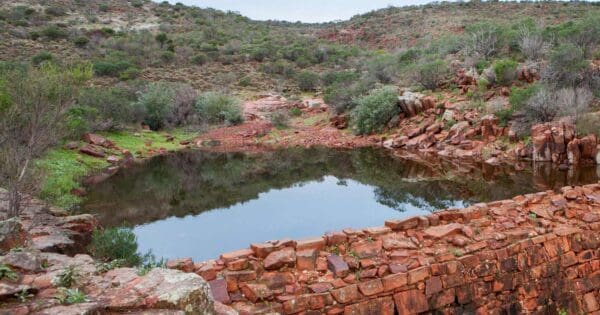
Ancient Volcanic Country on the Eyre Peninsula
Overview
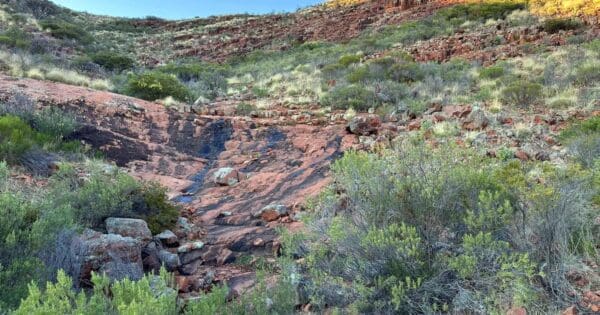
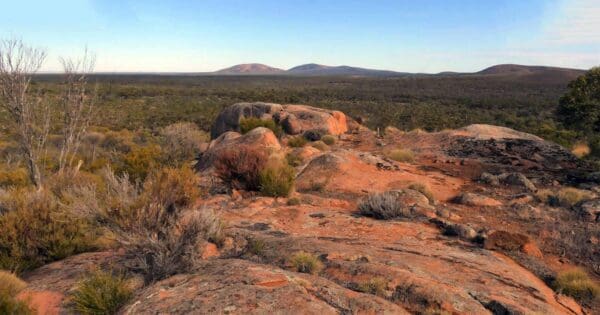
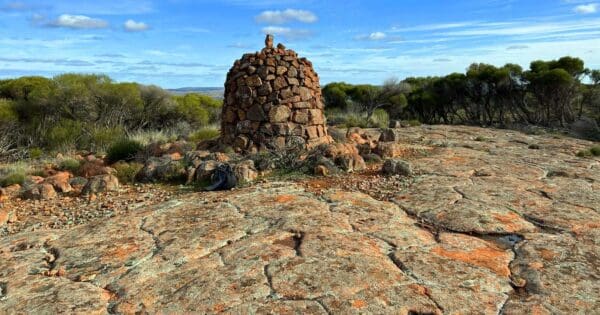
Gawler Ranges National Park sits in the southern Gawler Ranges on South Australia’s northern Eyre Peninsula, about six hours north-west of Adelaide. It is a big, open, rugged landscape of hills, rocky gorges and seasonal creeks, where the country shifts between mallee country to the south and drier inland country to the north.
That meeting point gives the park much of its character. The scenery feels both expansive and intricate, with broad plains, broken ridgelines, granite outcrops and waterholes tucked into the rock. It is also a place with strong conservation value, protecting a mix of plant and animal life that includes species found at the edge of their natural range as well as species unique to the Gawler Ranges.
Highlights
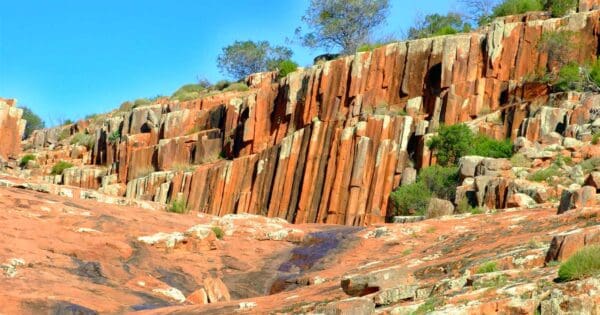
The park is best known for its ancient volcanic landscape. The Organ Pipes are its standout natural feature, formed around 1,500 million years ago and recognised as some of the largest volcanic rhyolite formations in the world. Elsewhere, rocky outcrops and falls at places such as Yandinga Falls and Kolay Mirica Falls add to the sense that this is a park shaped as much by deep geological time as by weather and water.
What stays with most people is the contrast across the landscape. One moment it is open woodland and grassland, the next it tightens into gorges, gullies and granite-fringed waterholes. Those shifts in terrain give the park a strong visual identity without relying on a single landmark.
Best Time to Visit
Late autumn and winter are usually the most comfortable times to be here, when the weather is cooler and the country greens up. After rain, creeks can flow and the park’s pools and soaks become much more lively.
From late winter into spring, wildflowers bring another layer of colour, including the bright blooms of crimson mallee and broad stretches of native grasses and bluebush across the plains. Summer has its own stark beauty, but the cooler months are generally the best fit for walking and for seeing the landscape at its most varied.
Plants and Animals
Gawler Ranges National Park protects more than 400 plant species, and many occur here at the outer edge of their natural distribution. Some are found nowhere else, including the Gawler Ranges hop bush, Gawler Ranges grevillea, Gawler Ranges mint bush, Gawler Ranges greenhood, crimson mallee and pointed-leaf honey myrtle.
The animal life is just as distinctive. The park supports rare and threatened species including yellow-footed rock-wallabies and malleefowl, and it contains Australia’s only protected population of the short-tailed grasswren. Semi-permanent soaks, granite waterholes and rocky gullies are especially important here, giving plants and animals refuge in dry times.
Culture and Heritage
This is Country for the Gawler Ranges People, who are recognised as the traditional owners of the park. The Gawler Ranges People are a distinct group of foundation families made up of some, but not all, of the Barngarla, Kokatha and Wirangu peoples, and this Country remains important to their laws, customs and cultural identity.
The park also contains culturally significant water sources, including granite waterholes and soaks. These places are part of the deeper story of how people have lived with this landscape over a very long time.
Find more places to explore…
Help expand the trail collection!
Know of an official trail not listed on Trail Hiking Australia? I’m focused on showcasing the best tracks managed by land managers, and I’d love your help! Sharing a trail adds to our community and helps others discover safe, new adventures.
Submit your trail here

