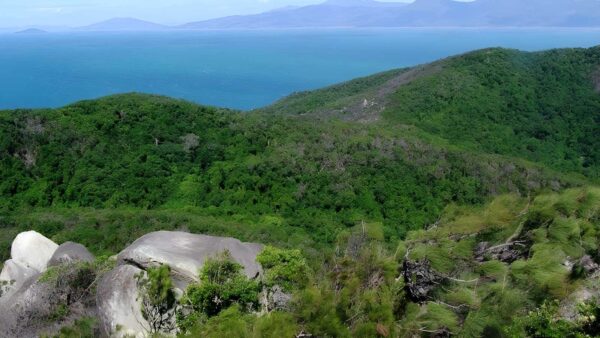
Where Rainforest Slopes Meet Coral Beaches on Fitzroy Island
Overview
Fitzroy Island National Park sits about 25km east of Cairns on a high continental island that was once connected to the mainland before rising sea levels cut it off. The park covers most of the island and packs a lot into a relatively small area, with granite outcrops, open woodland, rainforest, mangroves and coral beaches all close together. That mix gives the island a very different feel from the low sandy cays further out on the Great Barrier Reef.
Highlights
The character of Fitzroy Island comes from the meeting of steep granite slopes and bright fringing reef. Exposed headlands and rocky spurs give way to sheltered bays, mangrove-lined creeks and beaches edged by coral rubble and clear water. Because the island rises sharply from the sea, even short distances bring noticeable changes in scenery, from dry, open slopes to damp gullies with thicker forest.
It is also one of the more distinctive islands off Cairns because it is a true continental island rather than a coral cay. That underlying granite shape gives the coastline a bolder, more rugged look, while the surrounding reef and beaches soften the edges.
Best Time to Visit
The drier months from around May to October are usually the most comfortable time to be on Fitzroy Island, with lower humidity and clearer conditions that suit walking and time by the water. The warmer wet season brings a lusher feel to the island’s rainforest gullies, but it can also be far more humid.
Plants and Animals
Plant communities change quickly across the island. Exposed slopes and spurs carry heaths and open woodland with eucalypts, acacias and turpentine trees, while rainforest grows in the wetter valleys. Around the creeks and shore, mangroves and other coastal plants adapted to salt spray and poor soils take over, including casuarinas and pandanus.
Recorded wildlife for the park includes 153 species. That variety reflects the island’s patchwork of habitats, from forest and woodland to shoreline environments, all compressed into a compact area.