Sorry, no records were found. Please adjust your search criteria and try again.
Sorry, unable to load the Maps API.
Explore stunning hiking trails of Eurobodalla National Park
Discover the diverse trails of Eurobodalla National Park, New South Wales, offering hikes and walks for all skill levels and interests. Find your perfect adventure today.
Discover 1 hiking trail in Eurobodalla National Park
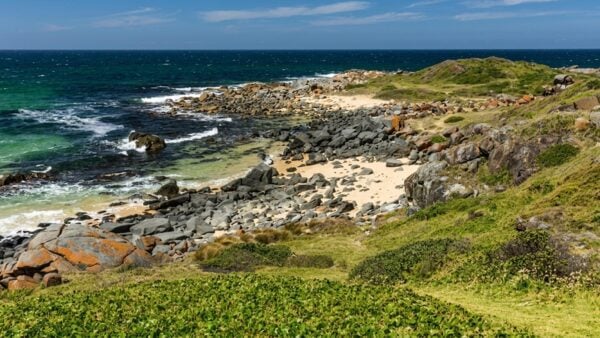

Headlands, lagoons and open coast at Eurobodalla
Overview
Eurobodalla National Park stretches along the far south coast of New South Wales between Moruya and Bermagui. Rather than one continuous block, it is made up of 16 separate coastal sections, protecting 2220 hectares of shoreline, intertidal country and coastal lakes. That scattered layout is a big part of its character. You move through a chain of beaches, headlands, dunes, estuaries and lake edges, with the park tying together many of the coast’s quieter natural areas.
What stands out most here is how undeveloped much of the coastline remains. Across the park, the scenery shifts from long exposed beaches to smaller sheltered stretches, with parallel dune systems, rocky points and wetland country adding variety along the way.
Highlights
The park’s appeal is its coastal shape and texture. It protects a mix of open beaches, smaller tucked-away bays, dune systems and headlands, plus freshwater and estuarine wetlands that break up the shoreline. This gives the park a broader feel than a single beach reserve, with each section showing a slightly different side of the south coast.
Bingie Bingie Point is one of the standout natural features, with a geologically significant rock platform and strong views over the surrounding coast. Elsewhere, the park’s numerous coastal lakes and lagoon systems add a softer, more sheltered counterpoint to the surf beaches and exposed headlands.
Best Time to Visit
Summer suits the park’s beaches, lakes and estuaries particularly well, when the water and coastal conditions make the most sense for a day by the shore. Outside the busiest holiday stretch, autumn and spring are often the more comfortable times to enjoy the open coast, with milder temperatures and a quieter feel across the headlands and beach country.
Plants and Animals
Despite being spread across separate coastal blocks, the park supports a notably rich mix of habitats and wildlife. Its vegetation includes 13 identified plant communities, and the variety of beaches, wetlands, headlands and lake margins helps support 194 recorded vertebrate species. That diversity is one of the reasons the park feels so varied from one section to the next.
Birdlife is a big part of the experience, especially around waterways and the coast. Species associated with the park include Australian pelicans, yellow-tailed black-cockatoos and Peron’s tree frogs, while sandy shorelines and estuaries also support more sensitive coastal birds.
Culture and Heritage
Eurobodalla National Park contains numerous sites of importance to the local Aboriginal community, and Aboriginal communities continue to be involved in the care and management of those places. The park also includes sites of historic importance, reflecting older coastal use and settlement patterns in different parts of the reserve.
Some places hold layered significance. Bingie Bingie Point, for example, is recognised not only for its geology and coastal scenery, but also for its Aboriginal value.
Find more places to explore…
Help expand the trail collection!
Know of an official trail not listed on Trail Hiking Australia? I’m focused on showcasing the best tracks managed by land managers, and I’d love your help! Sharing a trail adds to our community and helps others discover safe, new adventures.
Submit your trail here

