Sorry, no records were found. Please adjust your search criteria and try again.
Sorry, unable to load the Maps API.
Explore stunning hiking trails of Eurobodalla Coastline
Discover the diverse trails of Eurobodalla Coastline, New South Wales, offering hikes and walks for all skill levels and interests. Find your perfect adventure today.
Discover 1 hiking trail in Eurobodalla Coastline
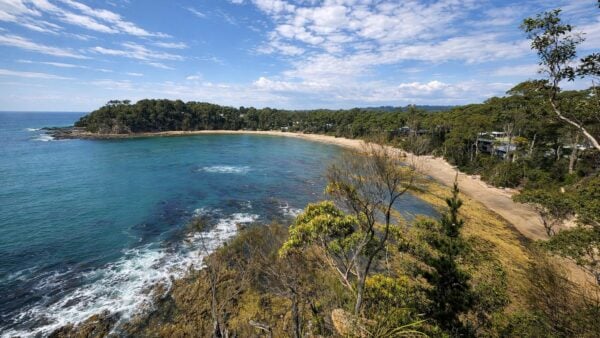

Where Headlands, Lagoons and Long Beaches Meet on the Far South Coast
Overview
Eurobodalla National Park protects a long, broken stretch of the far south coast of New South Wales, running between South Head Moruya and the mouth of Tilba Tilba Lake south of Narooma. It sits about 300km south of Sydney and is made up of 16 separate sections rather than one continuous block of country, which helps explain the constant change in scenery as you move along it.
This coastline brings together surf beaches, smaller sheltered beaches, dune systems, headlands, intertidal areas, lagoons and coastal lakes in one park. Even though it is narrow and fragmented in places, it plays an important role in protecting a 30km run of coastal country and the plant and animal communities tied to it.
Highlights
The real character of Eurobodalla lies in its variety. North of Narooma, the coast is marked by longer exposed beaches and parallel dunes, while further south it shifts into smaller beaches edged by cliffs and headlands. Creeks and lagoon entrances regularly break up the shoreline, so the landscape never feels repetitive for long.
One of the standout natural features is Bingie Bingie Point, where unusual rock formations make it a regionally significant geological site. Elsewhere, the park’s scenic strength comes from the mix of open ocean, quieter inlets, wetland edges and forested backdrops rather than from any single dramatic landmark.
Best Time to Visit
There is no single season that defines this coastline. Summer brings the classic beach weather that suits the park’s ocean and lake edges, while spring is a particularly good time for seeing coastal wildflowers, including banksias in the dune and woodland areas. In winter, the headlands become appealing places to take in the open coast, and this is also the main whale watching season along the NSW south coast.
Plants and Animals
Eurobodalla National Park supports a broad mix of coastal habitats, including freshwater and estuarine wetlands, dune vegetation, banksia woodland, paperbark forest, casuarina and mangrove communities, coastal forest and low woodland on exposed headlands. That spread of habitats is a big part of what makes the park feel so varied from one section to the next.
Wildlife reflects that diversity. Coastal birds are a strong feature, with white-bellied sea eagles and Australian pelicans among the more visible species, and the estuaries and headlands are important overwintering areas for migratory birds. The park also supports beach and estuary species such as pied oystercatchers and hooded plovers, alongside a wider mix of native fauna across its forests, wetlands and shoreline.
Culture and Heritage
Eurobodalla National Park is on the traditional Country of the Yuin People and remains an important place for Aboriginal people today. The coastline provided food, shelter, medicines and materials, and the park contains numerous sites that are significant to the contemporary Aboriginal community as well as many places that show long Aboriginal use of the area.
Within the park, Bingie Bingie Point is noted not only for its geology but also for its Aboriginal value. The Bingi Dreaming route follows ancient Song Lines associated with the Yuin people, giving this part of the coast a cultural depth that sits alongside its natural character.
Find more places to explore…
Help expand the trail collection!
Know of an official trail not listed on Trail Hiking Australia? I’m focused on showcasing the best tracks managed by land managers, and I’d love your help! Sharing a trail adds to our community and helps others discover safe, new adventures.
Submit your trail here

