Sorry, no records were found. Please adjust your search criteria and try again.
Sorry, unable to load the Maps API.
Explore stunning hiking trails of East Fitzgerald National Park
Discover the diverse trails of East Fitzgerald National Park, Western Australia, offering hikes and walks for all skill levels and interests. Find your perfect adventure today.
Discover 2 hiking trails in East Fitzgerald National Park
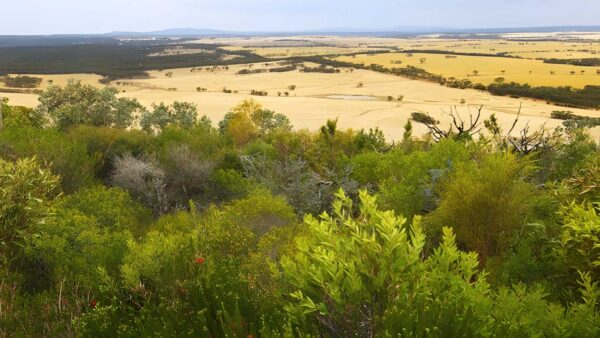



Quartzite Ranges and a Wild South Coast at East Fitzgerald
Overview
East Fitzgerald National Park forms the eastern side of Fitzgerald River National Park on Western Australia’s south coast, not far from Hopetoun and roughly 400 kilometres south-east of Perth. This is a big, open landscape where coastal ranges, river valleys, inlets and beaches all sit close together, giving the area a strong sense of scale and variety. The park is also recognised as the core of the Fitzgerald Biosphere Reserve, which reflects how important this country is for conservation.
What stands out here is the meeting of rugged shoreline and ancient mountain country. The Barren Ranges run along the coast as folded quartzite-rich peaks and ridges, while inland areas open into plains, mallee, heath and river country. Even within the broader park, the eastern side has a particularly dramatic coastal character.
Highlights
The scenery in East Fitzgerald is shaped by the Barren Ranges, where old metasedimentary rocks have been folded and lifted into a line of coastal peaks above the Southern Ocean. That geology gives the area its hard-edged ridges, rocky slopes and elevated lookouts, with long views across beaches, inlets and the park’s broad interior.
There is also a strong contrast between landforms. Around the coast, cliffs, dunes, limestone and sheltered inlets break up the shoreline, while further inland the Fitzgerald and Hamersley river systems cut through the country to form larger valleys and gorges. It is a place of wide horizons rather than dense forest, with much of its scenic appeal coming from the sheer openness of the landscape.
Best Time to Visit
The most rewarding months are usually late winter through spring, when flowering is at its peak from August to November and the heath and shrublands show the park’s plant diversity at its best. The cooler months also suit walking better than the height of summer, especially in the more exposed parts of the coast and ranges.
Winter also brings whale watching to this stretch of coast, adding another seasonal reason to spend time in the eastern section of the park.
Plants and Animals
This is one of the most botanically rich protected areas in Western Australia. Across Fitzgerald River National Park, 1,748 plant species have been identified, including 75 that occur nowhere else. Heath and shrubland dominate much of the landscape, with mallee spread widely across the park and woodlands mostly confined to rivers and swamps.
The eastern side is part of the Eyre Botanical District and helps protect a large, uncleared example of that country. Plant diversity is especially high across the uplands, plains and ranges, and the mix of coastal influence, varied geology and different soils is a big part of why the flora is so rich. Birdlife is also notable, with around 200 bird species recorded in the park.
Culture and Heritage
Fitzgerald River National Park is recognised as Traditional Owner country for Goreng, Menang and Wudjari people.
Find more places to explore…
Help expand the trail collection!
Know of an official trail not listed on Trail Hiking Australia? I’m focused on showcasing the best tracks managed by land managers, and I’d love your help! Sharing a trail adds to our community and helps others discover safe, new adventures.
Submit your trail here

