Sorry, no records were found. Please adjust your search criteria and try again.
Sorry, unable to load the Maps API.
Explore stunning hiking trails of D’Entrecasteaux National Park
Discover the diverse trails of D’Entrecasteaux National Park, Western Australia, offering hikes and walks for all skill levels and interests. Find your perfect adventure today.
Discover 2 hiking trails in D'Entrecasteaux National Park


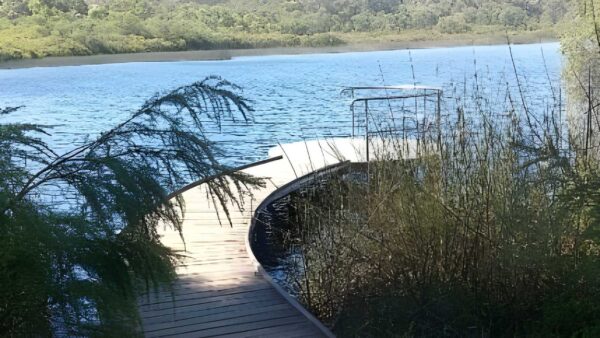

Where Southern Forests Meet a Long, Wild Coast
Overview
D’Entrecasteaux National Park stretches along the south coast of Western Australia, south of Manjimup, and protects a large sweep of coastal country backed by forest, wetlands, rivers and granite landforms. It is a place of strong contrasts, where long beaches and exposed cliffs sit alongside freshwater lakes, dense heath and patches of karri forest. The park forms part of a broader landscape that still feels big and open, with natural systems that remain largely intact.
What gives this park its character is that mix of coast and inland habitats in one continuous reserve. Beaches, inlets, wetlands and dune systems shape the shoreline, while further inland the scenery shifts into forested country and swamps, creating a landscape that changes noticeably from one part of the park to the next.
Highlights
The coastline is the part most people remember first. D’Entrecasteaux is known for white beaches, rugged coastal cliffs and prominent headlands including Point D’Entrecasteaux, Black Point and Cliffy Head. The scenery is broad rather than delicate, with wind-shaped dunes, open ocean and long sections of shore that feel uninterrupted for kilometres.
Just as striking is the variety behind the coast. Granite outcrops rise from the landscape, inland lakes and wetland systems break up the forest, and the Yeagarup dune country adds another layer of scale and texture. Altogether, it is a park with a strong sense of geological change, from rocky headlands to shifting sand and low-lying wetlands.
Best Time to Visit
The most comfortable time to visit is usually from spring through to the milder months of autumn, when conditions are often better for walking and for taking in the coast without the full force of winter weather. Spring is especially rewarding because the heath and woodland flora are at their best, adding colour to a landscape that can otherwise feel stark and windswept.
If you are mainly interested in coastal views, cooler clear days can make the cliffs, beaches and headlands feel at their sharpest. Seasonal changes matter here because the park is shaped so strongly by weather, with its coastal and wetland landscapes looking quite different across the year.
Plants and Animals
D’Entrecasteaux National Park supports a notably varied spread of habitats, and that shows in its plant life. Coastal heath, wetlands, sedgelands, woodlands and patches of karri all occur within the park, with some areas recognised for endemic, disjunct and relictual flora. There is also an endangered threatened ecological community at Black Point formed by rimstone pools and cave structures created by microbial activity on the marine shoreline.
The wetlands are especially important for birdlife. Lake Jasper and Lake Maringup are recognised as two of the five most important wetlands for waterbirds on the south coast, and Lake Jasper has supported the highest number of breeding waterbird species recorded at any one wetland in that region. Across the park, threatened fauna recorded include quokka, woylie, chuditch, wambenger, Australasian bittern and malleefowl, while New Zealand fur seals are known to haul out at Black Point and peregrine falcons occur along the coastal cliffs.
Culture and Heritage
D’Entrecasteaux National Park has strong Noongar cultural connections. Official park information for sites within the park recognises Minang and Bibbulman people as the Traditional Owners of D’Entrecasteaux National Park. The Lake Jasper and Meerup Dunes area is described as a place of particular archaeological and cultural significance, with erosion revealing stone artefacts, fish traps, quarry sites, mythological sites and burial sites. Artefacts found well below Lake Jasper’s present water level show how long people have lived with and used this country.
The park also carries traces of more recent history, but the deeper story is one of long Aboriginal presence tied to the coast, lakes, dunes and inland waters. That continuing connection helps explain why the landscape feels like more than a scenic stretch of shoreline.
Find more places to explore…
Help expand the trail collection!
Know of an official trail not listed on Trail Hiking Australia? I’m focused on showcasing the best tracks managed by land managers, and I’d love your help! Sharing a trail adds to our community and helps others discover safe, new adventures.
Submit your trail here

