Sorry, no records were found. Please adjust your search criteria and try again.
Sorry, unable to load the Maps API.
Explore stunning hiking trails of Cylinder Headland
Discover the diverse trails of Cylinder Headland, Queensland, offering hikes and walks for all skill levels and interests. Find your perfect adventure today.
Discover 2 hiking trails in Cylinder Headland
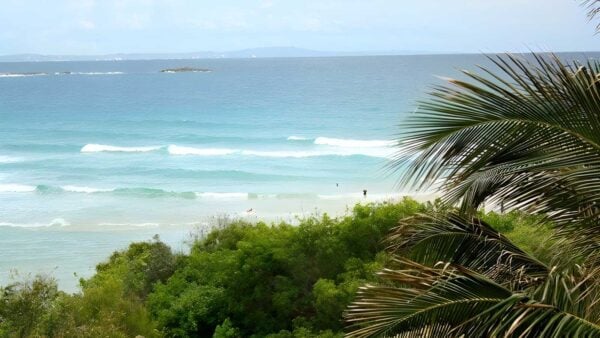

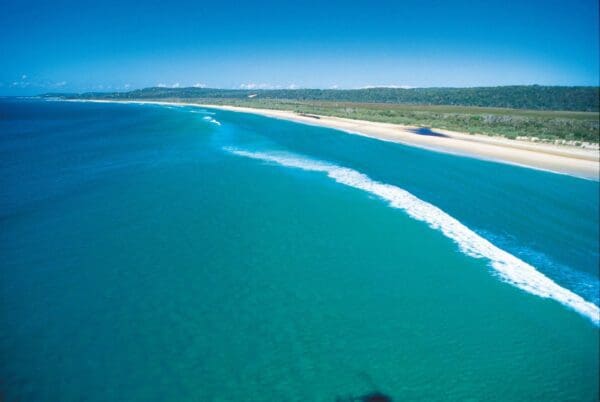
Wind-shaped Headland Above the Point Lookout Coast
Overview
Cylinder Headland sits at Point Lookout on Minjerribah, on the north-eastern side of North Stradbroke Island. This is a small but striking piece of coast where the land lifts above the shoreline and gives a clear sense of how exposed this part of the island is to sea, salt and wind. Rather than a long sweep of beach or a broad national park landscape, the headland is about the meeting point between rocky foreshore, dune country and the settled edge of Point Lookout.
It also forms part of a larger coastal foreshore corridor that links several headlands and beaches around Point Lookout. That setting matters, because Cylinder Headland makes most sense as one section of a connected coastal landscape rather than an isolated lookout on its own.
Highlights
The drawcard here is the headland itself. Exposed rock, open ocean outlooks and the contrast between the raised foreshore and the lighter, sandier country nearby give this part of Point Lookout its character. From the headland, the coastline feels close and immediate, with the shape of the shore and the changing colour of the water doing most of the work.
Another distinctive feature is the way the vegetation reflects the site’s exposure. This is not lush, sheltered coastal country. The scenic character comes from a harder, more wind-worked edge, with low shrubland and woodland shaped by salt and weather.
Best Time to Visit
Cylinder Headland is at its best in the cooler, drier months, when the air is clearer and the exposed coastline is more comfortable for walking. In south-east Queensland, that usually means autumn through spring. Early morning and later afternoon often show the headland at its best, when the angle of light brings out the texture of the rock, the slope of the foreshore and the colour shifts across the sea.
Because this is an exposed coastal site rather than a shaded inland reserve, the middle of hot summer days can feel harsh. Outside the wetter months, the place tends to feel cleaner-lined and easier to take in.
Plants and Animals
Cylinder Headland sits within an ecologically connected foreshore corridor that carries several coastal vegetation communities through Point Lookout. On and around the headland, that includes exposed kangaroo grass and wind-sheared shrubland and woodland on the rocky ground, with spinifex grassland and casuarina woodland closer to the beach system nearby. This mix helps explain why the area feels so varied over a short distance, even though it is all unmistakably coastal.
The seaward edge of this corridor is part of a Ramsar-listed wetland area, and the corridor has extensive records of bird species that depend on connected coastal habitat. Even in a built-up part of the island, the headland still belongs to a broader living coastal system rather than a stand-alone parkland strip.
Culture and Heritage
Cylinder Headland and the surrounding Point Lookout foreshore are recognised as places with cultural heritage values, and parts of this area are protected through Cultural Heritage and Conservation Management Plans. That cultural significance is part of why the foreshore is managed carefully as more than just a scenic coastal reserve.
Find more places to explore…
Help expand the trail collection!
Know of an official trail not listed on Trail Hiking Australia? I’m focused on showcasing the best tracks managed by land managers, and I’d love your help! Sharing a trail adds to our community and helps others discover safe, new adventures.
Submit your trail here

