Sorry, no records were found. Please adjust your search criteria and try again.
Sorry, unable to load the Maps API.
Hikes and walks in Collie
Here you’ll find every hike we list in Collie, Western Australia. Each listing has the distance, grade and time it takes, so you can pick one that suits you. You can also search hikes across Australia.
Discover 1 hiking trail in Collie
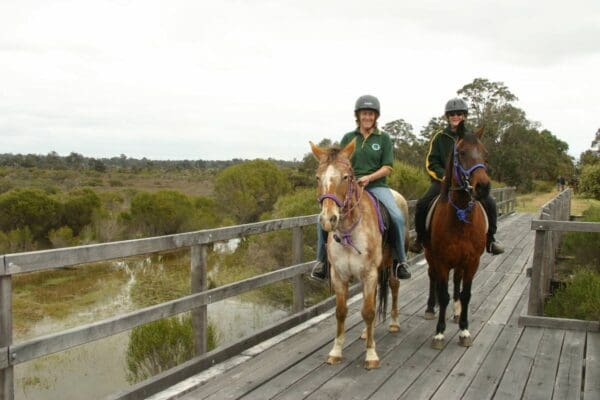

Jarrah Forest and River Country Around Collie
Overview
Collie sits in Western Australia’s South West, about 195 kilometres south of Perth and around 7 kilometres east of Wellington National Park. What makes the area stand out is the way the lower Collie River valley cuts through the western edge of the Darling Plateau, creating steep-sided valleys, forested ridges and a landscape shaped as much by water as by forest. Around town, the wider Collie region brings together national park, conservation park and state forest country, with a strong jarrah forest character that gives the whole area its look, scent and scale.
Much of the best-known scenery near Collie is concentrated in and around Wellington National Park, where the Collie River, Wellington Dam and the surrounding uplands create a mix of broad water views, rocky slopes and deeply incised valley country. It feels distinctly inland compared with the coast, yet still very much part of the South West forest belt.
Highlights
The defining natural feature here is the lower Collie River valley, where the river has cut deep into the landscape below Wellington Reservoir. That carving has produced some of the area’s strongest scenery, with steep valley sides, granite outcrops, river pools and long views across forested slopes. In the higher country, lateritic uplands and prominent hills add shape and relief, while around Wellington Dam the big open water and surrounding ridgelines give the landscape a broader, more expansive feel.
There is also a pleasing contrast between enclosed river sections and more open forest country. Some parts feel shaded and intimate along the water, while others open out to wide views over the Collie River Valley and the dam.
Best Time to Visit
Spring is one of the best times to be here, when wildflowers are out and the river is usually flowing well through the valley. The forest is especially appealing then, with fresh colour on the ground layer and mild conditions that suit longer days outside.
Cooler months more broadly tend to show the landscape at its best. The jarrah and marri forest has more softness after winter rain, and the contrast between dark trunks, granite and moving water is stronger than it is in the hotter, drier part of the year.
Plants and Animals
Collie is part of a forest landscape dominated by jarrah, marri and yarri, with different soils and landforms shaping how dense or open the forest feels from place to place. Along the valley floors and creek lines, moisture supports richer habitat, while granite outcrops create smaller pockets of specialised vegetation.
The area supports a mix of native mammals and birdlife associated with the South West forests. Animals recorded in the wider Wellington National Park area include chuditch, quenda, quokka, brushtail possum and woylie. Tree hollows are important for birds such as cockatoos, parrots, owls and tree-martins, while denser shrubs around granite outcrops and creeklines provide habitat for smaller bush birds. The Collie River and reservoir also support waterbirds.
Culture and Heritage
Wellington National Park is recognised as Country for Kaniyang and Wiilman people. The Collie River valley also carries Aboriginal heritage connected to the long history of Noongar occupation in this forest landscape, with the river and surrounding jarrah country forming an important part of that story.
Find more places to explore…
Help expand the trail collection!
Know of an official trail not listed on Trail Hiking Australia? I’m focused on showcasing the best tracks managed by land managers, and I’d love your help! Sharing a trail adds to our community and helps others discover safe, new adventures.
Submit your trail here