Sorry, no records were found. Please adjust your search criteria and try again.
Sorry, unable to load the Maps API.
Hikes and walks in Coffin Bay National Park
Here you’ll find every hike we list in Coffin Bay National Park, South Australia. Each listing has the distance, grade and time it takes, so you can pick one that suits you. You can also search hikes across Australia.
Discover 8 hiking trails in Coffin Bay National Park
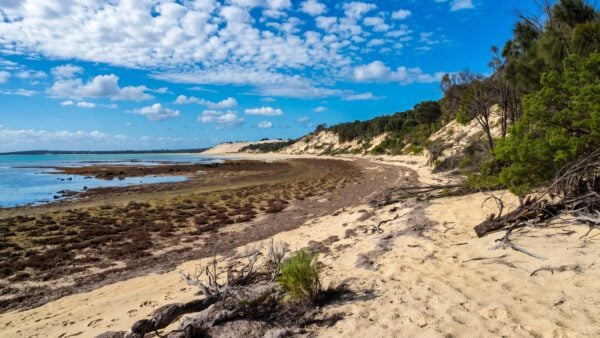

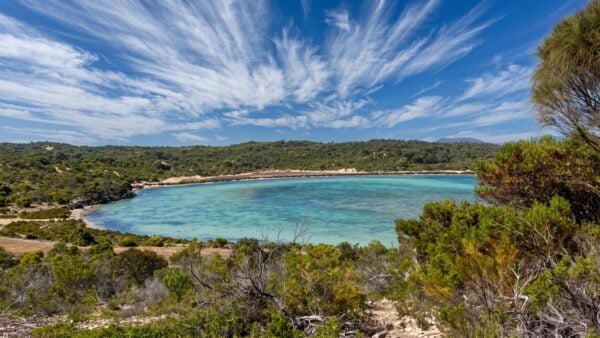
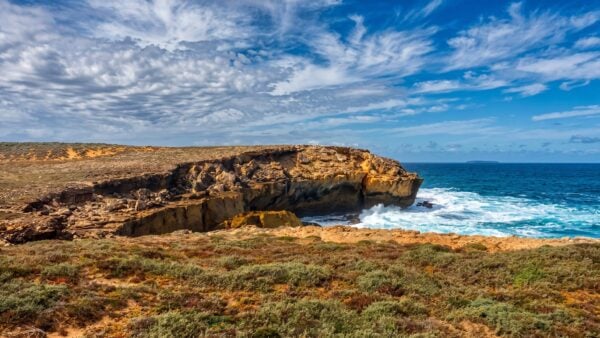

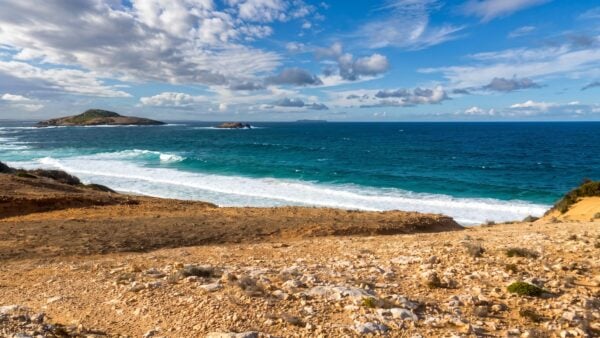
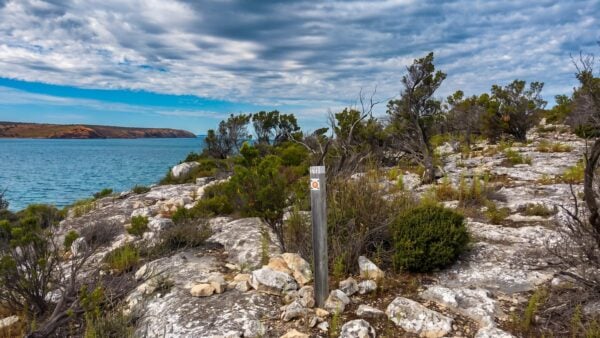
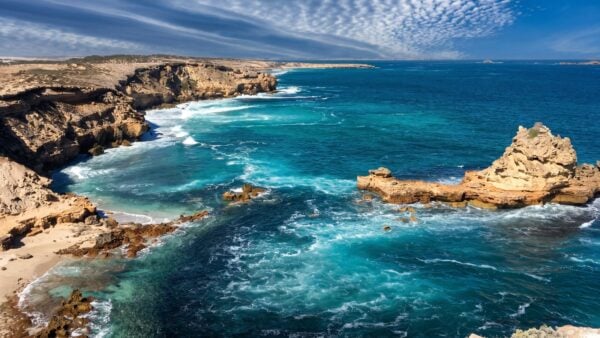
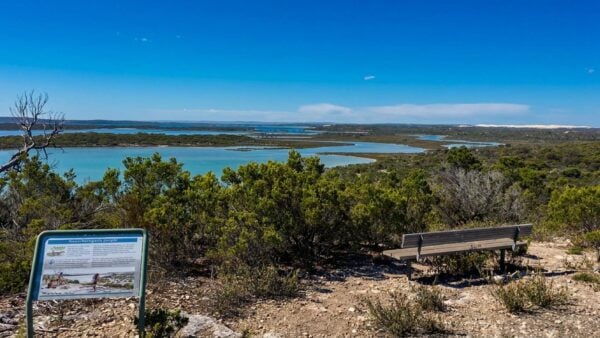

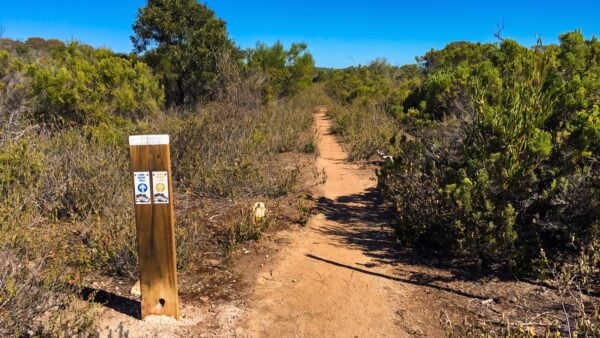
Sheltered Bays, Coastal Dunes and Wild Cliffs in Coffin Bay National Park
Overview
Coffin Bay National Park lies about 50 km west of Port Lincoln at the southern tip of South Australia’s Eyre Peninsula. The park protects around 31,000 hectares of the Coffin Bay Peninsula, including the Whidbey Wilderness Area. On the Southern Ocean side, surf breaks along sweeping beaches below wind-exposed cliffs. Around Yangie Bay, the water is sheltered and walking tracks pass through low coastal mallee and heath.
From Flinders Highway, take Coffin Bay Road to the park entrance. Sealed roads provide access to Yangie Bay, Point Avoid and Golden Island Lookout, so you can explore several parts of the park in a 2WD. Vehicle access to the remote northern beaches requires a high-clearance 4WD. Yangie Bay has a campground, toilets and a picnic shelter. There is no drinking water in the park, so bring your own.
Highlights
Yangie Bay is a good starting point if you’re visiting for the first time. A short climb to Yangie Lookout opens up views across the bay to the Marble Range. From the same campground, you can take a longer walk between vegetated dunes to Long Beach. The route gives you a feel for how quickly the landscape changes as you leave the sheltered bay and reach the open coast.
At Black Rocks, the walking track takes in the rugged Avoid Bay coastline and looks out over Lake Damascus. Further into the peninsula, the longer walks around Boarding House Bay and Point Whidbey cross coastal heath, samphire flats and low mallee, with views of cliffs, coves and offshore reefs. Keep well back from cliff edges, which can be unstable, and give the surf plenty of room on exposed beaches and rock platforms.
Best Time to Visit
Late winter and spring are good times to plan a visit around walking. The weather is generally cooler than in summer, and it’s when coastal plants such as cocky tongue put on their orange, red and yellow flowers. In winter, you may also spot southern right whales offshore from the Avoid Bay cliffs.
Summer is usually dry and can be hot, so start longer walks early and carry enough water for the full route. Check the wind and swell forecast before heading to the exposed coast. Conditions around Point Avoid can feel quite different from those beside Yangie Bay.
Plants and Animals
Coastal heath and shrubland cover much of the park, with cushion bush, coastal bearded-heath and salmon correa growing among the dunes and on exposed headlands. Samphire grows on low-lying flats, while mallee and patches of drooping sheoak woodland add variety inland. Near Point Sir Isaac, rangers and volunteers have worked to restore sheoak woodland affected by earlier grazing.
Emus, western grey kangaroos and goannas live in the park, and more than 120 bird species have been recorded. Look for ospreys and white-bellied sea eagles hunting along the coast. Hooded plovers nest on sandy beaches, so give nesting birds and their chicks plenty of space.
Culture and Heritage
The lower Eyre Peninsula coast is Country of the Barngarla and Nauo peoples, who have long drawn on its resources, including fish and plants such as the nondo bean that grows in the dunes. Stone fish traps, stoneworking sites and middens remain in the park and reflect generations of knowledge of these shores.
Matthew Flinders charted much of the lower Eyre Peninsula coast in 1802 and named Coffin Bay after Admiral Sir Isaac Coffin. Whaling and sealing took place in the early nineteenth century, and sheep grazing later became established on the peninsula. Coffin Bay National Park was established in 1982 and now protects the coastline, dunes and woodlands that walkers explore today.
Find more places to explore…
Help expand the trail collection!
Know of an official trail not listed on Trail Hiking Australia? I’m focused on showcasing the best tracks managed by land managers, and I’d love your help! Sharing a trail adds to our community and helps others discover safe, new adventures.
Submit your trail here