Sorry, no records were found. Please adjust your search criteria and try again.
Sorry, unable to load the Maps API.
Explore stunning hiking trails of Cape Range National Park
Discover the diverse trails of Cape Range National Park, Western Australia, offering hikes and walks for all skill levels and interests. Find your perfect adventure today.
Discover 3 hiking trails in Cape Range National Park



Where the Limestone Range Meets the Reef
Overview
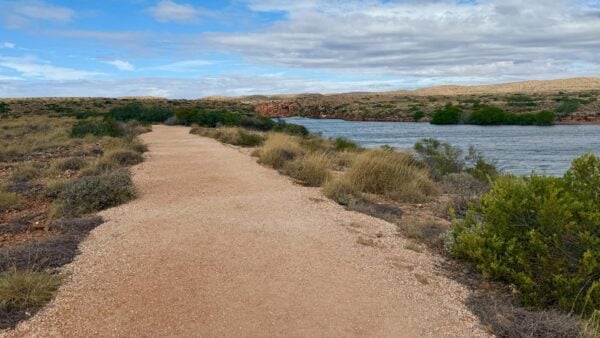
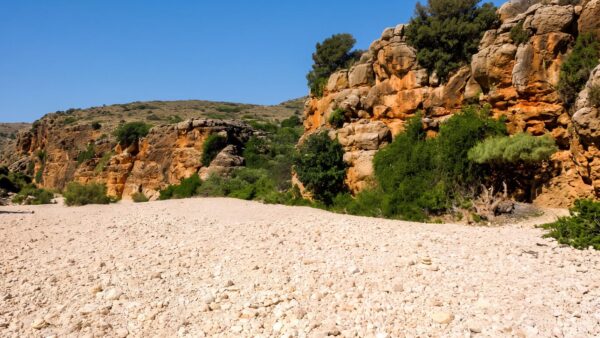
Cape Range National Park sits on the North West Cape near Exmouth, around 1,250 kilometres north of Perth, where a steep limestone range runs down to a narrow coastal plain beside Ningaloo Marine Park. The park covers about 50,581 hectares of the peninsula and is shaped by a heavily dissected karst landscape, with dry ranges, rocky gorges and coastal country packed closely together. That contrast between red and cream limestone, open plain and bright Indian Ocean water is one of the things that gives the place its strong sense of character.
The park also forms part of the Ningaloo Coast World Heritage Area, so even though it feels remote and spare, it carries international significance for its geology, habitats and the way its land and sea environments connect.
Highlights
The scenery here is all about sharp contrasts. Cape Range rises as a long uplifted limestone backbone, cut by deep gorges and canyons that reveal the shape of the peninsula. From higher points along the range, the views stretch across the coastal plain to Ningaloo Reef on one side and Exmouth Gulf on the other, giving you a clear sense of how narrow and dramatic this strip of country really is.
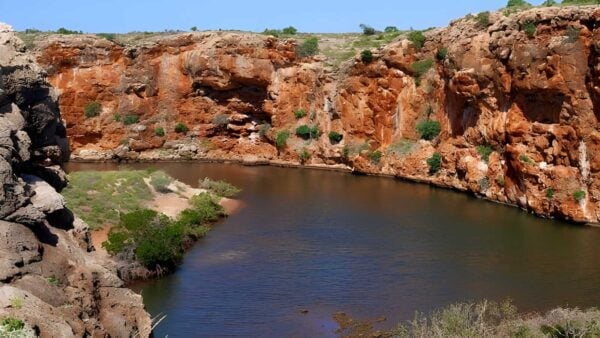
Yardie Creek is one of the park’s most distinctive natural features, bringing sheer gorge walls, permanent water and pockets of vegetation into an otherwise arid setting. Elsewhere, places such as Charles Knife Canyon and Shothole Canyon show off the park’s folded limestone, colour bands and erosion patterns, while the coast adds another layer of scenery with reefs, beaches, mangroves and wave-cut terraces shaped by uplift over long periods.
Best Time to Visit
The more comfortable months are generally the cooler part of the year, when daytime conditions are better for walking and for taking in the open country without the full force of summer heat. The dry, exposed landscape means light, shade and temperature make a big difference to how the park feels, and the cooler season usually gives a better balance between clear days and time outdoors.
Winter and the shoulder months also suit visitors who want to appreciate the park’s scenic contrasts rather than rush through it, with softer conditions for looking across the range, coast and reef country together.
Plants and Animals
Although the country looks stark at first glance, Cape Range supports a surprisingly rich mix of life. Its gorges act as refuges for wildlife, including the black-flanked rock-wallaby, while Yardie Creek and Mangrove Bay are especially important bird habitats for resident and migratory species. Beaches on the peninsula are also used for nesting by marine turtles, including green, hawksbill and loggerhead turtles.
One of the park’s most remarkable natural features is less obvious from the surface. The Cape Range karst system supports specialised underground ecosystems, including endemic subterranean animals and two fish species restricted to subterranean environments. That hidden biological richness is a big part of why the park matters scientifically as well as scenically.
Culture and Heritage
Cape Range National Park has direct and continuing Aboriginal cultural connections. The park is jointly managed with Traditional Owners, and the North West Cape has ongoing cultural significance for Baiyungu, Thalanyji and Yinigurdira people. Management of the park recognises the role of traditional custodians in caring for country and protecting cultural heritage within this landscape.
Find more places to explore…
Help expand the trail collection!
Know of an official trail not listed on Trail Hiking Australia? I’m focused on showcasing the best tracks managed by land managers, and I’d love your help! Sharing a trail adds to our community and helps others discover safe, new adventures.
Submit your trail here

