Sorry, no records were found. Please adjust your search criteria and try again.
Sorry, unable to load the Maps API.
Explore stunning hiking trails of Cape Le Grand National Park
Discover the diverse trails of Cape Le Grand National Park, Western Australia, offering hikes and walks for all skill levels and interests. Find your perfect adventure today.
Discover 2 hiking trails in Cape Le Grand National Park
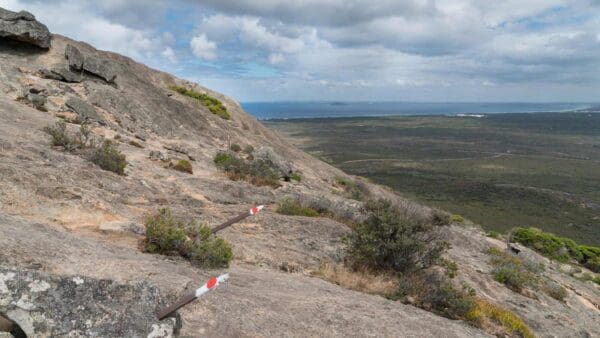

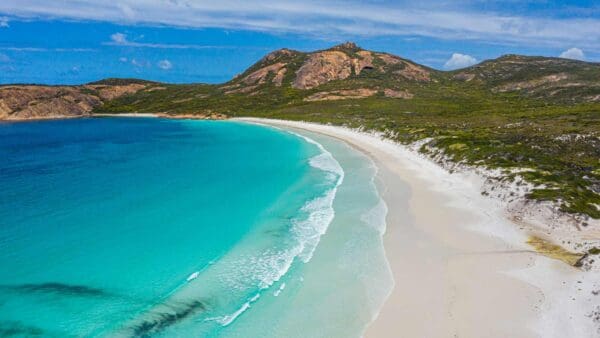

Granite Peaks, White Sand and the Clear Water Coast of Cape Le Grand
Overview
Cape Le Grand National Park sits on the south coast of Western Australia, east of Esperance, where granite headlands meet long pale beaches and clear Southern Ocean water. It is one of the best-known parks in the region, but it still feels defined by the shape of the land itself: broad coastal sweeps, rounded peaks, sheltered coves and inland heath.
The park’s character comes from that contrast between coast and hinterland. Along the shoreline, rocky points break up a run of bays and beaches. Just back from the water, rolling sandplain and heath country spread out beneath the granite mass of peaks such as Frenchman Peak and Mount Le Grand.
Highlights
The scenery here is built around ancient granite and an unusually bright coastline. Frenchman Peak rises sharply above the surrounding country, while Mount Le Grand gives the park its scale and presence. From many parts of the coast, those stone forms sit directly behind white sand and intensely blue water, which gives the whole area its distinctive look.
The bays are another big part of the park’s appeal. Lucky Bay, Hellfire Bay, Thistle Cove, Rossiter Bay and Le Grand Beach each have their own shape and mood, from open sweeps to more enclosed coves between rocky headlands. Offshore islands of the Recherche Archipelago add to the sense of depth and distance along the horizon.
Best Time to Visit
Spring is one of the best times to see Cape Le Grand at its most colourful, when the inland sandplain and heath come alive with wildflowers. It is also a great season for walking weather, with enough clarity in the air to really appreciate the meeting of granite, heath and sea.
Outside spring, the park is still compelling year round because so much of its appeal is scenic rather than seasonal. Calm, clear days show off the colour of the bays especially well, while cooler months often suit longer days out on foot.
Plants and Animals
Behind the beaches, the park supports rolling heathlands and sandplain vegetation, including dense stands of banksia and a strong display of seasonal wildflowers. This inland country is as much a part of Cape Le Grand as the coast, and it gives the park a softer texture between the exposed granite slopes and the sea.
Native animals are part of the park’s everyday character. Western grey kangaroos are often seen in the open country, and the heathlands provide habitat for smaller species such as pygmy possums. Birdlife is drawn to the coastal edges and sheltered bays, especially where flowering thickets and headlands create a mix of feeding and resting areas.
Culture and Heritage
Cape Le Grand National Park is recognised as Wudjari country. Official material for the park identifies the Wudjari people as the Traditional Owners, and nearby planning material also records Aboriginal cultural sites and the cultural importance of places within the park, including Mandooboornup, also known as Frenchman Peak, and Mandoowernup, also known as Mount Le Grand.
Find more places to explore…
Help expand the trail collection!
Know of an official trail not listed on Trail Hiking Australia? I’m focused on showcasing the best tracks managed by land managers, and I’d love your help! Sharing a trail adds to our community and helps others discover safe, new adventures.
Submit your trail here

