Sorry, no records were found. Please adjust your search criteria and try again.
Sorry, unable to load the Maps API.
Explore stunning hiking trails of Cape Hillsborough National Park
Discover the diverse trails of Cape Hillsborough National Park, Queensland, offering hikes and walks for all skill levels and interests. Find your perfect adventure today.
Discover 3 hiking trails in Cape Hillsborough National Park


Where Volcanic Headlands Meet Dark Sands and Mangrove Flats
Overview
Cape Hillsborough National Park protects a small but remarkably varied stretch of the central Queensland coast, about 50km north-west of Mackay. Within a relatively compact area, the landscape shifts from rainforest gullies and vine forest to open eucalypt woodland, heath on exposed slopes, mangrove communities and broad sandy beaches. The surrounding shoreline and adjoining waters give the park a strong coastal character, but its steep hills and rocky headlands make it feel more rugged than many beachside reserves.
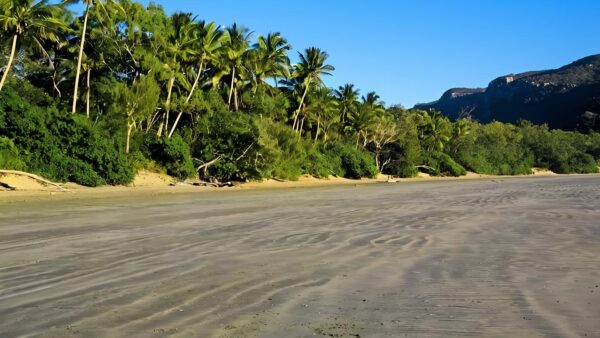
What gives the place its distinct look is its volcanic origin. The hills are the remains of an ancient volcano, and the park’s rhyolite bedrock and mica-rich parent rock help create the dark, fine sands seen along the coast here. Large boulders, rock outcrops and headlands add to that sense of an old, weathered landscape shaped over millions of years.
Highlights
The standout feature of Cape Hillsborough is the meeting of bulky volcanic hills with the Coral Sea. Rocky headlands, scattered boulders, sandy beaches and tidal flats all sit close together, so the scenery changes quickly as you move through the park. At low tide, the coast opens up even further, revealing rock pools, exposed shore platforms and views across to offshore features such as Wedge Island.
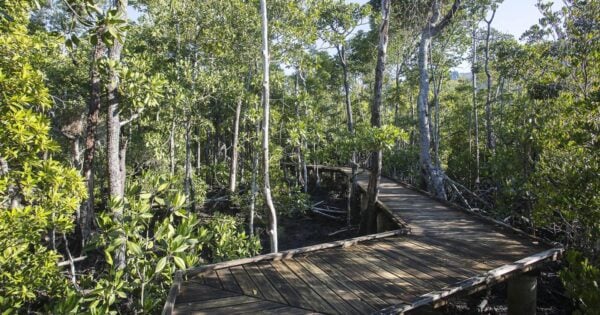
There is also a strong sense of contrast in the landforms. Sheltered creeks and valleys support pockets of lush forest, while the more exposed slopes carry drier vegetation and open views. West of the main coastal area, extensive mangroves add another layer to the scenery and underline how closely the park is tied to both land and sea.
Best Time to Visit
The more comfortable time to spend longer in Cape Hillsborough National Park is usually during the cooler, drier months, when walking is generally more pleasant and humidity is lower. Even then, the park’s appeal changes with the tide as much as with the season, because beaches, rock pools and the shape of the coastline are especially noticeable around low tide.
If you are more interested in the park’s greener side, the wetter months can make the rainforest gullies and creeks feel fuller and more vivid. This is a place that looks different in different conditions, with calm winter mornings, summer growth and changing coastal light all showing off different parts of the landscape.
Plants and Animals
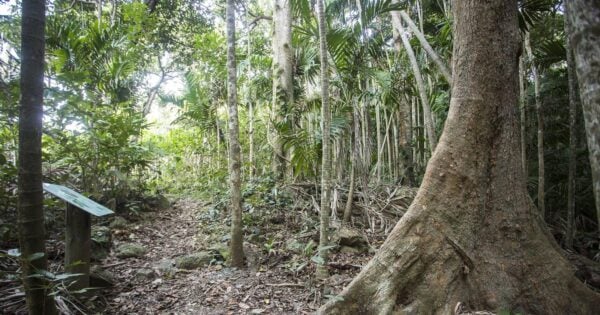
The park packs in an impressive range of habitats for its size. Lowland rainforest and vine forest grow along creeks, valleys and hillside gullies, while open eucalypt forest spreads across the rockier hills and headlands. There are also heath patches on exposed slopes, mangroves along the western side of the park and dune vegetation behind the beaches.
That habitat mix supports a wide spread of wildlife. Six species of kangaroos and wallabies have been recorded here, including agile wallabies, eastern grey kangaroos, whiptail wallabies, plain rock-wallabies, swamp wallabies and red-legged pademelons. The beaches and shorebird habitat are also important for species such as the beach stone-curlew, sooty oystercatcher and eastern curlew, while flatback turtles nest on sandy sections of the coast.
Cape Hillsborough also has some less obvious wildlife values. Coastal caves provide roosts for bats, including a colony of ghost bats, and the park’s rainforest areas are important for fruit-eating and migratory birds. In the mangroves and nearby coastal habitats, marine and estuarine life adds another dimension to the park beyond what you see on the walking tracks.
Culture and Heritage
Cape Hillsborough is Yuwi Country and is described as Yuwi nandhi, the traditional home of the Yuwibara people. The place holds spiritual and cultural significance, with long connections to land and sea reflected in cultural Lore and in the continuing responsibility to care for Country. That connection is also visible in the coastal landscape itself, where extensive marine resources supported long-term Aboriginal use.
The park and surrounding area contain evidence of that long history, including fish trap remains, middens and artefact sites. Cape Hillsborough also includes the site of a former mission reserve gazetted in 1876. Today, care for the park includes ongoing involvement by Yuwi Land and Sea Rangers alongside park management, reflecting both the cultural importance of the area and its living connection to Country.
Find more places to explore…
Help expand the trail collection!
Know of an official trail not listed on Trail Hiking Australia? I’m focused on showcasing the best tracks managed by land managers, and I’d love your help! Sharing a trail adds to our community and helps others discover safe, new adventures.
Submit your trail here

