Sorry, no records were found. Please adjust your search criteria and try again.
Sorry, unable to load the Maps API.
Hikes and walks in Byfield Conservation Park
Here you’ll find every hike we list in Byfield Conservation Park, Queensland. Each listing has the distance, grade and time it takes, so you can pick one that suits you. You can also search hikes across Australia.
Discover 3 hiking trails in Byfield Conservation Park



Ancient Dunes and Coastal Heath at Byfield
Overview
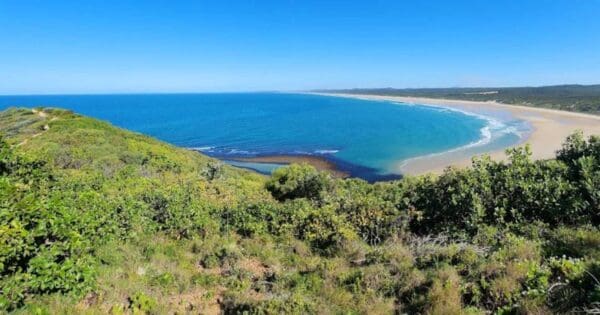
Byfield Conservation Park sits within a larger protected coastal landscape north of Yeppoon on Queensland’s central coast. This is one of the last substantial undeveloped stretches of coast in the region, where sand dunes, heath, woodland, rainforest pockets and tidal environments all meet in a relatively compact area. Together with the adjoining national park and state forest, it helps protect a striking mix of landforms and plant communities that feel quite different from the more built-up parts of the Capricorn Coast.
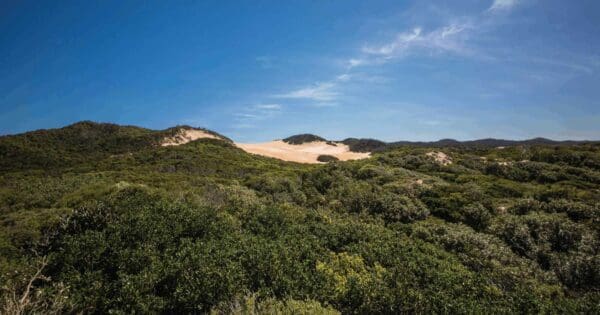
The character of the place is shaped by sand. Behind the foreshore, high parabolic dunes carry heath, woodland and forest, while sheltered spots support taller eucalypt country and wetter creekside vegetation. The result is a park that feels both coastal and inland at once, with open sandy country giving way to denser green pockets as the terrain changes.
Highlights
The scenery here is defined by large dune systems and a coast that is still moving and changing under wind, waves and shifting sand. Those big parabolic dunes are a standout feature of the southern Byfield area, and breaks in the vegetation at major sand blows add to the sense of scale and openness.
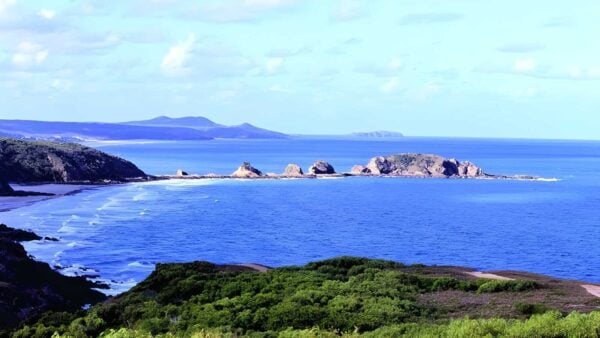
Another part of Byfield’s appeal is the contrast between environments. Around the wider park area you move from heath-covered sand country to rainforest-edged creeks, lowland swamps, rocky headlands and the shallow waters of Corio Bay. That variety gives the landscape its distinct feel, with broad coastal views balanced by quieter, enclosed stretches of forest and creek country.
Best Time to Visit
The most appealing times are usually the cooler months, when walking is more comfortable and the exposed sandy country is less harsh in the middle of the day. Spring is especially rewarding, with colourful wildflowers through the coastal vegetation adding another layer to the landscape.
At any time of year, the park is best appreciated when you are there for the scenery and the vegetation changes rather than expecting one single dominant season. Its mix of heath, forest and coastal environments means the setting has interest well beyond a short flowering window.
Plants and Animals
Byfield Conservation Park protects extensive coastal heath communities along with woodland and forest on nutrient-poor dune sands. The broader Byfield area is also known for pockets of rainforest where water is more reliable, creating a sharp contrast with the drier sandy country nearby. Among the notable plants associated with the area are the Byfield fern, Bowenia serrulata, and the Byfield grevillea, both tied to the district’s distinctive plant life.
Wildlife is varied as well, with birds particularly well represented across the park and adjoining coastal habitats. Official records list hundreds of species for Byfield Conservation Park, including mammals, reptiles, frogs and a wide range of resident and migratory birds. Nearby coastal and bay environments are important for shorebirds and other migratory species, which adds to the ecological richness of the area as a whole.
Culture and Heritage
Traditional Owner connections are recognised here through the involvement of the Darumbal people in managing the Byfield area. Indigenous cultural heritage places within the management area are treated as a custodial responsibility of Traditional Owners, and protecting those places forms part of ongoing park management.
Byfield also has a longer shared-history story shaped by grazing, timber cutting and earlier attempts to mine coastal sands, but the strongest impression today is how much of the area’s natural and cultural fabric has remained intact within this protected coastal landscape.
Find more places to explore…
Help expand the trail collection!
Know of an official trail not listed on Trail Hiking Australia? I’m focused on showcasing the best tracks managed by land managers, and I’d love your help! Sharing a trail adds to our community and helps others discover safe, new adventures.
Submit your trail here