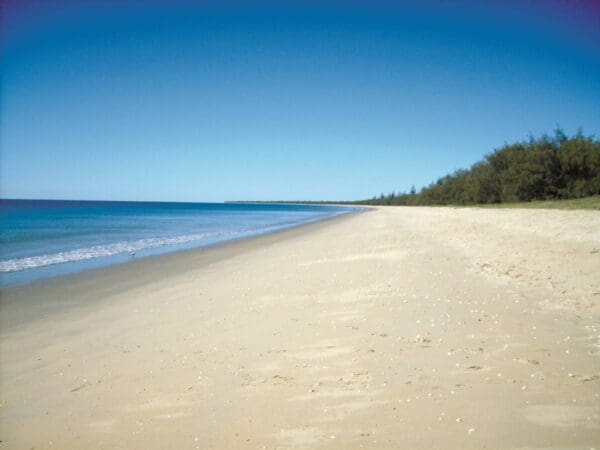
Sand, Wetlands and Tidal Country at Burrum Coast
Overview
Burrum Coast National Park stretches across a long piece of the Wide Bay coast in southern Queensland, with separate sections at Kinkuna, Woodgate, Burrum River and Buxton. It protects a broad sweep of coastal country shaped by sand, freshwater wetlands and tidal edges, rather than one single block of bushland. That mix gives the park a very different feel from inland parks, with heath, swamp, river margins and beachside country all sitting close together.
The park lies around Woodgate Beach, Burrum Heads and Buxton, roughly 260km north of Brisbane. At about 25,923ha, it is a large coastal reserve, and nearly a fifth of it is mapped as wetland. Those wetlands are mostly palustrine systems such as swamps and wet heaths, with additional intertidal areas including mangroves, saltmarsh and saltflats.
Highlights
The real character of Burrum Coast comes from its low, sandy landscape and the way fresh and salt water meet across the coast. In the Woodgate and Kinkuna areas, beach, dunes, wallum country and tea-tree swamps create that classic Wide Bay coastal look. Around the Burrum River and Buxton sections, the scenery shifts to quieter tidal country, with estuarine edges, mangroves and sheltered inlets.
Because the park is spread across four sections, it has a broader range of scenery than many coastal reserves. Some parts are open and beach-fringed, while others are defined by river flats, wetland mosaics and stretches of shoreline that feel much more enclosed and tidal.
Best Time to Visit
Burrum Coast has a mild subtropical climate. The more comfortable time for walking is usually the cooler part of the year, when daytime temperatures are generally around 15 to 20°C. Summer is warmer and more humid, with average daily temperatures around 20 to 30°C.
Plants and Animals
This park supports a rich mix of coastal habitats, and that shows in its plant and animal life. Wallum communities, melaleuca swamps, mangroves, saltmarsh and other wetland habitats all occur here, creating good conditions for birdlife and wetland species as well as the plants that thrive in nutrient-poor sandy soils.
Recorded wildlife for the park includes hundreds of bird species, along with mammals, reptiles, frogs and fish. The mapped wetland habitats include extensive palustrine wetlands and intertidal areas, with mangroves and saltmarsh forming an important part of the park’s tidal fringe.