Sorry, no records were found. Please adjust your search criteria and try again.
Sorry, unable to load the Maps API.
Explore stunning hiking trails of Bass Coast
Discover the diverse trails of Bass Coast, Victoria, offering hikes and walks for all skill levels and interests. Find your perfect adventure today.
Discover 3 hiking trails in Bass Coast



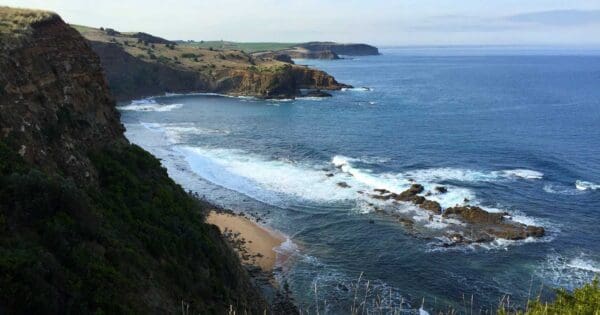

Cliffs, Fossils and Surf Beaches Along the Bass Coast
Overview
Bass Coast on Victoria’s southern shore is defined by a long run of exposed coastline between San Remo and Inverloch, where cliffs, sandy coves, wetlands and reefs meet Bass Strait. Much of this stretch now sits within Yallock-Bulluk Marine and Coastal Park, created to bring together coastal reserves along about 40 kilometres of shore and protect both natural and cultural values.
The landscape changes quickly as you move along it. Around the headlands and beaches there are rock shelves, seagrass-rich shallows, heathlands and dune systems, while inland sections around Wonthaggi include restored heath country. The coast is also geologically significant, with cliffs and headlands formed roughly 95 to 125 million years ago and a shoreline known for nationally significant dinosaur fossil finds.
Highlights
The strongest impression here is the meeting of dark cliffs and open ocean. Between San Remo, Kilcunda, Cape Paterson and Inverloch, the coast alternates between high headlands, broad beaches and smaller coves, with constant views across Bass Strait.
Several natural features stand out for their scenic character, especially the striking sea stack at Eagles Nest, the rock shelves and pools revealed at low tide, and the wetland and estuary country around the Powlett River mouth. During the whale migration season, the higher coastal lookouts can also become good places to scan the water.
Best Time to Visit
Spring is one of the nicest times to be on the Bass Coast, especially when heathland wildflowers are out around Wonthaggi and the weather is usually milder for longer walks. It is also a good season for seeing the contrast between green coastal slopes, surf beaches and rocky shore platforms.
Summer brings brighter beach weather and longer daylight, while the cooler months can be especially rewarding for the raw coastal scenery, stronger seas and occasional whale sightings offshore. There is no single season that defines the place, so the best timing really depends on whether you want wildflowers, beach conditions or a moodier stretch of coast.
Plants and Animals
This coast supports a mix of marine and coastal habitats, including wetlands, heathlands, sandy beaches, dunes, seagrass beds and rocky reefs. That variety is a big part of what makes the area feel so rich, with each section holding different plant communities and wildlife.
On the open beaches, one of the best known birds is the Hooded Plover, a small ground-nesting shorebird that relies on relatively undisturbed stretches of sand. Wetlands and estuary areas also support waterbirds, while the heathlands around Wonthaggi are known for their wildflower displays and for native habitat that has been restored from earlier grazing land and pine plantations.
Culture and Heritage
Bass Coast is part of an Aboriginal cultural landscape in the traditional Country of the Bunurong Peoples, and Yallock-Bulluk Marine and Coastal Park takes its name from the Yallock-Bulluk Clan. The name reflects local landscape features, with Yallock meaning river and Bulluk meaning swamp.
The coast also carries a deep geological history. Along this shoreline, ancient rock formations and erosion continue to reveal fossil-bearing layers that have made the area nationally important for dinosaur discoveries.
Find more places to explore…
Help expand the trail collection!
Know of an official trail not listed on Trail Hiking Australia? I’m focused on showcasing the best tracks managed by land managers, and I’d love your help! Sharing a trail adds to our community and helps others discover safe, new adventures.
Submit your trail here

