Sorry, no records were found. Please adjust your search criteria and try again.
Sorry, unable to load the Maps API.
Explore stunning hiking trails of Barron Gorge National Park
Discover the diverse trails of Barron Gorge National Park, Queensland, offering hikes and walks for all skill levels and interests. Find your perfect adventure today.
Discover 2 hiking trails in Barron Gorge National Park
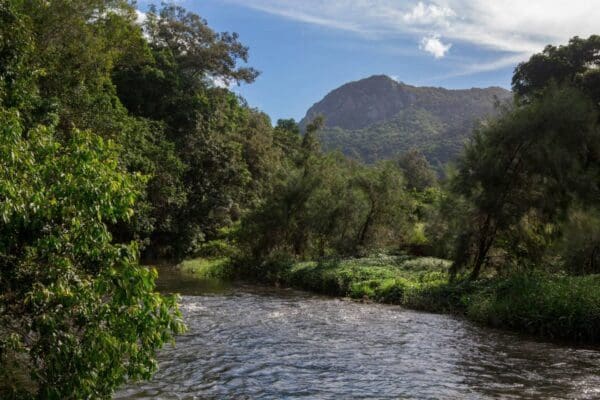

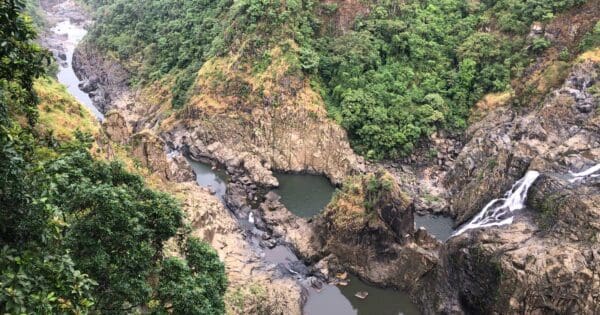

Where rainforest and river cut through the Barron escarpment
Overview
Barron Gorge National Park sits between Cairns and the Atherton Tableland, following the Barron River from the coastal foothills up into higher country around Kuranda. It covers 2,820 hectares and protects a compact but striking slice of the Wet Tropics, where steep slopes, deep gorges, waterfalls and dense rainforest are packed into a relatively small area.
What gives the park its character is the sudden change in terrain. The country rises from lower, warmer slopes into mistier uplands, and the river has carved hard through the escarpment to form the gorge and falls that define the landscape. As part of the Wet Tropics World Heritage Area, it also helps protect one of the largest remaining expanses of wet tropical rainforest in Australia.
Highlights
The main drawcard is the gorge itself: a sharply incised river valley hemmed in by rugged mountains and thick rainforest. Barron Falls is the best-known feature, with water dropping in a broken fall more than 250m high where the river meets a band of more resistant rock. Stoney Creek Falls and its adjoining gorge add another dramatic note, especially where the forest closes in around the rock faces and watercourses.
Scenically, this is a park of contrast rather than openness. Sheer slopes, dark green canopy, exposed rock and fast-moving water all sit close together, giving the landscape a compressed, powerful feel that is very different from the broader tableland country nearby.
Best Time to Visit
The park’s rainforest is shaped by seasonal rain and mist, so conditions change a lot through the year. The wetter months bring the river, falls and creeks to life and often show the gorge at its most forceful, while the drier months are usually better for clearer views and more comfortable walking weather. Around Cairns and Kuranda, the cooler months from about May to October are often the most pleasant time to be out in the hills.
Plants and Animals
Barron Gorge National Park protects a surprising range of vegetation for its size. Tropical rainforest dominates, but there are also open woodlands, she-oak groves on foothills and upland slopes, patches of grassland near the coastal foothills, and small areas of upland heath on the plateau and peaks. Across the park, 33 regional ecosystems have been identified, including many with threatened or declining biodiversity status.
Wildlife is equally varied, with 147 animal species recorded. The mix reflects the park’s span from lowlands to tableland margins, with rainforest species alongside animals tied to creeks, rocky slopes and more open country.
Culture and Heritage
Barron Gorge National Park lies within Djabugay Country. The Djabuganydji Bama are the Traditional Owners of the area known as Djirri Nyundu Nyrrumba, which includes the park, and a native title determination over Barron Gorge National Park was made in 2004. The park is also known as Din Din, and Barron Falls holds particular cultural significance.
The gorge has a layered shared history as well. Old walking pads through the area were later used by miners, timber workers, cattle drovers and railway workers, and traces of that past still remain in places, including diggings, former camps and other relics tied to the region’s gold, timber and rail eras.
Find more places to explore…
Help expand the trail collection!
Know of an official trail not listed on Trail Hiking Australia? I’m focused on showcasing the best tracks managed by land managers, and I’d love your help! Sharing a trail adds to our community and helps others discover safe, new adventures.
Submit your trail here

