Sorry, no records were found. Please adjust your search criteria and try again.
Sorry, unable to load the Maps API.
Explore stunning hiking trails of Magnetic Island National Park
Discover the diverse trails of Magnetic Island National Park, Queensland, offering hikes and walks for all skill levels and interests. Find your perfect adventure today.
Discover 5 hiking trails in Magnetic Island National Park
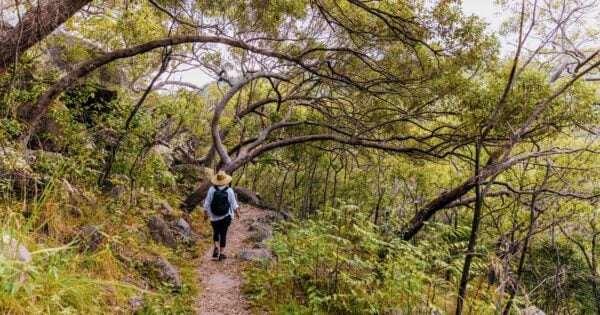

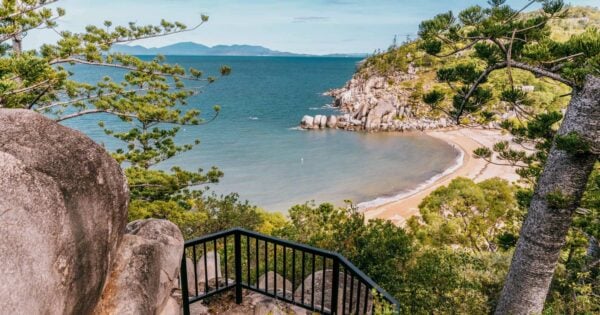


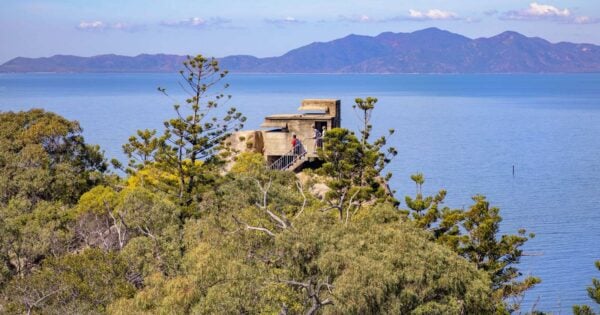

Granite Headlands and Reef-Fringed Bays on Yunbenun
Overview
Magnetic Island National Park covers much of Yunbenun, the large continental island just offshore from Townsville in north Queensland. The protected area sits within the dry tropics section of the Great Barrier Reef and gives the island its distinctive shape, from rounded granite hills and rocky slopes to sheltered gullies, wetlands and a coast lined with bays, mangroves and seagrass beds.
Most of the island remains protected, which gives the place a surprisingly wild feel so close to a regional city. The landscape is shaped by granite ranges, rocky outcrops, talus slopes and low hills, with a strong contrast between dry open woodland inland and greener pockets in more sheltered spots.
Highlights
What makes this park stand out is the meeting of granite country and the sea. Boulder-covered headlands, hoop pines on exposed slopes, sandy bays and fringing reefs all sit close together, so the scenery changes quickly from one part of the coast to the next.
The island has 19 bays around its coastline, and the national park protects much of the natural backdrop that makes them so memorable. On the western side, mangrove-lined shores and quieter coastal flats add another side to the landscape, while higher ground opens out to long views across the island, the mainland and surrounding reef waters.
Best Time to Visit
The more comfortable time to spend time in the park is usually through the cooler, drier months, when walking conditions are less humid and the island’s rocky terrain feels more forgiving. This is also a good time to notice the contrast between dry woodland, shaded gullies and the bright coastal edge.
Seasonal colour can be part of the appeal too. Native kapoks and Townsville wattles bring flashes of yellow to the landscape at certain times, which softens the otherwise dry, granite-heavy character of the island.
Plants and Animals
The park is mostly covered by mixed open eucalypt woodland, but it is far from uniform. Sheltered gullies and some coastal pockets support semi-evergreen vine thicket, while headlands carry hoop pines and the coast includes wetlands, fringing woodlands and mangrove communities. More than 80 native plants and 250 native animals have been recorded across the protected area estate.
Animal life is one of the park’s defining features. Allied rock-wallabies live among the granite boulders, koalas occur in the wooded parts of the island, and the coastal habitats connect with seagrass beds and reef-fringed bays that support a broader marine system. There are also species of conservation significance in the park, including coastal sheathtail bats in sea-cave and boulder country, and a range of wildlife tied to its woodlands and wetlands.
Culture and Heritage
Yunbenun is the traditional Country of the Wulgurukaba People, whose connection to the island and nearby mainland extends back thousands of years. The park contains cultural places including shell middens, stone tools and art sites, and Wulgurukaba language and knowledge remain part of how the island is understood and cared for today.
The park also holds important post-contact heritage. The Fort Complex, built during World War II on a rugged headland above Florence Bay, remains one of the most intact examples of its kind in Australia and adds a striking historical layer to the island’s natural setting.
Find more places to explore…
Help expand the trail collection!
Know of an official trail not listed on Trail Hiking Australia? I’m focused on showcasing the best tracks managed by land managers, and I’d love your help! Sharing a trail adds to our community and helps others discover safe, new adventures.
Submit your trail here

