Hike at a Glance
Max elevation: 352m
Min elevation: 0m
Total Ascent: 1620m
Essential information
The Port Davey Track, situated in a remote location with challenging terrain, variable weather conditions, limited facilities, potential navigation challenges, wildlife encounters, and specific permits and regulations required, demands careful preparation and a thorough understanding of the potential risks involved for any adventurer considering the journey.
Hike overview
Deep in Tasmania's Southwest National Park lies the Port Davey Track, a challenging 70-kilometer trail for experienced hikers. Nicknamed the "Old Port Davey Track," it winds through remote wilderness, part of the Tasmanian Wilderness World Heritage Site.
The track is considered demanding due to its remoteness and lack of facilities. The Tasmanian Parks & Wildlife Service recommends this as a "wilderness walk" best suited for seasoned bushwalkers. Hikers can expect 4-5 days to complete the track one-way, carrying all necessary supplies as there are no huts along the route. Campsites are available, but self-sufficiency is crucial.
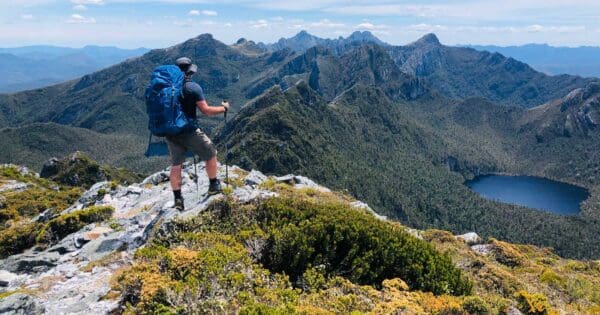
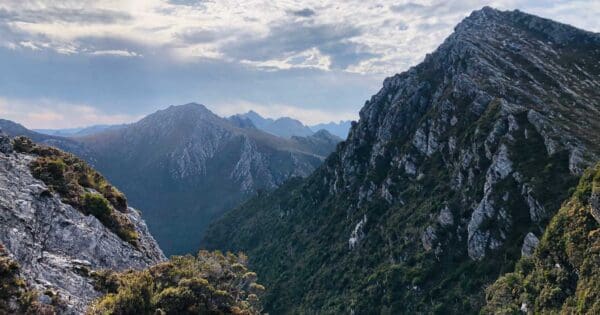
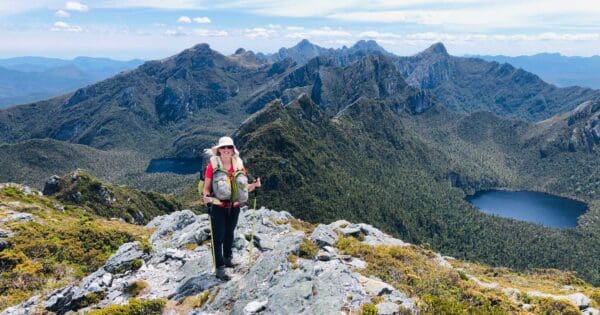
The Port Davey Track offers a true wilderness experience. Hikers traverse ancient rainforests, rugged mountain ranges, and pristine river valleys. Cascading waterfalls, panoramic views, and diverse plant and animal life create a captivating journey.
For the adventurous, the track goes beyond physical challenge. It's a chance to disconnect from the modern world and reconnect with nature. The serenity of the wilderness fosters introspection and a deeper appreciation for the natural world.
The Port Davey Track requires experience, preparation, and a healthy dose of self-reliance. The terrain is demanding, with steep and muddy sections in some areas. The remote location necessitates being well-equipped for all weather conditions, as help may be far away in case of emergencies.
Hikers should be experienced with Tasmanian walking tracks before attempting the Port Davey Track. This will help prepare them for the challenges of the wilderness environment.
The Port Davey Track starts from the Huon Campsite, near the end of the Scotts Peak Road. This is reached via Maydena and Frodshams Pass, approximately a 2-3 hour drive west of Hobart. There are no roads to Melaleuca, the end point of the track. Hikers must fly, sail, or walk in and out.
Combining with the South Coast Track (Optional):Â While this description focuses on the Port Davey Track, for the truly adventurous, it can be combined with the South Coast Track for an epic 8-14 day trek, allowing for a more comprehensive exploration of Tasmania's dramatic southwest coast.
The Port Davey Track is more than a hike; it's an unforgettable experience for those seeking adventure and immersion in nature. As you traverse its wild beauty, you'll discover a challenging yet rewarding journey that leaves a lasting impression.
Planning
- Research the trail extensively, familiarise yourself with the route, and create a detailed itinerary to ensure a well-organised and safe journey.
- Pack appropriate gear, including sturdy hiking boots, weather-appropriate clothing, a reliable tent, sleeping bag, sufficient food, and a water purification system to stay hydrated throughout the trail.
- Carry a well-stocked first aid kit, emergency shelter, a map, compass, or GPS device, as well as a personal locator beacon to ensure you are prepared for any unforeseen circumstances.
- Engage in physical training and prepare for the challenging terrain to build the stamina and strength necessary for the demanding hike.
- Stay updated on weather forecasts and be ready for sudden changes in weather by carrying appropriate layers of clothing to adapt to varying conditions.
- Educate yourself about the local wildlife, take precautions to prevent encounters, and know the appropriate measures to take in case of any wildlife-related incidents.
- Respect the environment and follow the principles of Leave No Trace by disposing of waste properly and minimising your impact on the natural surroundings.
- Ensure you have obtained all necessary permits and adhere to the regulations set by the Tasmanian Parks & Wildlife Service to avoid any legal or environmental complications.
Bathurst Harbour Crossing: Important Information
The 300-meter crossing of Bathurst Harbour by rowboat can be challenging, even in calm conditions with low wind and weak currents the three required trips (to return boats) can take 1.5-2 hours.
Here are some key points to consider:
- Be prepared to make multiple trips across the harbor, especially with a group or heavy packs. You should always ensure there are boats available on both sides of the crossing.
- Leaving backpacks on the opposite side can be risky due to unpredictable weather changes.
- There are reportedly four boats in total, two on each side of the harbor. Be aware that other hikers may have moved all the boats to one side. This can create a dangerous situation if you need to return for a left-behind pack or encounter bad weather while crossing.
Safety First:
- Swimming across the harbor is not recommended due to potential currents and cold water.
- Always prioritise your safety and be prepared to turn back if the weather deteriorates.
- If boats are unavailable on your arrival, be aware of the long (57km) return hike to Scott's Peak Dam and plan accordingly. It's crucial to have enough food and supplies for this scenario.
Track grade
Grade 5 (Difficult) - Walks for the Most Experienced: Grade 5 represents the most challenging walking tracks on the AWTGS. These are only recommended for very experienced and fit walkers with specialised skills, including navigation and emergency first aid. Tracks are likely to be very rough, very steep, and unmarked. Walks may be more than 20 kilometers. These challenging walks demand a high level of fitness and experience to navigate difficult terrain, significant elevation changes, and potentially unformed paths.
Practical information
Trail Conditions:
- Expect a challenging route. The track is poorly maintained with significant muddy sections, overgrown vegetation, and blowdowns (fallen trees).
- While generally easy to follow, getting lost is a possibility, especially in thick undergrowth. Navigation skills are recommended.
- Be prepared for mud. It can be much worse depending on recent rainfall.
Campsites:
- Finding suitable campsites can be difficult. Most are small, exposed, and uneven.
- Several established campsites (Junction Creek, Crossings River, second Spring River site) may be unusable due to flooding or blowdowns.
- Wild camping opportunities are limited.
- The best campsites are at Forest Camp (dry), Spring River's western bank, and Farrell Point (dry).
Water:
- Water levels can fluctuate significantly depending on rainfall. While your experience might have had easy crossings, be prepared for deeper water (waist to shoulder height) during wetter periods.
There is now a bridge over Spring River.
Weather:
- The weather can be unpredictable. Be prepared for a variety of conditions, including sunshine, rain showers, and wind, especially as you approach Melaleuca.
Walk map and GPX file
Max elevation: 352 m
Min elevation: 0 m
Total climbing: 1620 m
Total descent: -1896 m
GPX files, maps and content are copyright Trail Hiking Australia. Not to be copied, redistributed or uploaded to other platforms including AllTrails.
Explore safely
Planning this hike? Most incidents develop before you even start. Safe outcomes depend on how navigation, hydration, environment, load and judgement work together. Small oversights can compound quickly in Australian conditions. See how it happens in the Hiking Safety Systems Foundations. Then use the Hiking Safety Systems, planning calculators, and make sure a trusted contact has your trip plan before heading out.
Leave a trip plan
Before you go, complete a trip intentions form and share it with a trusted contact. Agree on a Late-Back Time and ask them to call 000 (Police) if you have not checked in. A clear trip plan is one of the simplest and most effective safety steps you can take.
Planning checklists
Download the hiking preparation and safety checklists before leaving home to help you think through your plans. They help ensure important considerations are not overlooked and support safer decision-making on the trail.
Getting there
Getting to the trailhead: Southwest National Park.
The Port Davey Track starts from the Huon Campsite, near the end of the Scotts Peak Road. This is reached via Maydena and Frodshams Pass, appoximately 2 – 3 hours drive west of Hobart. There are no roads to Melaleuca at the end of the one way journey; walkers must either fly, sail, or walk in and out.
Reaching the Huon Campsite trailhead of the Port Davey Track involves a combination of air and land travel, followed by a specific route to the starting point. For those arriving from outside Tasmania, Hobart International Airport or Launceston Airport serves as the main entry points. From there, travelers can opt for a rental car or a scheduled bus service to reach the closest town or village adjacent to the trailhead.
Once in the vicinity, local transport services or organised tours may offer further assistance in reaching the trailhead. It’s advisable to check with local visitor centers or the Tasmanian Parks & Wildlife Service for detailed directions and any updates on transportation options, ensuring a seamless and hassle-free journey to the starting point of the Port Davey Track.
Need a rental car to get you to the hike? Find one here.
Accommodation nearby
Find accommodation close to the trailhead including hotels, cabins, and campgrounds. Use the interactive map to explore available options in nearby towns.
Nearby towns: Cygnet, Derwent Bridge, Dover, Franklin, Geeveston, Gordon, Gordon River, Huonville, Kingston, Lake Pedder, Macquarie Harbour, Maydena, Queenstown, Strathgordon, Tullah
About the region
Tasmania's largest expanse of wilderness is in Southwest National Park, a remote and rugged landscape in the heart of the Tasmanian Wilderness World Heritage Area. Home to majestic Huon pine, sassafras, celery top and myrtle, the region is awash with the distinctive fragrances of the Tasmanian forest.
The Gordon River Road is a narrow ribbon through the largely untracked region of forests, imposing mountain ranges and buttongrass plains, providing access to the vast expanses of Lake Pedder and Lake Gordon.
In Southwest National Park, you'll find one of Tasmania's most challenging wilderness walks, the multi-day South Coast Track. There are also endless shorter walks to take you up and over mountains and out to the coast. For a real ends-of-the-Earth' experience, travel to Australia's southernmost point accessible by road, Cockle Creek, where a day walk to South Cape Bay allows walkers to immerse themselves in the raw power of this wilderness landscape.
Southwest National Park is vast, wild and spectacular. Rocky coastline, windswept beaches, dramatic mountain ranges, deep harbours and extensive buttongrass plains are home to unique plant and animal species.
Similar walks nearby
Looking for more walks in or near Southwest National Park? Try these trails with a similar difficulty grade.
Gallery
Got any photos from this hike? Your photos can help others plan. Share shots from along the trail so fellow hikers know what to expect.
Click to add your photos >>
Suggest an edit
Notice something different about this trail? Whether it’s a new feature, a route change, or a closure, share your update so we can keep our info accurate and helpful for fellow hikers.
Click to suggest edits >>
Acknowledgement of Country
Trail Hiking Australia acknowledges the Traditional Owners of the lands on which we hike and pay respects to their Elders, past and present, and we acknowledge the First Nations people of other communities who may be here today.