A Peninsula I Know From the Inside
Growing up in Victoria, my family spent most holidays on the Mornington Peninsula at my grandparents’ holiday home in Blairgowrie. I spent countless hours exploring the back beaches, fishing off the Sorrento pier, and finding what were then secret coves. It was a place to unwind, and over the years it has only grown more special to me.
That’s probably why I keep pointing people to it when they ask about a weekend away from Melbourne. Located just an hour’s drive from the city, the Mornington Peninsula gives you two coastlines for the price of one: calm bay-side beaches facing Port Phillip Bay on one side, and wilder, windswept ocean beaches on the other. That contrast is really what defines the place. In summer, both sides fill up with swimmers, surfers and beachcombers, and the seaside restaurants and local markets are busy. In winter, the crowds thin out and the region settles into something quieter, with fireside dining and art exhibitions taking over from the beach days.
National Parks Worth Building a Trip Around
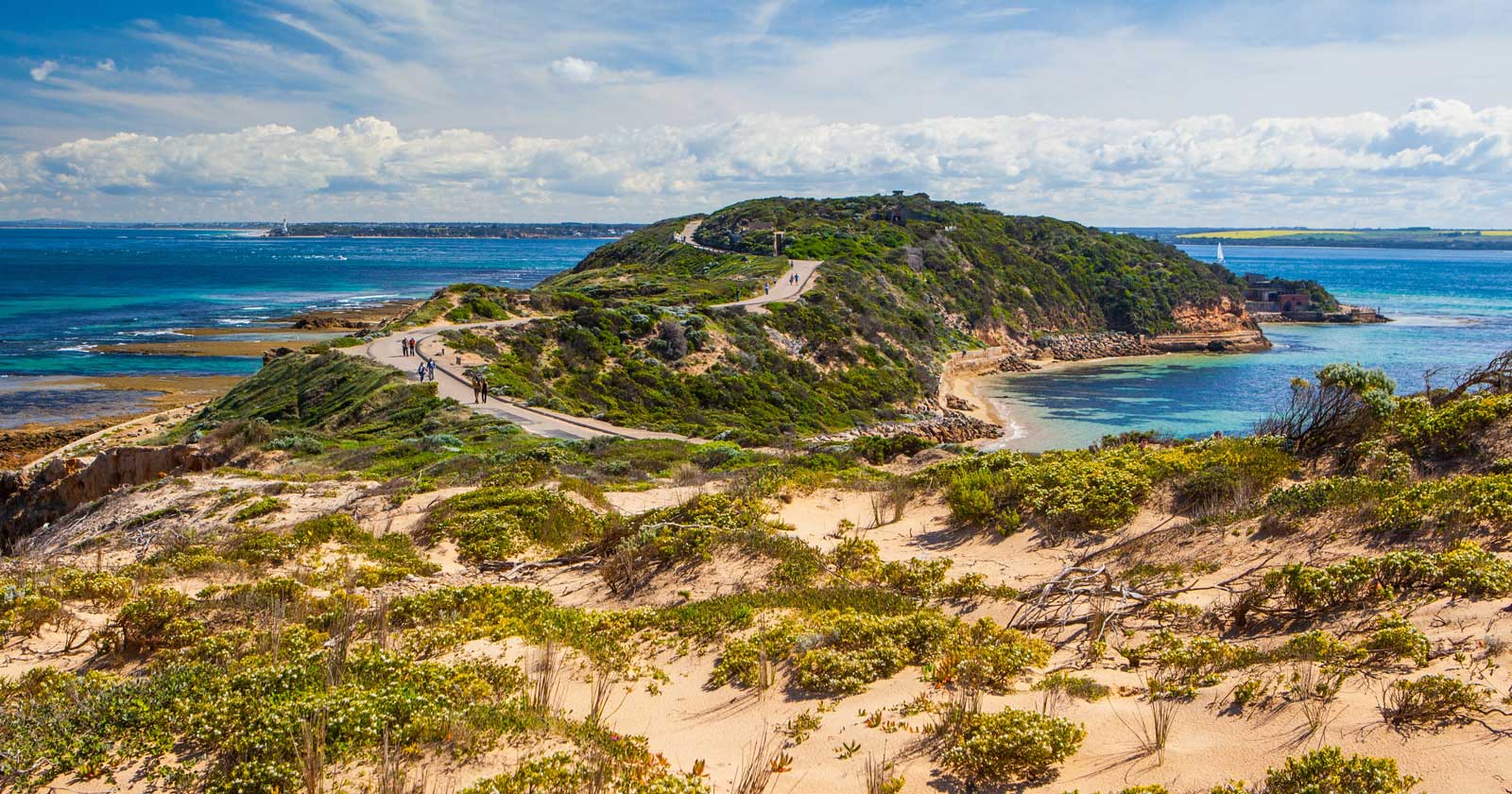
Start at Point Nepean National Park, right at the tip of the Peninsula. It’s steeped in history, from its Aboriginal significance to its role in early European settlement and Australia’s military history, and it’s a good spot for walking or cycling, with rugged coastal landscapes and panoramic views of Bass Strait, the Rip, and Port Phillip Bay. That history is worth more than a passing mention, and I’ll come back to it.
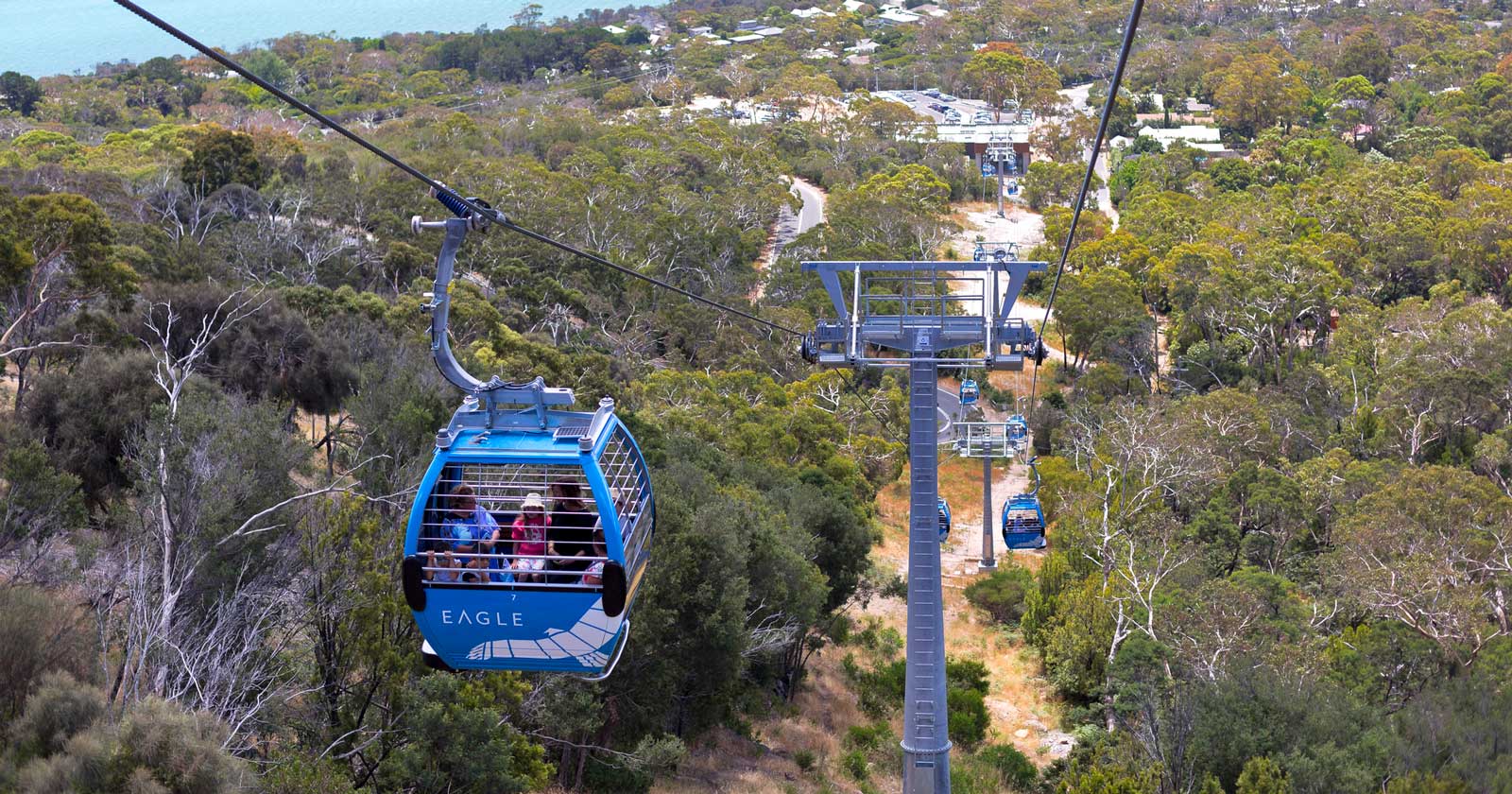
Further along is Arthurs Seat State Park, where the 314-metre summit gives you views that stretch as far as Melbourne on a clear day. The Arthurs Seat Eagle gondola is worth doing if you’d rather get that view without the climb. The park is popular for walking, picnicking, photography and mountain biking, and it’s home to the Southern Brown Bandicoot and koalas among other wildlife.
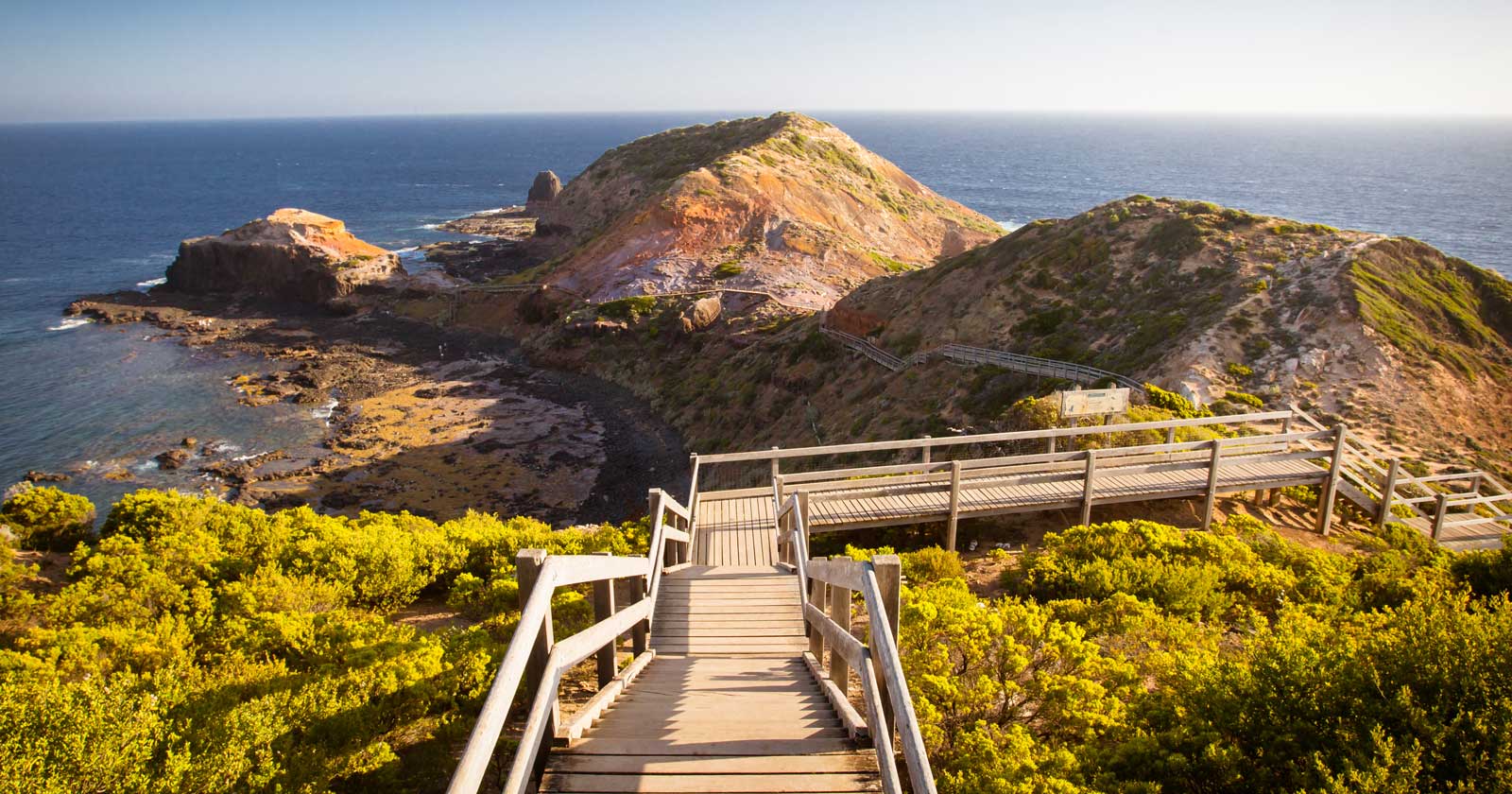
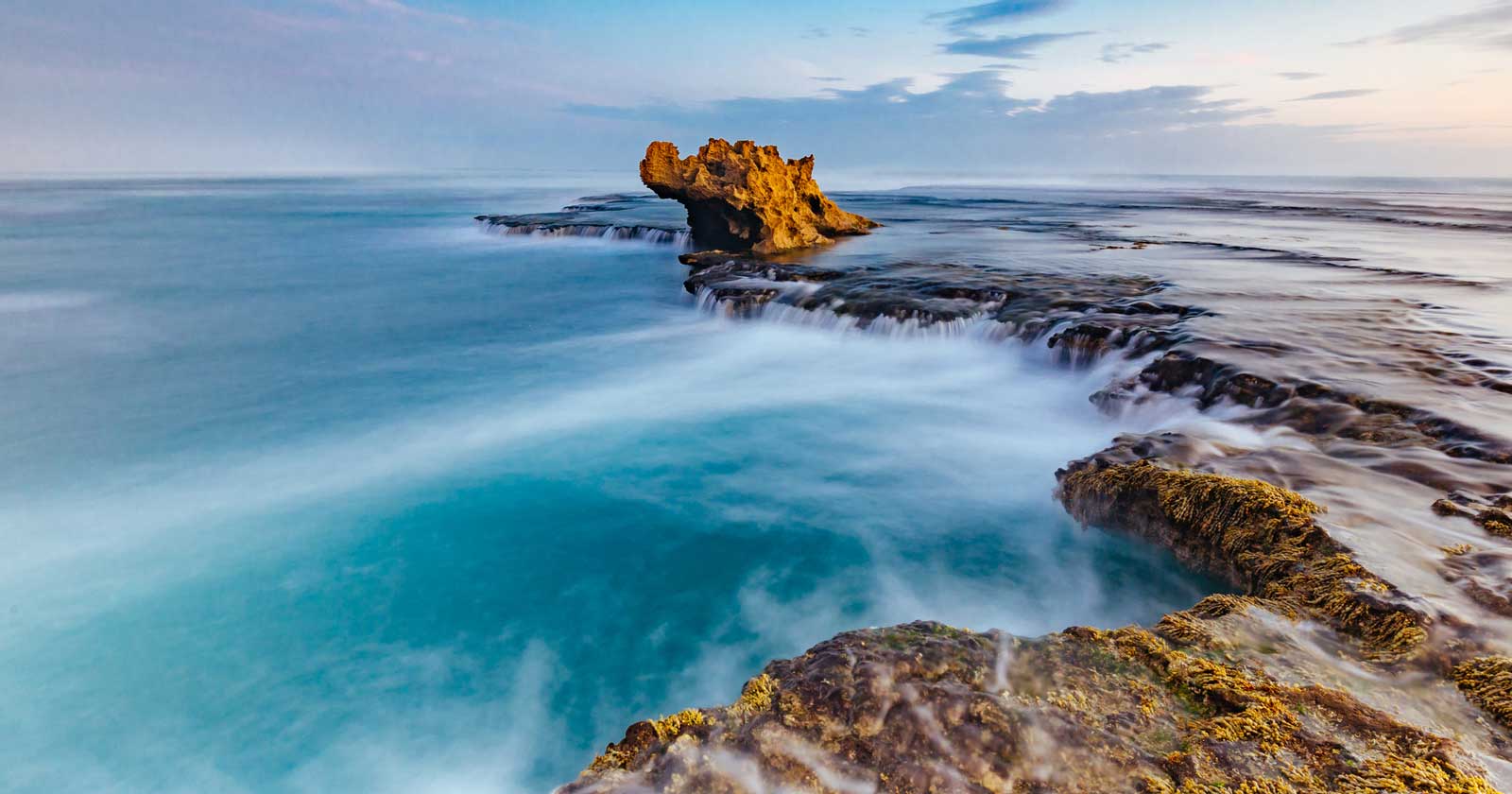
Then there’s the Cape Schanck Lighthouse Reserve, perched on dramatic cliffs. The lighthouse has guided ships safely since 1859, and you can take a guided tour to learn about its past or climb the sandstone steps to the lamp room for sweeping views over the southern Peninsula and Bass Strait. The walking tracks around it lead to some of the most picturesque coastal scenery on the Peninsula, including Pulpit Rock and the Devils Desk, both shaped by millions of years of volcanic activity.
The Coastline Itself
With 192 km of coastline, the beaches are the main event whichever side you’re on. The bay side gives you calm, clear water; the ocean side is more rugged and exposed. Both are good for a swim or a quiet walk on the sand, whatever the season.
If you’d rather cover ground on foot, the Peninsula’s walking trails link up across the region for hikers, cyclists and even horse riders, at all fitness levels. The 100km Mornington Peninsula Walk ties existing tracks together into one route, mixing coastal cliffs, quiet beaches and bushland. The Coastal Walk through Mornington Peninsula National Park is a particular highlight, with panoramic views along the coastline. Keep an eye out for kangaroos and koalas in Greens Bush, and for birdlife across the state parks generally.
Point Nepean’s History, and the Bunurong People’s Longer One
The Mornington Peninsula sits within the traditional Country of the Bunurong People, and that connection to the land runs through the whole region, from stories embedded in the landscape to cultural practices that continue today.
Point Nepean itself tells a more recent chapter: Aboriginal heritage, early colonial defence works, and a role in Australia’s military history that includes historic forts and tunnels, the old quarantine station, and the memorial to Prime Minister Harold Holt. It’s worth setting aside proper time here rather than just driving through on the way to the beach.
Beyond the Beach: Food, Drink and Slowing Down
The Peninsula is also a genuine food and drink destination. There are wineries, breweries and distillers throughout the region producing cool-climate wines and handcrafted spirits, plus a growing number of craft brewers, cider makers and distillers along the Beer, Cider, and Spirits Trail. The wider food and drink trail takes in restaurants serving fresh seafood and produce-driven menus. If you’d rather browse than sit down, the local markets are full of produce, crafts and other finds, and they’re a good way to get a feel for the place beyond the tourist strip. There’s also golf, gardens and marine activities if that suits your pace better.
If you want to properly slow down at the end of it all, the Peninsula Hot Springs and the region’s day spas offer geothermal pools and spa treatments built for exactly that.
That mix, a working coastline, parks with real history, and produce worth stopping for, is why the Peninsula has stayed a place I go back to rather than just somewhere I visited as a kid. It rewards a slower trip more than a rushed one, whether you’re there for the walking trails or just for an afternoon on the pier at Sorrento.




Growing up in Victoria, my family spent many memorable holidays on the Mornington Peninsula. From exploring back beaches to relaxing by the bay, it’s always been a special place to me. What do you love most about this beautiful region?