Understanding rock scrambling
Rock scrambling means moving over rocky terrain where you’re using your hands for balance and stability, but without ropes or climbing equipment. It sits between hiking and technical rock climbing, and it demands careful foot placement, balance, and sound judgement, more than raw strength.
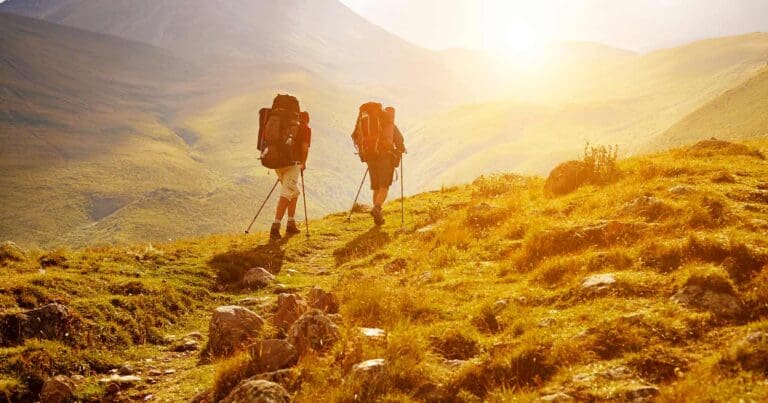
I think of scrambling as where a lot of climbers actually develop their movement skills, learning how to move efficiently over slabs, low-angle rock, short steeper sections, and loose boulders. Those same movement skills matter for hikers too, especially once you’re on untracked routes, alpine walks, or exposed summits where the trail effectively runs out.
I’d never rush scrambling or take it lightly. A slip on exposed rock can have serious consequences, particularly when you’re climbing without a rope or other safety systems to catch you.
Building confidence on easy rock
Confidence in scrambling comes from controlled practice, not from pushing your limits. When I’m introducing someone to scrambling terrain, I start them on low-angle slabs, stable boulders, or short rock steps close to the ground. Practising in low-risk environments lets you focus on balance, foot placement, and movement without the added pressure of exposure. Scrambling should feel deliberate and controlled, never rushed or reactive, and if it doesn’t feel that way, I’d rather step back to easier ground than push on.
Core rock scrambling skills
These are the fundamentals I rely on to improve movement efficiency and reduce risk on easy rock.
1. Maintain balance at all times
Aim to keep three points of contact on the rock wherever you can. This might be two feet and one hand, or two hands and one foot. Move one limb at a time and stay stable before you commit weight to the next move. Good balance comes from controlled movement through your core, not sudden reaches, and that’s the difference I look for between someone who’s comfortable and someone who’s about to have a bad moment.
2. Keep weight over your feet
Your feet give you the most reliable support on scrambling terrain. Look for solid footholds and trust them. Keep your body weight centred over your feet rather than pulling with your arms. Strong foot placement reduces fatigue and improves stability on both slabs and steeper steps, and it’s the habit that tires you out the least over a long day.
3. Use your hands for balance, not hauling
Your hands should assist with balance and control rather than doing most of the work. Avoid overreaching. Look for handholds that are comfortable and within easy reach. On slabby terrain, spreading your arms slightly can help with balance even when there’s no obvious handhold available.
4. Test every hold
Loose rock is common on scrambling routes, so I test every handhold and foothold before I commit weight to it. Pull down on holds rather than out, and tap rock surfaces to check for hollow sounds. If a hold moves or sounds unstable, don’t use it. Loose rock is a frequent cause of scrambling accidents, and it’s the one hazard I’m most deliberate about checking for.
5. Pack and manage your load carefully
A poorly loaded pack can throw you off balance at exactly the wrong moment. Keep heavier items close to your back and lower in the pack to maintain a stable centre of gravity. A properly adjusted waist belt helps stop the pack shifting during critical moves, especially when you’re stepping up or down.
6. Stay focused and manage exposure
Scrambling needs your full attention. Distractions, fatigue, or rushing all increase the risk of mistakes. If you feel exposed, out of breath, or unsure, stop in a safe position and reassess. Take time to breathe, regain focus, and plan your next move. Asking for help or backing down is always safer than pushing through fear or uncertainty, and I don’t see either as a failure.
7. Warn others of falling rock, and know how to respond
If you dislodge a rock, even a small one, shout “rock” or “below” immediately, loud enough for anyone nearby or below you to hear. It’s worth building as a deliberate habit, because a second’s hesitation is often the difference between a warning and an impact.
If you hear that call, look down straight away, cover your head with your hands, and make yourself as small a target as you can. Don’t look up to see what’s coming. In a group on steep or scrambly ground, spread out across the slope rather than moving directly above or below each other, so no one is ever standing in the fall line of someone else’s mistake.
Judgement matters more than strength
Rock scrambling isn’t about strength or speed, in my view. It’s about reading the terrain, moving deliberately, and knowing when to slow down or turn back. Conditions such as wet rock, loose debris, fatigue, or poor visibility can quickly increase risk.
Scramble only within your skill level, stay conservative with your decisions, and remember that the safest move is often the one you choose not to make.




Hi, im keen to increase my exposure to difficulty and then heights- any suggestions for somw sites on Sydney northern beaches? Cheerd